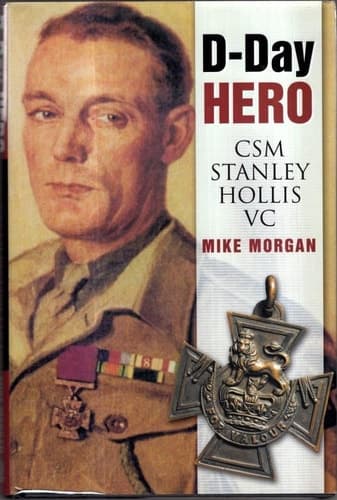
Synopsis
D-Day's only Victoria Cross winner, Stanley Hollis was uniquely recommended for this coveted award twice on June 6, 1944. A tough, working-class rebel, Hollis was no model soldier: he was forever being 'busted' to corporal for various misdemeanours, only to win his stripes back again. He fought with the Green Howards at Dunkirk, in the Western Desert, in Italy, on D-Day and through France and Germany to the end of the war. Seriously wounded and taken prisoner by the Afrika Korps, Hollis was personally congratulated by Rommel, then made a daring escape. In Italy, he was recommended for the Distinguished Conduct Medal.
Recommendations
Quartered Safe Out Here A Harrowing Tale of World War II
by George MacDonald Fraser
Fraser was actually there—fighting in Burma with the Border Regiment—and his memoir has that same gritty, unvarnished voice as Hollis's story. Where Morgan captures Hollis as a scrappy, rule-breaking soldier who got the job done anyway, Fraser writes about ordinary men doing extraordinary things without pretending war was anything but brutal and absurd. You'll recognize that working-class irreverence and dark humor threading through the combat narrative.
View book
The Cruel Sea
by Nicholas Monsarrat
Monsarrat served in the Royal Navy during WWII, and this novel follows a single ship and its crew across the entire war—giving you that same chronological sweep as Hollis's journey from Dunkirk to Germany. But here's the thing: Monsarrat focuses on the grinding, repetitive danger and the bonds between men rather than individual heroics, so you get a different angle on what made soldiers like Hollis tick. The authenticity is absolute because he lived it.
View book
Joseph Heller's Catch-22
by Joseph Heller
I know this seems like a left turn, but hear me out: Heller was a bombardier in WWII, and his novel captures something true about military life that straight memoir often misses—the absurd bureaucracy, the arbitrary discipline, the way a man like Hollis (forever being busted and reinstated) would experience the system as fundamentally irrational. Where Morgan's biography is straightforward, Heller uses dark comedy to convey the same frustration with military logic. Both books are ultimately about individuals surviving a machine that doesn't care about them.
View book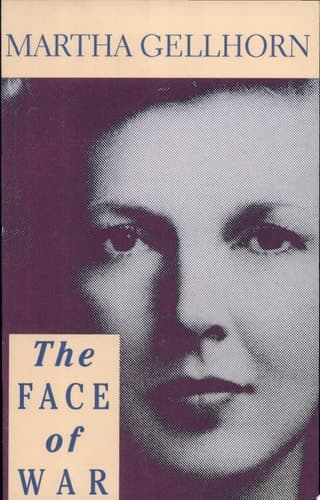
The Face of War
by Martha Gellhorn
Gellhorn was a war correspondent who reported from multiple theaters during WWII, and her essays and dispatches offer a completely different vantage point on the same war Hollis fought in. She writes about soldiers like him—the ordinary men doing the fighting—with sharp observation and genuine respect. Published in 1959, it's from an earlier era of war writing, and her prose has a clarity that complements the biography's narrative drive. You'll see the North African campaign, Italy, and the European theater through fresh eyes.
View bookAbout Mike Morgan
Biography coming soon.
View author page