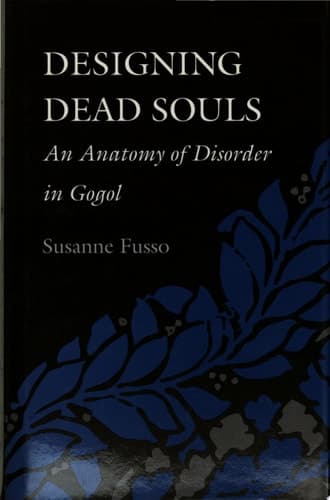
Designing Dead Souls An Anatomy of Disorder in Gogol
Susanne FussoPublished1993
Pages195
Formathardcover
PublisherStanford University Press
Synopsis
This strikingly original work presents an integral and inclusive explanatory model for the elusive narrative strategies of Gogol's Dead Souls; in the process, it draws larger conclusions about Gogol's creative methods and aesthetic concerns. Throughout his career, Gogol manifests two seemingly contradictory urges: the urge toward order, system, clarity and wholeness, and the urge toward disorder, disruption, obscurity, and fragmentation. The author seeks to make a system, an anatomy, of Gogol's impulses toward disorder and disruption in Dead Souls in all their various and distinctive aspects. In anatomizing Gogolian disorder, she explores the mythology of creativity and lying in Gogol; his (at least literary) fear of the family; the relation between the uses of obscurity in Dead Souls and the poetry of Russian Sentimentalism, especially Zhukovskii's; Dead Souls as parable; and the mutually subversive relation between ¹ction and non¹ction in Gogol.
Recommendations

The Apocalyptic Vision of Mikhail Bulgakov's the Master and Margarita (Studies in Slavic Language & Literature)
by Edward E. Ericson
Like Fusso's analysis of Gogol's creative tension between order and chaos, Bulgakov's novel *embodies* that same dialectic—a Moscow narrative and a Pontius Pilate narrative that refuse to cohere into a single meaning, yet somehow do. The novel's playful disruption of narrative authority and its exploration of how fiction and reality subvert each other will feel like watching Gogol's methods taken to their logical extreme.
View book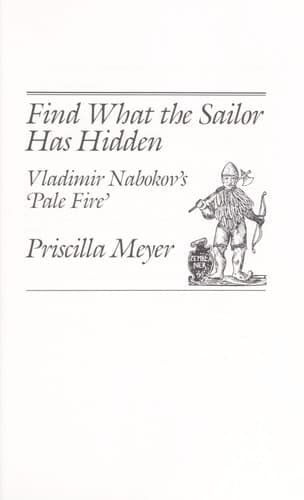
Find what the Sailor Has Hidden Vladimir Nabokov's Pale Fire
by Priscilla Meyer
Nabokov constructs a novel where the apparatus of interpretation—the footnotes, the commentary, the scholarly apparatus itself—becomes the story, which is precisely the kind of structural obscurity that Fusso identifies in Gogol. The unreliable narrator and the deliberate confusion between text and paratext will resonate with your interest in how Gogol weaponizes narrative form.
View book
If on a Winter's Night a Traveler Introduction by Peter Washington
by Italo Calvino
Calvino's 1979 novel shares Gogol's obsession with the reader's experience of disorder—but where Gogol fragments narrative from within, Calvino fragments it from without, offering you ten different novel beginnings that never resolve. It's a surprise recommendation because it's playful rather than dark, yet it tackles the same question: what happens when a writer refuses to give you the wholeness you expect?
View book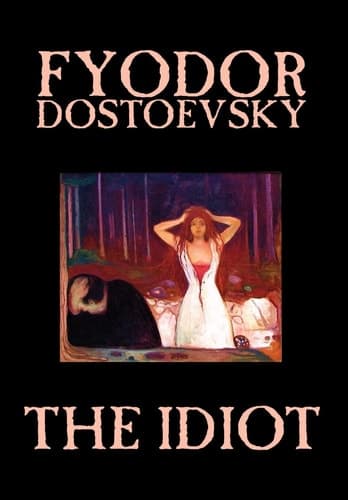
The Idiot
by Fyodor Mikhailovich Dostoevsky
Dostoevsky's novel operates in the same Russian literary tradition as Gogol but pushes toward psychological and moral disorder rather than purely formal disruption. The novel's refusal to provide moral clarity or narrative resolution—its insistence that goodness and chaos are intertwined—extends the questions Fusso identifies about Gogol's creative ambivalence into the realm of character and philosophy.
View book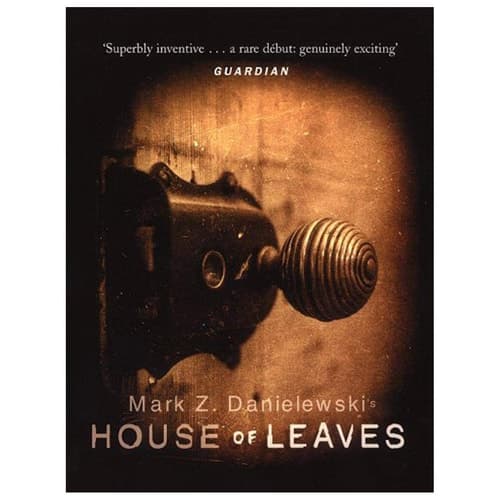
Mark Z. Danielewski's House of Leaves
by Mark Z. Danielewski
Here's where we leap forward: Danielewski's 2000 novel is what happens when a contemporary American writer inherits Gogol's obsession with making disorder *systematic*—footnotes that sprawl across pages, a house that's larger on the inside than the outside, multiple narrators whose reliability collapses. It's a genuine surprise because it's contemporary and American, yet it's essentially a 21st-century meditation on the same problem Fusso anatomizes in Gogol: how do you make a structure out of structural impossibility?
View bookAbout Susanne Fusso
Biography coming soon.
View author page