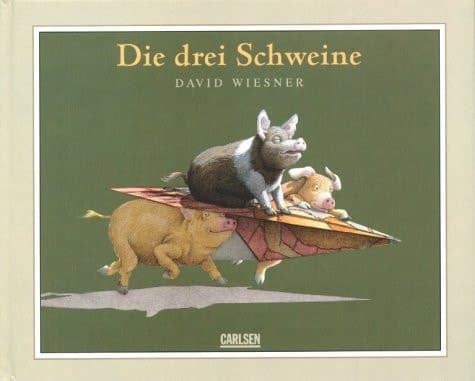
Synopsis
Drei Schweine, die in die Welt ziehen, um ihr Glück zu machen, geraten an einen gierigen Wolf. Er pustet das Haus, das sie sich gebaut haben, einfach um ...
Recommendations
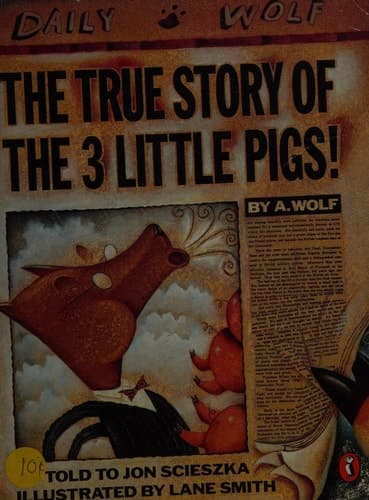
The True Story of the Three Little Pigs
by Jon Scieszka
Scieszka takes the same fairy tale framework Wiesner reimagined and flips it completely—here the wolf tells his version of events with deadpan charm and unreliable logic. Where Wiesner's wordless storytelling lets the pictures do the subversion, Scieszka uses a narrator's voice to undermine everything we thought we knew, making this a perfect companion piece that shows how the same story can be told in radically different ways.
View book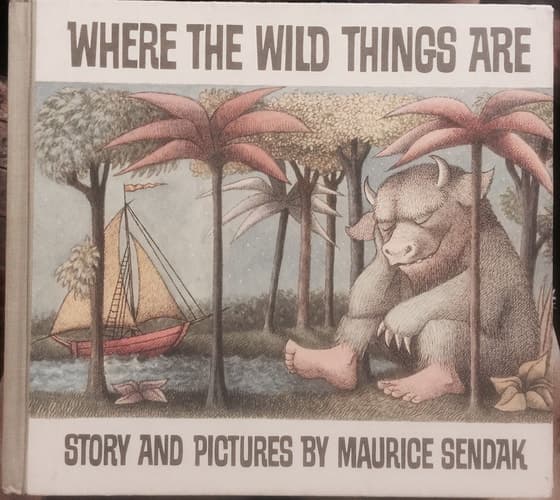
Where the Wild Things Are Holiday Feature Edition
by Maurice Sendak
Published in 1963, this predates Wiesner's work by decades but shares his gift for letting illustrations carry emotional weight that words alone couldn't. Both books understand that children's literature doesn't need to explain everything—the journey itself, with its mixture of danger and wonder, is what matters. Sendak's creatures have that same slightly unsettling quality as Wiesner's wolf.
View book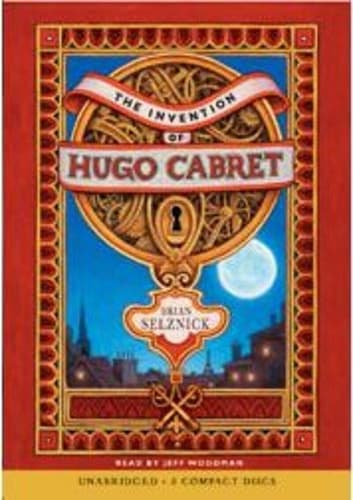
The Invention of Hugo Cabret
by Brian Selznick
Selznick creates something genuinely hybrid—part novel, part visual narrative told through hundreds of pencil drawings integrated into the text itself. Like Wiesner, he trusts that images can advance plot and character in ways that prose can't replicate, but he layers it with a mystery that unfolds across both mediums simultaneously. It's a book that makes you understand why some stories demand to be drawn.
View book![Cover of Giovanni Ba[t]tista Piranesi The Prisons (le Carceri)](/_next/image?url=https%3A%2F%2Fcovers.whatshouldireadnext.com%2Feditions%2F9780486215402%2Flg.jpg&w=3840&q=75)
Giovanni Ba[t]tista Piranesi The Prisons (le Carceri)
by Giambattista Piranesi
Here's the surprise pick: Clarke's novella shares Wiesner's interest in how physical spaces can trap or liberate characters, but she approaches it through literary fantasy rather than picture books. The way Piranesi gradually discovers the true nature of his world mirrors how Wiesner's pigs must adapt when their assumptions about safety prove wrong—both explore how environment shapes identity and possibility.
View book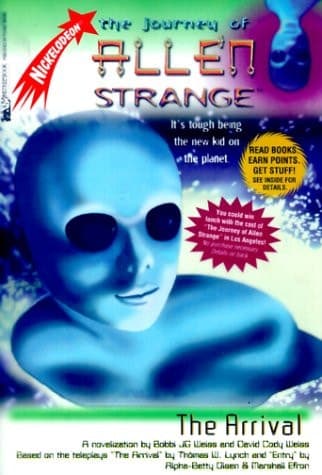
The Arrival
by Bobbi J. G. Weiss
Tan is essentially Wiesner's contemporary working in the same wordless-narrative space, but *The Arrival* tackles immigration and displacement through surreal, dreamlike imagery. Where Wiesner's pigs face external danger, Tan's protagonist faces a world that operates by unfamiliar rules—both books use visual language to explore vulnerability and adaptation without a single word of dialogue.
View bookAbout David Wiesner
D
David Wiesner
Born 1956
David Wiesner (born February 5, 1956) is an American illustrator and writer of children's books, known best for picture books including some that tell stories without words. As an illustrator he has won three Caldecott Medals recognizing the year's "most distinguished American picture book for children" and he was one of five finalists in 2008 for the biennial, international Hans Christian Andersen Award, the highest recognition available for creators of children's books. https://en.wikipedia.org/wiki/David_Wiesner
View author page