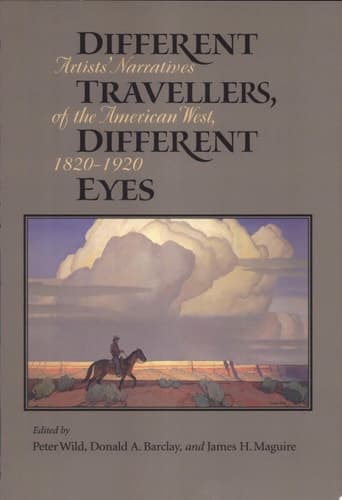
Different Travellers, Different Eyes Artists' Narratives of the American West, 1820-1920
Peter WildPublished2001
Pages270
Formatpaperback
PublisherTCU Press
Synopsis
The early American West has been depicted in art as a land of harsh struggles, a place of heavenly miracles, and everything in between. Different Travellers, Different Eyes records impressions of life on the nineteenth-and early twentieth-century American frontier by twenty-one artists better known for their paintings, sculptures, and photographs. Most but not all the selections come from journals or diaries kept during trips to the West.
Thomas Moran, for instance, notes what others must have felt, that "the impression then made upon me by the stupendous and remarkable manifestations of nature's forces will remain with me as long as memory lasts." That impression of grandeur echoes the vast and dramatic canvasses Moran created on his trips west.
Different Travellers, Different Eyes is not an art-history book. The narrators are not art historians. Their works adorn the walls of museums, fill the pages of art books, fetch large sums at auction, and (as reproductions) illustrate histories of the early American West. Chances are slim, however, that the casual reader has read a word these artists wrote. This gathering brings the best of this literary art out of the shadows.
Recommendations
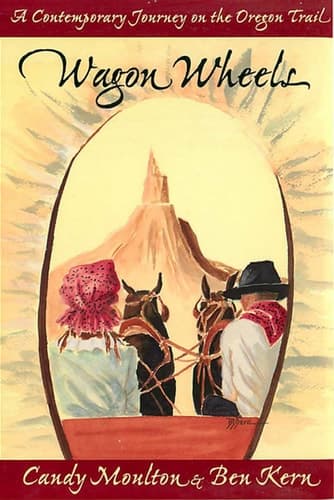
Wagon Wheels A Contemporary Journey on the Oregon Trail
by Candy Vyvey Moulton
Buck retraces the actual Oregon Trail with a covered wagon and mules, creating a modern narrative that mirrors the firsthand accounts you just read—but he's doing the experiencing himself rather than analyzing artists' impressions. You'll get that same sense of how landscape transforms perception, except Buck is wrestling with the terrain in real time, which gives the frontier a visceral immediacy that complements Wild's literary approach.
View book
The Worst Journey in the World
by Apsley Cherry-Garrard
This 1922 Antarctic expedition memoir has the same DNA as your book—a traveler recording raw impressions of an extreme landscape that defies easy categorization—but it's from a completely different geographical and temporal context. Cherry-Garrard writes with the same mixture of wonder, hardship, and philosophical reflection that Moran and the other Western artists captured, proving that the human response to sublime wilderness transcends geography.
View book
In the Heart of the Sea: The Tragedy of the Whaleship Essex
by Nathaniel Philbrick
Here's your surprise pick: Philbrick reconstructs a maritime disaster through multiple eyewitness accounts and logbooks, giving you that same layered, multi-perspective approach to American frontier experience that Wild uses—except the frontier is the ocean, and the 'landscape' is actively hostile. The way Philbrick weaves together different voices and interpretations of the same events echoes how Wild shows us that the West looked completely different depending on who was looking.
View book![Cover of [The works ] ; The works of Mark Twain. 2. Roughing it](/_next/image?url=https%3A%2F%2Fcovers.whatshouldireadnext.com%2Feditions%2F9780520024786%2Flg.jpg&w=3840&q=75)
[The works ] ; The works of Mark Twain. 2. Roughing it
by Mark Twain
Twain's 1872 memoir is the literary counterpart to the visual artists you've been reading—he's documenting the same era and often the same landscapes, but through a humorist's eye that punctures the romantic mythology the painters were creating. Pairing this with Wild's collection gives you the full picture: the sublime artistic vision alongside the irreverent, often deflating reality of actually living through frontier conditions.
View book
The Journals of Lewis and Clark
by Meriwether Lewis
You've been reading about artists interpreting the West; here are the explorers whose journey essentially created the West as a concept for American imagination. These journals predate the artists Wild covers, but they're the foundational text that shaped how everyone else—including those twenty-one painters—would see the landscape. It's the source material for the entire tradition you've just explored.
View bookAbout Peter Wild
Biography coming soon.
View author page