Synopsis
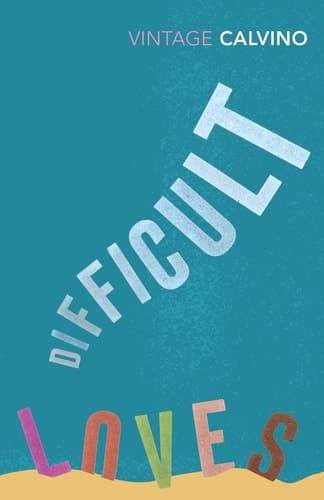
'Gleaming with resonant clarity, Calvino's fiction hits the mind's eye with the hard-edged sumptuousness, of a pre-Raphaelite painting. Vividnes, enthralls him. Story after story in DIFFICULT LOVES sparkle, with heightened reSponsiveness to life. Capturing the tiniest tactile sensations and the heart-pounding excitement that amplifies them, Calvino sensitises his characters down to the last straining tendon and straying finger-tip'
Recommendations
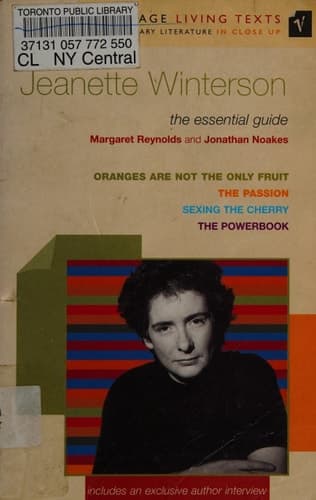
Jeanette Winterson Oranges are Not the Only Fruit, The Passion, Sexing the Cherry, The Powerbook
by Margaret Reynolds
Winterson shares Calvino's gift for making physical sensation almost unbearably vivid—the way she describes desire and touch has that same pre-Raphaelite intensity you loved in Difficult Loves. Both writers treat love as something that fractures and transforms rather than resolves, and they do it through prose that feels almost painterly in its precision.
View book
Ficciones
by Jorge Luis Borges
If you appreciated how Calvino's stories shimmer with multiple meanings and unexpected angles, Borges is essential—his stories operate like philosophical puzzles wrapped in narrative, each one a small universe of ideas. Both writers prove that short fiction can contain entire worlds of thought without sacrificing beauty or emotional resonance.
View book
The Apocalyptic Vision of Mikhail Bulgakov's the Master and Margarita (Studies in Slavic Language & Literature)
by Edward E. Ericson
Published in 1967, this novel has that same quality of heightened reality Calvino captures—where the mundane and the magical collide with startling clarity. Bulgakov weaves multiple storylines with the same architectural precision Calvino uses in his collections, and both writers find profound humanity in characters caught between competing worlds.
View book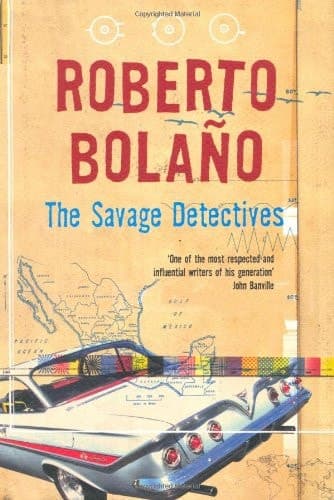
The Savage Detectives A Novel
by Roberto Bolaño
Here's the surprise: this sprawling novel about poets and obsession shares Calvino's belief that capturing tiny, precise moments of human connection is as important as grand narrative arcs. Bolaño's characters strain toward meaning the way Calvino's do—through sensory detail, through failed relationships, through the sheer effort of paying attention.
View book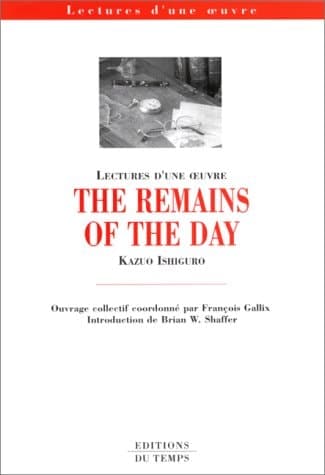
The remains of the day de Kazuo Ishiguro
by Gallix/François
Ishiguro does something quietly devastating with restraint and what's left unsaid—much like how Calvino's characters often reveal themselves through what they don't articulate. Both writers understand that the most profound emotional truths live in the spaces between words, in the tension between what characters feel and what they're willing to express.
View bookAbout Italo Calvino
I
Italo Calvino
1923–1985
Italo Calvino (Santiago de Las Vegas de La Habana, 15 ottobre 1923 – Siena, 19 settembre 1985) è stato uno scrittore e paroliere italiano. Intellettuale di grande impegno politico, civile e culturale, è stato uno dei narratori italiani più importanti del secondo Novecento. I numerosi campi d'interesse toccati dal suo percorso letterario sono meditati e raccontati attraverso capolavori quali la trilogia de *I nostri antenati, Marcovaldo, Le cosmicomiche, Se una notte d'inverno un viaggiatore,* uniti dal filo conduttore della riflessione sulla storia e la società contemporanea. ---------- Italo Calvino (Italian: [ˈiːtalo kalˈviːno]; 15 October 1923 – 19 September 1985) was an Italian journalist and writer of short stories and novels. His best known works include the *Our Ancestors* trilogy (1952–1959), the *Cosmicomics* collection of short stories (1965), and the novels *Invisible Cities* (1972) and If on a winter's night a traveler (1979). Lionised in Britain and the United States, he was the most-translated contemporary Italian writer at the time of his death, and a noted contender for the Nobel Prize for Literature.
View author page