Directions to servants, 1745 (Students' facsimiles, PR-8)
Jonathan SwiftPublished1971
Pages3
Formathardcover
PublisherScolar Press
Synopsis
A Scolar Press Facsimile. Facsim. Of 1st Ed., London, Printed For R. Dodsley And M. Cooper, 1745.
Recommendations
A Modest Proposal Study Guide
by Jonathan Swift
Wait—I know what you're thinking. But hear me out: if you've only read *Directions to Servants*, Swift's *Modest Proposal* shows you his full range of satirical weaponry. Where *Directions* uses deadpan instruction-manual format to skewer servant behavior, *Proposal* takes that same ice-cold tone and aims it at something far more sinister, making the contrast between form and content absolutely devastating.
View book
The remains of the day de Kazuo Ishiguro
by Gallix/François
Ishiguro gives you a butler's perspective—literally—and uses the same technique Swift employed: a narrator so committed to their role that their unreliability becomes the entire point. Stevens' careful, formal recounting of his life mirrors the servant's voice in Swift, but Ishiguro stretches it across a novel where you gradually realize how much the narrator is hiding, even from himself.
View book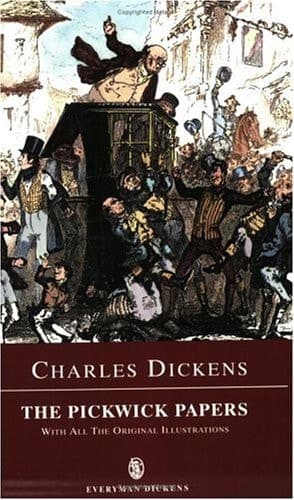
The Pickwick Papers
by Charles Dickens
Dickens populates this novel with servants, hangers-on, and social climbers who are constantly trying to navigate hierarchies and expectations—much like Swift's targets. But where Swift is surgical, Dickens is exuberant; he finds comedy in the same human follies Swift identified, but with warmth underneath the mockery. The episodic structure also echoes Swift's sectional approach to dissecting behavior.
View book
Find what the Sailor Has Hidden Vladimir Nabokov's Pale Fire
by Priscilla Meyer
This is the surprise pick: a novel disguised as a poem with scholarly apparatus. Like *Directions to Servants*, it's formally playful—using footnotes and commentary as the actual narrative—but Nabokov weaponizes the form in ways that make Swift look straightforward. The unreliable editor commenting on someone else's work creates layers of irony that will feel familiar to anyone who's read Swift's deadpan instructions.
View book
The Autobiography of a Flea
by Anonymous
An 19th-century satirical novella that uses an absurd narrator (a flea observing human behavior) to comment on Victorian society—it's the spiritual descendant of Swift's technique. The premise is ridiculous, the observations are sharp, and the formal constraint (everything filtered through this impossible perspective) creates the same kind of dark comedy you found in *Directions*. It's genuinely obscure, which makes it a genuine discovery.
View bookAbout Jonathan Swift
J
Jonathan Swift
1667–1745
Jonathan Swift was an Irish satirist, essayist, political pamphleteer (first for the Whigs, then for the Tories), poet and cleric who became Dean of St. Patrick's, Dublin. He is remembered for works such as Gulliver's Travels, A Modest Proposal, A Journal to Stella, Drapier's Letters, The Battle of the Books, An Argument Against Abolishing Christianity, and A Tale of a Tub. Source and more information: https://en.wikipedia.org/wiki/Jonathan_Swift
View author page