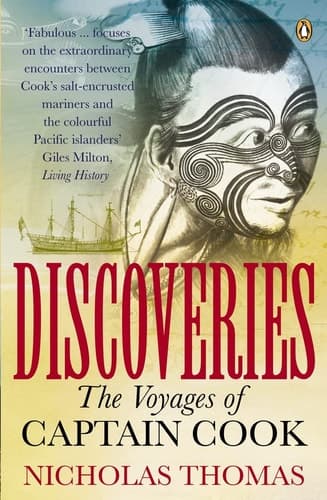
Discoveries The Voyages of Captain Cook
Nicholas ThomasPublished2004
Pages467
Formatpaperback
PublisherPenguin Books
Synopsis
Cook's great voyages marked the end of an era in world history. As he sailed into Hawaii in January 1778 he made contact with the last of the human civilizations to grow up independently of the rest of the world. But equally for the Polynesians and Melanesians of the Pacific, Cook's arrival in their midst merely marked a further (if disastrous) twist in diverse histories already many centuries old. In this immensely enjoyable and absorbing book Cook's journeys are reimagined, attempting toleave behind (or master) our later preoccupations to let us see what Cook and his associates experienced and what the societies he encountered experienced - from the Beothuks of Newfoundland to the Tongans of the Friendly Islands.
Recommendations
The Conquest of New Spain
by Bernal Diaz Del Castillo
Written by an actual conquistador who witnessed Cortés's expedition, this 16th-century account does what Thomas does with Cook—it captures the immediate, lived experience of cross-cultural encounter from the European perspective while inadvertently revealing the sophistication of the societies being 'discovered.' You'll find the same tension between what the writer thought was happening and what was actually at stake for the indigenous peoples.
View book
The Worst Journey in the World
by Apsley Cherry-Garrard
Cherry-Garrard was Scott's expedition member, and his memoir has that same quality of Thomas's work—meticulous attention to what exploration actually *felt* like, the mundane details alongside the monumental stakes. But where Cook's voyages were about mapping and contact, this is about the psychological and physical toll of polar exploration, giving you a different angle on how Europeans experienced the world's remaining unknowns.
View book
The Rime of the Ancient Mariner and Other Poems
by Samuel Taylor Coleridge
I know—it's a poem, not a history book. But hear me out: Coleridge was writing in 1798, right in the shadow of Cook's voyages, and this narrative poem captures something Thomas explores beautifully—the psychological weight of encountering the truly unknown, and how that encounter transforms you in ways you can't quite articulate. It's the emotional and spiritual counterpart to Cook's empirical documentation.
View book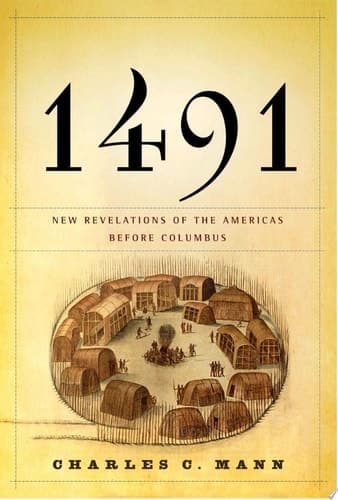
1491 New Revelations of the Americas Before Columbus
by Charles C. Mann
Mann does for pre-Columbian America what Thomas does for the Pacific—he reconstructs sophisticated, diverse civilizations on their own terms rather than as footnotes to European arrival. The methodological approach is similar too: using multiple sources (archaeological, linguistic, oral history) to challenge the 'discovery' narrative and show what was actually lost.
View book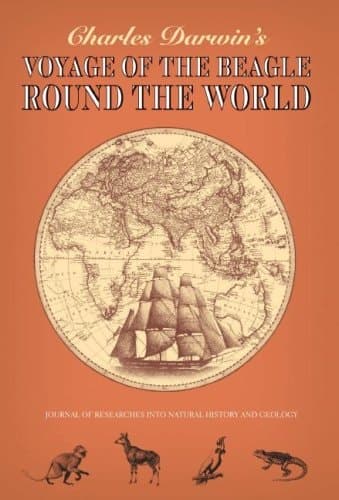
Charles Darwin's Voyage of the Beagle
by Charles Darwin
Darwin sailed on a ship following in Cook's wake, and his journal has that same observational intensity—but where Cook was mapping coastlines and making contact, Darwin was cataloging nature itself. What connects them is the sense of witnessing a world that would never be seen that way again, and the careful, almost overwhelming detail required to capture it before it changed forever.
View bookAbout Nicholas Thomas
Biography coming soon.
View author page