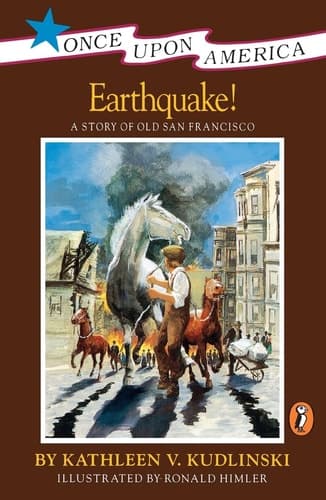
Earthquake! A Story of Old San Francisco
Kathleen V. KudlinskiPublished1995
Pages64
Formatpaperback
PublisherPenguin Young Readers Group
Synopsis
An hour before dawn on April 18, 1906, Phillip is awakened by the barking of dogs and the fearful whinnying of his father's horses. Moments later, San Francisco is struck by a tremendous earthquake. As walls buckle and bricks rain down on them Phillip's family struggles to escape from their own home. Then he remembers the horses. Can Phillip save them—and himself—in time?
Recommendations

A More Perfect Union How I Survived the Happiest Day of My Life
by Hana Schank
Tarshis writes with the same immediate, visceral tension that Kudlinski captures—you're dropped right into the moment of disaster with a young protagonist who has to think fast to survive. Where Kudlinski focuses on Phillip's connection to the horses, Tarshis gives you that same intimate human-and-animal bond but through a different lens, making each book feel like a fresh perspective on the same historical moment.
View book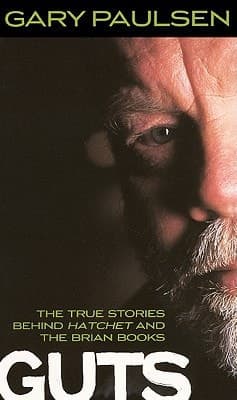
Guts The True Stories Behind Hatchet and the Brian Books
by Gary Paulsen
Like Kudlinski's Phillip, Paulsen's Brian faces a sudden, catastrophic moment that strips away everything familiar—but instead of an earthquake, it's a plane crash over the Canadian wilderness. Both books share that same lean, urgent prose style and focus on a young person's resourcefulness when nature becomes the antagonist. The pacing is relentless in both, with survival depending on quick thinking rather than luck.
View book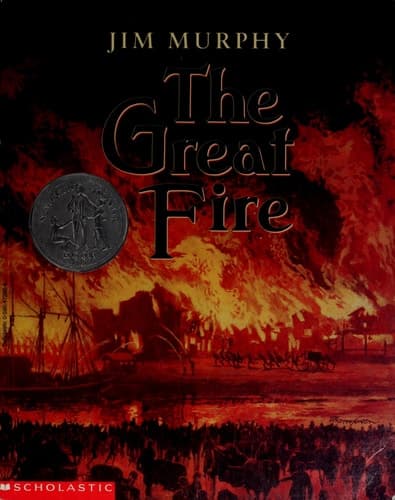
The Great Fire
by Jim Murphy
Here's where I'm suggesting something slightly different in form—Murphy writes narrative nonfiction rather than historical fiction, weaving together eyewitness accounts of the 1871 Chicago Fire. If you loved the authenticity of Kudlinski's earthquake details, you'll find Murphy's approach even more immersive; he lets real people tell you what it felt like to watch a city burn. It's got that same sense of urban disaster but told through actual voices from the time.
View book
Ash
by James Murphy
This is my curveball recommendation—it's a reimagined Cinderella set in a fantasy world, which sounds completely different from Kudlinski's grounded historical fiction. But Lo shares Kudlinski's gift for making you feel the physical reality of a world: the way ash settles on skin, how fire moves through a landscape, the sensory weight of disaster. The emotional stakes are just as high, even though one is magical and one is historical.
View book
Mary Wollstonecraft and the Feminist Imagination
by Barbara Taylor
Published in 2018, this one's from a different era entirely and takes a completely different approach—it's a mystery featuring young Ada Lovelace and Mary Shelley as amateur detectives in Victorian London. What connects it to your earthquake book is Stratford's skill at making historical details feel alive and urgent; he captures that same sense of young people navigating a world that's bigger and more dangerous than they expected, with the added pleasure of historical figures you can actually research afterward.
View bookAbout Kathleen V. Kudlinski
K
Kathleen V. Kudlinski
Born 1950
Kathleen Kudlinski was born in Pennsylvania. When she grew up, she studied art and biology at the University of Maine. She became a science teacher, but when she stopped teaching, she tried writing. She is the author of books about Rosa Parks, Franklin Delano Roosevelt, Dr. Seuss, and many more.
View author page