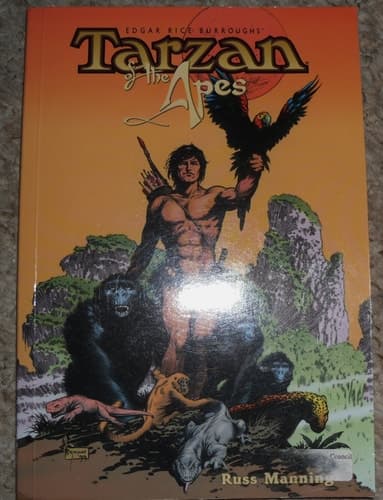
Edgar Rice Burroughs' Tarzan of the Apes
Russ ManningPublished1999
Pages103
Formatpaperback
PublisherDark Horse Comics
Synopsis
Tarzan of the Apes is a novel written by Edgar Rice Burroughs, the first in a series of books about the title character Tarzan. It was first published in the pulp magazine All-Story Magazine in October, 1912; the first book edition was published in 1914. The character was so popular that Burroughs continued the series into the 1940s with two dozen sequels. For the novel's centennial anniversary, Library of America published a hardcover edition based on the original book in April 2012 with an introduction by Thomas Mallon.
Recommendations
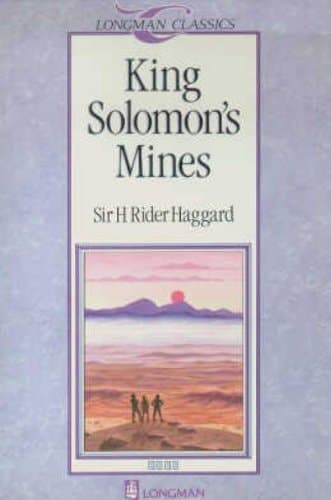
King Solomon's Mines
by Henry Rider Haggard
Haggard's 1885 adventure novel shares Burroughs' gift for making readers believe in impossible worlds hidden from civilization, but he achieves it through a more grounded, expedition-narrative style. Where Tarzan grows up isolated and discovers his humanity, Haggard's protagonists journey into the unknown and must navigate both physical dangers and moral ambiguities—the pacing has that same relentless forward momentum that keeps you reading past midnight.
View book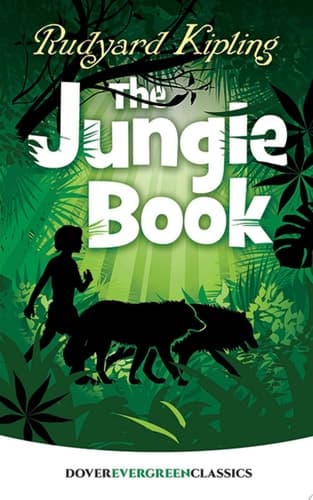
The Jungle Book
by Rudyard Kipling
You might expect this recommendation, but Kipling's original stories (not the Disney version) operate on a completely different wavelength than Burroughs—his jungle is governed by strict laws and social hierarchies that Mowgli must learn and navigate, whereas Tarzan instinctively becomes king of the apes. It's the inverse of the same premise, and Kipling's prose has a hypnotic quality that makes the animal world feel more real than the human one.
View book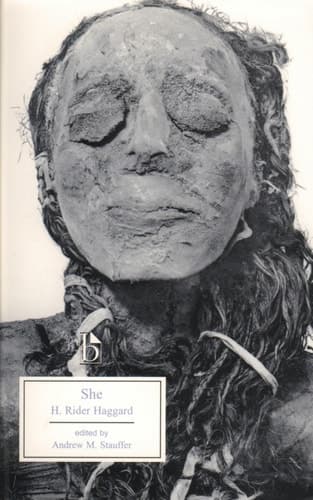
She A History of Adventure
by H. Rider Haggard
Another Haggard, yes, but this one pivots toward the mythic and philosophical in ways that elevate it beyond simple adventure—the discovery of an ancient, hidden civilization forces the protagonist to confront questions about immortality and power that Tarzan never really grapples with. If you loved the sense of discovering a world untouched by modern civilization, this takes that premise and makes it genuinely unsettling.
View book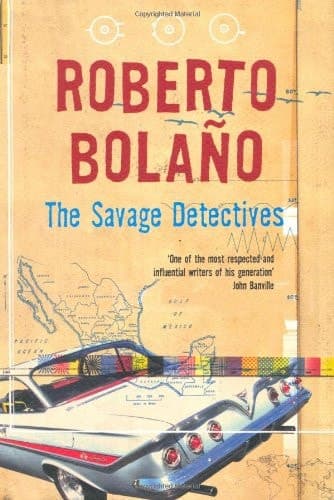
The Savage Detectives A Novel
by Roberto Bolaño
This is your surprise recommendation—a 1998 postmodern novel that seems nothing like Tarzan until you realize both are fundamentally about characters existing outside normal society and the obsessive documentation of their lives. Bolaño writes about poets and drifters the way Burroughs writes about apes and jungles: with complete seriousness and an almost anthropological attention to their social structures and hierarchies. It's challenging, but the narrative voice has that same adventurous spirit.
View book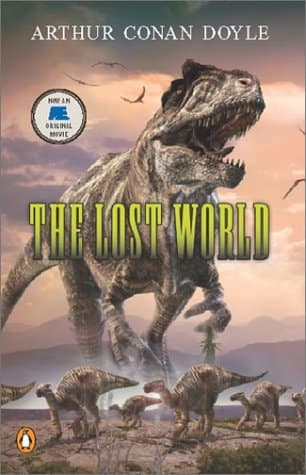
The Lost World
by Arthur Conan Doyle
Doyle's 1912 novel (published the same year as Tarzan's magazine debut) captures that same sense of wonder at discovering a pocket of prehistoric life, but through the eyes of journalists and scientists trying to prove what they've found to a skeptical world. The tension between the adventure itself and the need to document it for credibility gives the story a different kind of urgency than Burroughs' more straightforward narrative.
View bookAbout Russ Manning
R
Russ Manning
1929–1981
Biography coming soon.
View author page