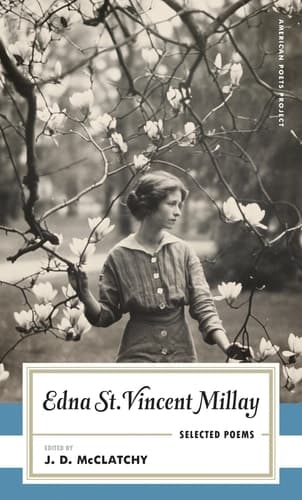
Edna St. Vincent Millay: Selected Poems (American Poets Project #1)
Edna St. Vincent MillayPublished2003
Pages231
Formathardcover
PublisherLibrary of America
Synopsis
Praised by poets and critics ranging from A. E. Housman and Thomas Hardy to Edmund Wilson, Edna St. Vincent Millay’s bold, exquisite poems take their place among the enduring verse of the twentieth century
Claiming a lyric tradition stretching back to Sappho and Catullus and making it very much her own, Millay won over her contemporaries—and readers ever since—with her passion, erotic candor, formal elegance, and often mischievous wit. J. D. McClatchy's introduction and selections offer new and surprising insights into Millay's achievement.
Included are her most beloved and justly admired poems, such as the wry bohemian anthem “Recuerdo” and the sonnet sequence “Fatal Interview”, the poetic record of a love affair that is presented in its entirety. McClatchy has also chosen works that extend our sense of Millay’s range: translations, her play Aria da Capo, and excerpts from her libretto The King’s Henchman.
“I have for the most part been guided by my taste for Millay at her tautest and truest," writes McClatchy. "There are precise and resonant images everywhere.”
About the American Poets Project
Elegantly designed in compact editions, printed on acid-free paper, and textually authoritative, the American Poets Project makes available the full range of the American poetic accomplishment, selected and introduced by today’s most discerning poets and critics.
Recommendations
The Complete Poems of Emily Dickinson
by Emily Dickinson
Like Millay, Dickinson commands formal precision while bending syntax to her emotional needs—but where Millay is openly sensual and bohemian, Dickinson's passion hides in dashes and slant rhymes. You'll find the same architectural intelligence in how both poets construct meaning, though Dickinson's compressed intensity feels almost like reading poetry in shorthand compared to Millay's more accessible lyricism.
View book
The Odes of Horace
by Horace
This is the classical ancestor Millay herself was reaching toward—those same Roman poets informing her sensibility about love, mortality, and how to live well. Reading Horace after Millay lets you see exactly what she inherited and transformed: the same carpe diem themes, but filtered through a twentieth-century woman's voice rather than an ancient man's.
View book
Gertrude Steins Autobiographien The autobiography of Alice B. Toklas und Everybody's autobiography
by Monika Hoffmann
Here's your surprise pick: Stein's prose has the same bohemian irreverence and erotic candor as Millay's poetry, but she's playing with language itself rather than traditional forms. Both women were living and writing in the same cultural moment, rejecting Victorian constraints, and Stein's account of Paris salon life captures the exact artistic ferment that shaped Millay's generation.
View book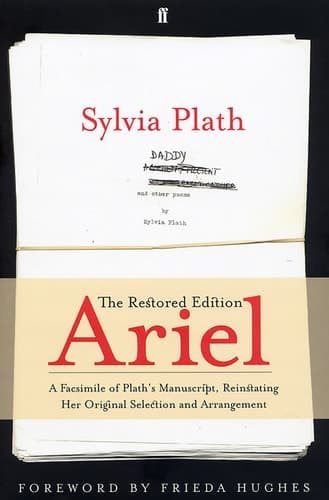
Ariel: The Restored Edition A Facsimile of Plath's Manuscript, Reinstating Her Original Selection and Arrangement
by Sylvia Plath
Plath inherits Millay's legacy of formal brilliance and emotional intensity, but pushes it into darker, more surreal territory—where Millay's wit keeps things buoyant, Plath's imagery becomes hallucinatory and dangerous. You'll recognize the same refusal to apologize for female rage and desire, but expressed through a completely different poetic vocabulary.
View book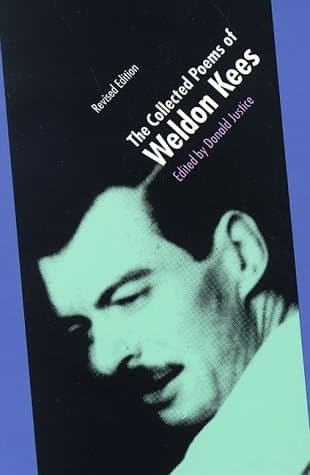
The Collected Poems
by W. Kees
Auden was writing in Millay's era and shared her gift for making formal verse feel conversational and alive—his poems have that same mischievous wit and accessibility without sacrificing intelligence. Where Millay mines lyric tradition for personal passion, Auden uses it for social observation, but both poets prove that sonnets and rhyme schemes don't have to feel dusty or academic.
View bookAbout Edna St. Vincent Millay
Biography coming soon.
View author page