
Synopsis
L'Etranger has the force and fascination of myth. The outwardly simple narrative of an office clerk who kills an Arab, 'a cause du soleil', and finds himself condemned to death for moral insensibility becomes, in Camus's hands, a powerful image of modern man's impatience before Christian philosophy and conventional social and sexual values. For this new edition Ray Davison makes use of recent critical analysis of L'Etranger to give a full and concise description of Camus's early philosophy of the Absurd and the ideas and preoccupations from which the novel emerges. Davison also discusses the developing pattern of Camus's notion of the art of the novel, his views on 'classicism', simplicity and ambiguity, his fondness for paradox, and his love of everyday situations which yield to mythical interpretation.
Recommendations
Generating recommendations…
Our AI is preparing recommendations for El extranjero. This usually takes under a minute.
About Albert Camus
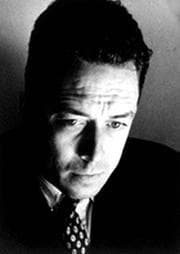
Albert Camus
1913–1960
Albert Camus was a French Algerian author, philosopher, and journalist who was awarded the Nobel Prize for Literature in 1957. He was a key philosopher of the 20th-century and his most famous work is the novel *L'Étranger* (*The Stranger*). In 1949, Camus founded the Group for International Liaisons within the Revolutionary Union Movement, which was a group opposed to some tendencies of the surrealistic movement of André Breton. Camus was the second-youngest recipient of the Nobel Prize for Literature - after Rudyard Kipling - when he became the first African-born writer to receive the award. He is the shortest-lived of any literature laureate to date, having died in an automobile accident just over two years after receiving the award. He is often cited as a proponent of existentialism, the philosophy that he was associated with during his own lifetime, but Camus himself rejected this particular label. In an interview in 1945, Camus rejected any ideological associations: "No, I am not an existentialist. Sartre and I are always surprised to see our names linked…"
View author page