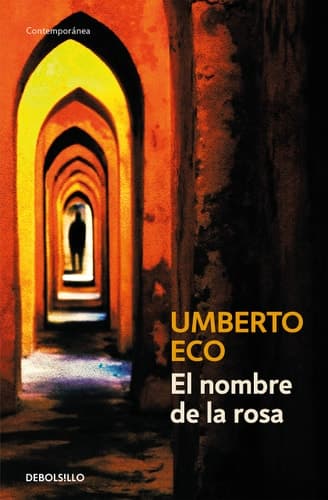
El nombre de la rosa / The Name of the Rose
Umberto EcoPublished2021
Pages784
Formatpaperback
PublisherNational Geographic Books
Synopsis
La novela emblemática de Umberto Eco. Una trama apasionante. Una admirable reconstrucción del conflictivo siglo XIV
«Umberto Eco cambió nuestra mirada sobre los libros: imprescindibles, pequeños, frágiles, a veces criminales, casi siempre salvadores. Un maestro que nos enseñó a entrelazar la sabiduría y el juego con su estilo sagaz y lúdico, con su asombrosa inventiva y certera lucidez.» Irene Vallejo
UNO DE LOS 100 TÍTULOS FUNDAMENTALES DEL SIGLO XX SEGÚN LE MONDE
Valiéndose de las características de la novela gótica, la crónica medieval y la novela policíaca, El nombre de la rosa narra las investigaciones detectivescas que realiza el fraile franciscano Guillermo de Baskerville para esclarecer los crímenes cometidos en una abadía benedictina en el año 1327. Le ayudará en su labor el novicio Adso, un joven que se enfrenta por primera vez a las realidades de la vida situadas más allá de las puertas del convento. En esta primera y brillante incursión de Umberto Eco en el mundo de la narrativa, que dio lugar a una manera de concebir la novela histórica, el lector disfrutará de una trama apasionante y una admirable reconstrucción de una época especialmente conflictiva de la historia de Occidente.
ENGLISH DESCRIPTION
Umberto Eco’s iconic novel. A gripping plot. An admirable reconstruction ofthe turbulent fourteen century.
“Umberto Eco changed the way we see books: crucial, small, fragile, sometimes criminal, almost always saviors. A master who taught us how to intertwine wisdom and games in his acute and playful way, with his astounding ingenuity and accurate insights.” —Irene Vallejo
ONE OF THE 100 ESSENTIAL BOKS OF THE TWENTIETH CENTURY, ACCORDING TO LE MONDE.
Drawing on the nature of gothic novels, medieval chronicles, and detective fiction, The Name of the Rose follows the inquiries and detective work of Franciscan Friar William of Baskerville to clarify a series of crimes perpetrated in a Benedictine abbey, in the year 1327.He is assisted by Adso, a novice who faces the realities of life outside the convent walls for the first time. In his first and brilliant incursion into the narrative world, in which Umberto Eco introduced a new way of conceiving historical fiction, the reader will enjoy a thrilling plot and a magnificent reconstruction of a particularly chaotic time in the history of the Western world.
Recommendations
Generating recommendations…
Our AI is preparing recommendations for El nombre de la rosa / The Name of the Rose. This usually takes under a minute.
About Umberto Eco
U
Umberto Eco
1932–2016
Umberto Eco (5 January 1932 – 19 February 2016) was an Italian novelist, literary critic, philosopher, semiotician, and university professor. He is widely known for his 1980 novel Il nome della rosa (The Name of the Rose), a historical mystery combining semiotics in fiction with biblical analysis, medieval studies, and literary theory. He later wrote other novels, including Il pendolo di Foucault (Foucault's Pendulum) and L'isola del giorno prima (The Island of the Day Before). His novel Il cimitero di Praga (The Prague Cemetery), released in 2010, topped the bestseller charts in Italy. Eco also wrote academic texts, children's books, and essays, and edited and translated into Italian books from French, such as Raymond Queneau’s “Exercises in Style” (1983). He was the founder of the Department of Media Studies at the University of the Republic of San Marino,[3] president of the Graduate School for the Study of the Humanities at the University of Bologna, member of the Accademia dei Lincei, and an honorary fellow of Kellogg College, Oxford.
View author page