Synopsis
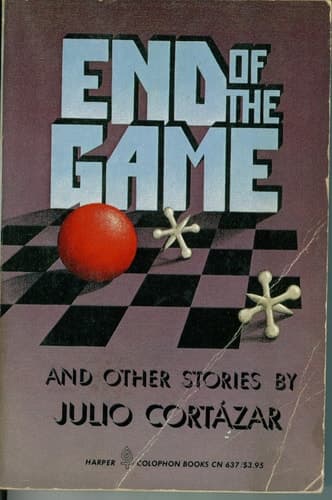
1978, First Harper Colophon Edition, Paperback, 277 pages
Recommendations
Hopscotch A Novel
by Julio Cortázar
Wait—I know you just finished Cortázar, but hear me out. If you haven't read *Hopscotch* yet, this is the natural next step. Where *End of the Game* gives you those crystalline short moments of disruption and philosophical vertigo, *Hopscotch* is Cortázar's full-length meditation on the same obsessions—reality fracturing, narrative as a game you can play in multiple orders, characters circling around meaning they can never quite grasp. It's like seeing the DNA of what made *End of the Game* work, but expanded into a labyrinth.
View book
The Apocalyptic Vision of Mikhail Bulgakov's the Master and Margarita (Studies in Slavic Language & Literature)
by Edward E. Ericson
Bulgakov does what Cortázar does—collapses multiple realities and time periods into one narrative space—but with a darker, more political edge. You get the same sense of reality as something unstable and negotiable, characters caught between worlds, and a narrative that refuses to behave itself. The Devil literally walks into Soviet Moscow, and the book treats this with the same matter-of-fact surrealism as Cortázar's children playing games that unravel the universe.
View book
Ficciones
by Jorge Luis Borges
If Cortázar is your entry point into Latin American experimental fiction, Borges is the other essential voice—and he works in the same compressed, idea-dense short story form. But where Cortázar finds strangeness in everyday moments, Borges builds entire philosophical universes in 3-4 pages. His stories about impossible libraries and forking paths will scratch the same itch for narrative games and reality-questioning, just with a more austere, almost mathematical precision.
View book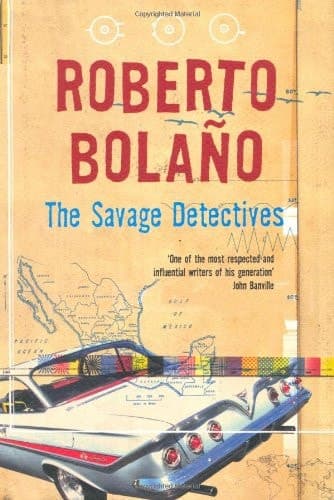
The Savage Detectives A Novel
by Roberto Bolaño
Here's where I'm taking a slight risk: Bolaño is denser and more demanding than Cortázar, but he's working in that same tradition of narrative instability and characters chasing meaning through fragmented realities. The book circles back on itself, jumps between voices and time periods, and has that same quality of intellectual playfulness mixed with genuine melancholy. It's what happens when someone takes Cortázar's techniques and applies them to a 600-page novel about poets and obsession.
View bookAbout Julio Cortázar
J
Julio Cortázar
1914–1984
Julio Florencio Cortázar (Ixelles, 26 de agosto de 1914-París, 12 de febrero de 1984) fue un escritor, poeta y profesor argentino. También trabajó como traductor, oficio que desempeñó para la Unesco y varias editoriales. En 1981, sin renunciar a su nacionalidad argentina, optó por la francesa en protesta contra la dictadura militar en su país, que prohibió sus libros y que él denunció a la prensa internacional desde su residencia en París. Se lo considera uno de los autores más innovadores y originales de su tiempo, maestro del relato corto, la prosa poética y la narración breve en general, y creador de importantes novelas, en la cual destaca *Rayuela,* que inauguraron una nueva forma de hacer literatura en el mundo hispano. Junto a Gabriel García Márquez, Mario Vargas Llosa y Carlos Fuentes, fue uno de los exponentes centrales del *boom* latinoamericano. Fuente: [Wikipedia](https://es.wikipedia.org/wiki/Julio_Cort%C3%A1zar) ---------- Julio Cortázar, born Jules Florencio Cortázar, was an Argentine author of novels and short stories. He influenced an entire generation of Latin American writers from Mexico to Argentina, and most of his best-known work was written in France, where he established himself in 1951. Source and more information: http://en.wikipedia.org/wiki/Julio_Cort%C3%A1zar
View author page