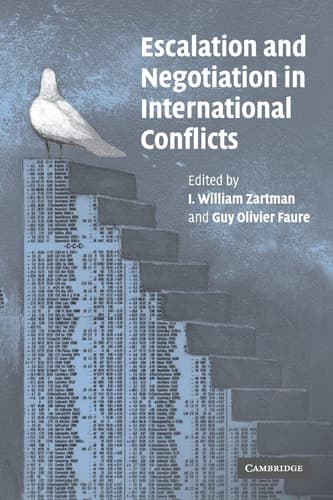
Escalation and Negotiation in International Conflicts
I. William ZartmanPublished2005
Pages350
Formatpaperback
PublisherCambridge University Press
Synopsis
How can an escalation of conflict lead to negotiation? In this systematic study, Zartman and Faure bring together European and American scholars to examine this important topic and to define the point where the concepts and practices of escalation and negotiation meet. Political scientists, sociologists, social psychologists, and war-making and peace-making strategists, among others, examine the various forms escalation can take and relate them to conceptual advances in the analysis of negotiation. They argue that structures, crises, turning points, demands, readiness and ripeness can often define the conditions where the two concepts can meet and the authors take this opportunity to offer lessons for theory and practice. By relating negotiation to conflict escalation, two processes that have traditionally been studied separately, this book fills a significant gap in the existing knowledge and is directly relevant to the many ongoing conflicts and conflict patterns in the world today.
Recommendations
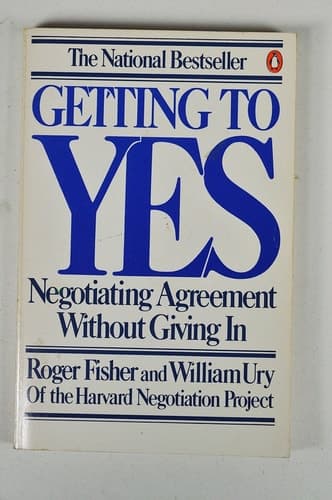
Getting to Yes Negotiating Agreement Without Giving in
by Roger Fisher
Fisher takes the negotiation half of Zartman's equation and gives it the practical toolkit treatment—you'll recognize the theoretical frameworks from your recent read, but here they're grounded in concrete strategies for identifying interests beneath positions. It's the natural next step for understanding how negotiators actually move from deadlock to agreement, with case studies that feel like real-world applications of the concepts Zartman explores.
View book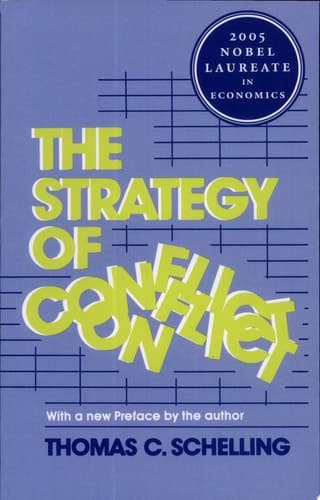
The Strategy of Conflict With a New Preface by the Author
by Thomas C. Schelling
Published in 1960, Schelling's work predates your book but provides the foundational game-theoretic thinking that underpins modern escalation analysis—reading it now will show you how scholars built on these ideas to reach Zartman's framework. His treatment of commitment, credibility, and the role of uncertainty in strategic interaction feels almost prescient when you apply it to contemporary conflicts.
View book
The Apocalyptic Vision of Mikhail Bulgakov's the Master and Margarita (Studies in Slavic Language & Literature)
by Edward E. Ericson
This is the curveball, but hear me out: Bulgakov's novel is fundamentally about power, negotiation, and the impossible position of trying to maintain principles within corrupt systems—themes that run through every conflict case study you've just read. The Devil's arrival in Stalin-era Moscow creates a series of escalations and attempted negotiations that play out with darkly comic inevitability, offering a literary perspective on how individuals navigate when the stakes are absolute.
View book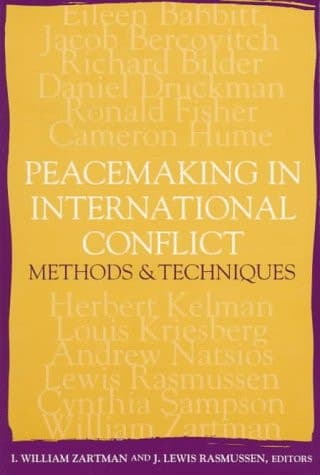
Peacemaking in International Conflict Methods & Techniques
by I. William Zartman
Bercovitch focuses on the mediation and third-party intervention side of conflict resolution that Zartman touches on but doesn't deeply explore—you'll see how external actors can either facilitate or complicate the escalation-to-negotiation transition. His typology of mediator roles and strategies fills a practical gap that will deepen your understanding of why some conflicts find their way to the table while others spiral.
View book
The Evolution of Cooperation Revised Edition
by Robert Axelrod
Axelrod approaches escalation and de-escalation through iterated game theory and the famous Prisoner's Dilemma—his findings about how cooperation emerges from repeated interaction offer a mathematical counterpoint to Zartman's more diplomatic framework. You'll see how seemingly rational actors can get trapped in escalatory cycles, and more importantly, what conditions allow them to break out, which connects directly to Zartman's concept of ripeness.
View bookAbout I. William Zartman
Biography coming soon.
View author page