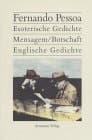
Synopsis
We don't have a synopsis for this title yet.
Recommendations
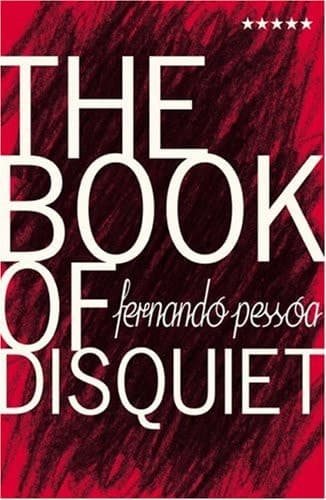
The Book of Disquiet
by Fernando Pessoa
Wait—I know what you're thinking. But hear me out: if you've only encountered Pessoa through Mensagem's structured mysticism, his fragmented prose-poem diary is like meeting him in a completely different room of the same house. Where Mensagem builds toward revelation, Disquiet spirals inward, using the same obsessive attention to language and identity but without the architectural certainty.
View book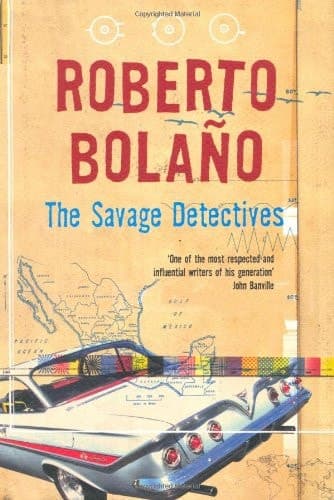
The Savage Detectives A Novel
by Roberto Bolaño
Bolaño shares Pessoa's conviction that poetry isn't decoration—it's a way of investigating reality itself. His novel chases literary movements and obscure poets across continents with the same intensity Pessoa brought to occult symbolism, but filtered through a noir sensibility that makes the search feel urgent and slightly dangerous rather than transcendent.
View book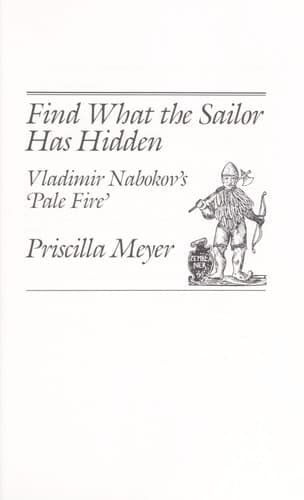
Find what the Sailor Has Hidden Vladimir Nabokov's Pale Fire
by Priscilla Meyer
Here's your surprise pick: a novel that's technically a poem with footnotes, which sounds like it should be unreadable but becomes absolutely hypnotic. Nabokov does what Pessoa attempted—using layers of meaning and unreliable narration to question whether we're reading truth or beautiful delusion—but he weaponizes it as dark comedy, making you complicit in the narrator's obsessions.
View book
The Rings of Saturn
by Winfried Georg Sebald
Sebald writes like someone who's read everything and forgotten nothing, assembling history, literature, and personal observation into meditative sequences that feel almost mystical—similar to how Mensagem weaves Portuguese history with esoteric symbolism. But where Pessoa reaches toward transcendence, Sebald finds melancholy and entropy in the same materials, creating something haunting rather than exalted.
View book
If on a Winter's Night a Traveler Introduction by Peter Washington
by Italo Calvino
Calvino takes Pessoa's interest in multiple selves and literary identity and turns it into a playful, metafictional game where you're constantly aware of reading as an act. Like Mensagem, it's densely symbolic and rewards rereading, but it approaches meaning through pleasure and invention rather than mystical revelation—think of it as the optimistic cousin to Pessoa's darker questioning.
View bookAbout Fernando Pessoa
F
Fernando Pessoa
1888–1935
Fernando António Nogueira Pessoa (Lisboa, 13 de junho de 1888 – Lisboa, 30 de novembro de 1935) foi um poeta português identificado com o modernismo, amplamente reconhecido como um dos principais expoentes da língua portuguesa e o maior poeta lusófono do século XX. Atuou também como dramaturgo, ensaísta, tradutor, publicitário, astrólogo, inventor, empresário, correspondente comercial, crítico literário e comentador político. ---------- Fernando Pessoa was a Portuguese poet, writer, literary critic, translator, publisher, and philosopher, described as one of the most significant literary figures of the 20th century and one of the greatest poets in the Portuguese language.
View author page