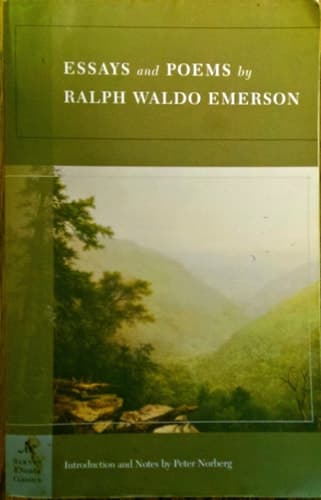
Essays and Poems
Ralph Waldo EmersonPublished2004
Pages521
Formatpaperback
PublisherBarnes & Noble Classics
Synopsis
Essays and Poems, by Ralph Waldo Emerson, is part of the Barnes & Noble Classics series, which offers quality editions at affordable prices to the student and the general reader, including new scholarship, thoughtful design, and pages of carefully crafted extras. Here are some of the remarkable features of Barnes & Noble Classics: • New introductions commissioned from todays top writers and scholars • Biographies of the authors • Chronologies of contemporary historical, biographical, and cultural events • Footnotes and endnotes • Selective discussions of imitations, parodies, poems, books, plays, paintings, operas, statuary, and films inspired by the work • Comments by other famous authors • Study questions to challenge the readers viewpoints and expectations • Bibliographies for further reading • Indices & Glossaries, when appropriate
All editions are beautifully designed and are printed to superior specifications; some include illustrations of historical interest. Barnes & Noble Classics pulls together a constellation of influences--biographical, historical, and literary--to enrich each readers understanding of these enduring works.
As an adolescent America searched for its unique identity among the nations of the world, a number of thinkers and writers emerged eager to share their vision of what the American character could be. Among their leaders was Ralph Waldo Emerson, whose essays, lectures, and poems defined the American transcendentalist movement, though he himself disliked the term.
Emerson advocates a rejection of fear-driven conformity, a total independence of thought and spirit, and a life lived in harmony with nature. He believes that Truth lies within each individual, for each is part of a greater whole, a universal "over-soul" through which we transcend the merely mortal.
Emerson was extremely prolific throughout his life; his collected writings fill forty volumes. This edition contains his major works, including Nature, the essays "Self-Reliance," "The American Scholar," "The Over-Soul," "Circles," "The Poet," and "Experience,", and such important poems as "The Rhodora," "Uriel," "The Humble-Bee," "Earth-Song," "Give All to Love," and the well-loved "Concord Hymn."
Includes a comprehensive glossary of names. Peter Norberg has been Assistant Professor of English at Saint Joseph's University in Philadelphia since 1997. A specialist in New England transcendentalism and the history of the antebellum period, he also has published on Herman Melville's poetry. He currently is writing a history of Emerson's career as a public lecturer.
Recommendations
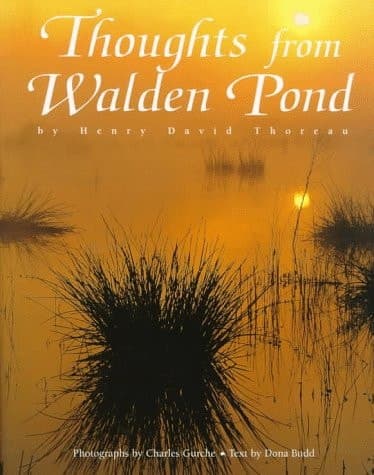
Thoughts from Walden Pond by Henry David Thoreau
by Henry David Thoreau
Thoreau takes Emerson's philosophy of nature and self-reliance and tests it through lived experience—two years in a cabin by Walden Pond. Where Emerson theorizes about harmony with nature and independence from society, Thoreau shows you what that actually looks like in practice, with the same lyrical prose but grounded in concrete details about beans, weather, and solitude.
View book
The Struggle for Life A Companion to William James's The Varieties of Religious Experience
by Donald Capps
James was deeply influenced by Emerson's ideas about the over-soul and individual spiritual truth, but he approaches these concepts as a psychologist examining actual human experience rather than as a philosopher. His case studies of mystical experiences and personal transformation feel like Emerson's essays brought into conversation with real people's lives—you get the same intellectual rigor but with the messiness of actual human consciousness.
View book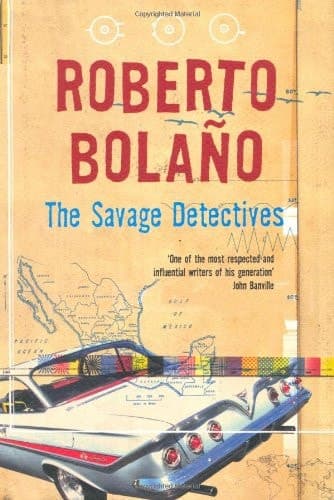
The Savage Detectives A Novel
by Roberto Bolaño
This is the surprise pick—a sprawling, postmodern novel that shares Emerson's obsession with individual vision and the search for truth outside conventional systems, but filtered through late 20th-century Latin American literature. Like Emerson's essays, it's fundamentally about characters trying to live according to their own principles despite social pressure, though Bolaño is far more skeptical about whether that's actually possible. The form itself—fragmented, digressive, resistant to easy interpretation—mirrors Emerson's belief that truth can't be neatly packaged.
View book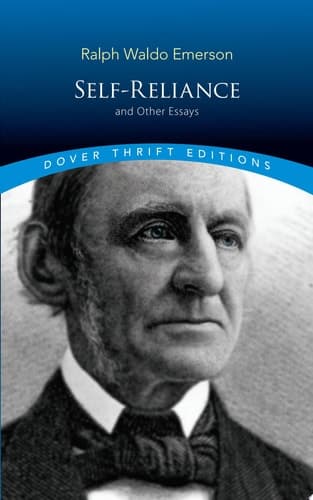
Self-reliance, and Other Essays
by Ralph Waldo Emerson
Wilde was a devoted reader of Emerson and wrote his own provocative essays on similar themes—the importance of being true to oneself, the dangers of conformity, the role of the artist in society. But where Emerson is earnest and spiritual, Wilde is witty and paradoxical, turning Emerson's transcendentalism into something more theatrical and ironic. It's like watching someone take your favorite philosopher's ideas and refract them through a prism of paradox and style.
View book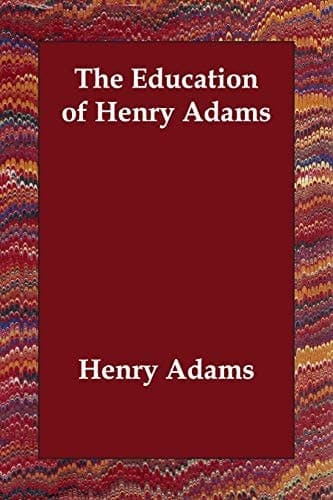
The Education of Henry Adams
by Henry Adams
Written in 1907, this is Adams wrestling with Emerson's optimistic vision of American progress and individual potential—and finding it increasingly inadequate for the modern world. It's a philosophical autobiography that echoes Emerson's introspective essays but with a darker, more skeptical tone, as Adams watches the 19th-century transcendentalist faith collide with 20th-century complexity. You'll recognize the DNA of Emerson's self-examination, but transformed by historical disillusionment.
View bookAbout Ralph Waldo Emerson
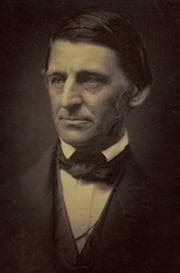
Ralph Waldo Emerson
1803–1882
Ralph Waldo Emerson was an American philosopher, essayist, and poet, best remembered for leading the Transcendentalist movement of the mid-19th century. His teachings directly influenced the growing New Thought movement of the mid-1800s. He was seen as a champion of individualism and a prescient critic of the countervailing pressures of society. Emerson gradually moved away from the religious and social beliefs of his contemporaries, formulating and expressing the philosophy of Transcendentalism in his 1836 essay, Nature. As a result of this ground-breaking work he gave a speech entitled The American Scholar in 1837, which Oliver Wendell Holmes, Sr. considered to be America's "Intellectual Declaration of Independence". Considered one of the great orators of the time, Emerson's enthusiasm and respect for his audience enraptured crowds. His support for abolitionism late in life created controversy, and at times he was subject to abuse from crowds while speaking on the topic. When asked to sum up his work, he said his central doctrine was "the infinitude of the private man." ([Source][1]) [1]: http://en.wikipedia.org/wiki/Ralph_Waldo_Emerson
View author page