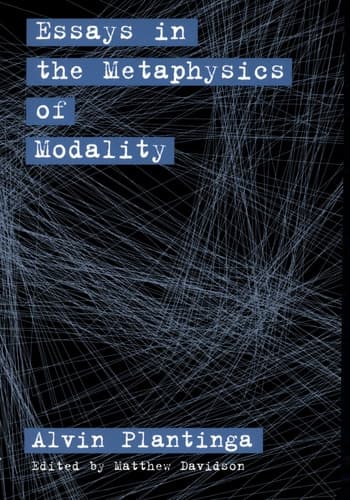
Essays in the Metaphysics of Modality
Alvin PlantingaPublished2003
Pages239
Formatpaperback
PublisherOxford University Press
Synopsis
This book is a collection of my essays, dating from 1969, concerning the metaphysics of modality. The first two chapters are a defense of the idea of modality de re against criticisms from William Kneale and W.V. Quine, and an elaboration on the notions of possible worlds and essences. In the third chapter, I conclude that the Theory of Worldbound Individuals is false, even when fortified with Counterpart Theory. Chapter 4 contains an argument for the conclusion that there neither are, nor could have been, possible but nonexistent objects. In the next chapter, I develop this theme in greater detail and argue for the compatibility of actualism -- i.e., the view that there neither are, nor could have been, any nonexistent objects --and possible worlds. Both Chs. 6 and 7 contain an account of the relationship between proper names and essences, my view being that proper names express essences and that sometimes different proper names for the same object express different essences of that object. The end of Ch. 7 and all of Ch. 8 are an examination of existentialism (the theory that propositions and states of affairs ontologically depend on their subjects) and arguments against it. In Ch. 9, I defend my theory of modality against objections raised by John Pollock. In Ch. 10, I sketch out what the commitments of modal realism are, and argue that David Lewis's modal theory is not a modal realist theory. Finally, in the concluding chapter I argue that propositions cannot be concrete objects.
Recommendations
History of the Concept of Mind: Volume 1: Speculations About Soul, Mind and Spirit from Homer to Hume
by Paul S. Macdonald
Ryle dismantles Cartesian dualism with the same surgical precision Plantinga applies to modal metaphysics—both philosophers are essentially performing conceptual archaeology, showing how our language about minds (or modality) has led us astray. Where Plantinga defends de re modality against Quine, Ryle defends ordinary language philosophy against the ghost-in-the-machine picture, making this a natural companion for someone who appreciates rigorous metaphysical argumentation.
View book
Naming and Necessity
by Saul A. Kripke
Kripke's lectures directly engage with the relationship between proper names, rigid designation, and essential properties—the very terrain Plantinga explores in chapters 6 and 7. But where Plantinga develops his theory systematically, Kripke argues against the descriptivist tradition through vivid thought experiments that feel almost conversational, giving you a different rhetorical approach to closely related metaphysical puzzles.
View book
The Nature of Necessity
by Alvin Plantinga
Lowe constructs a comprehensive metaphysical system around necessity and essence that both builds on and challenges Plantinga's framework—particularly his actualism and possible worlds semantics. This is the kind of book where you'll find yourself constantly flipping back to Plantinga's arguments to see where Lowe agrees, diverges, or sharpens the position, making it feel like a genuine philosophical conversation across pages.
View book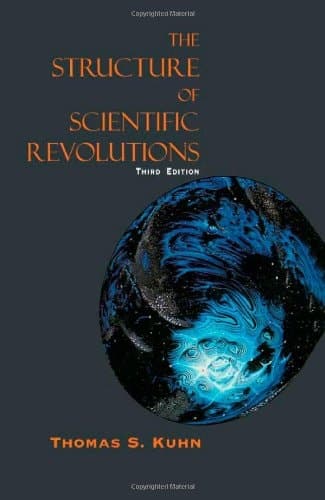
The Structure of Scientific Revolutions
by Thomas S. Kuhn
Here's your surprise pick: Kuhn's 1962 classic might seem far from modal metaphysics, but both Plantinga and Kuhn are fundamentally concerned with how we carve up conceptual space and whether our frameworks map onto reality or merely organize our thinking. Reading Kuhn after Plantinga gives you a different angle on essentialism—not as abstract metaphysics but as a question about how scientific communities actually use concepts like 'possible' and 'necessary.'
View book
Counterfactuals
by David Lewis
Lewis's treatment of counterfactuals and possible worlds semantics is precisely what Plantinga engages with (and critiques) in chapter 10—Lewis's modal realism versus Plantinga's actualism. Rather than just reading about their disagreement in Plantinga's summary, you'll see Lewis develop his full theory, which makes the philosophical stakes much clearer and lets you evaluate both positions with the full force of each argument.
View bookAbout Alvin Plantinga
Biography coming soon.
View author page