Essays on Karolina Pavlova
Susanne FussoPublished2001
Pages268
Formathardcover
PublisherNorthwestern University Press
Synopsis
xiv, 268 p. ; 25 cm
Recommendations
The Governor's Palace in Williamsburg: A Cultural Study (Williamsburg Decorative Arts Series)
by Graham Hood
Like Fusso's scholarly excavation of Pavlova's life and work, Brackenbury reconstructs a 19th-century woman's interior world through letters and fragments—but here you're reading the fictional governess's own voice rather than critical analysis. It shares that same careful attention to how women's intellectual and emotional lives were constrained by their era, but lets you inhabit the constraint rather than study it from outside.
View book
The Apocalyptic Vision of Mikhail Bulgakov's the Master and Margarita (Studies in Slavic Language & Literature)
by Edward E. Ericson
This is your bridge back into Russian literary culture, but through a wildly different lens—Bulgakov writes with satirical energy about art, censorship, and creative ambition in Soviet Moscow. Where Fusso's essays are measured and scholarly, Bulgakov's narrative spirals and digresses, yet both are fundamentally concerned with how Russian writers navigate impossible political and social circumstances.
View book
A.S. Byatt's Possession A Reader's Guide
by Catherine Burgass
Here's your surprise: a contemporary literary mystery that's essentially a love letter to literary scholarship itself. Two modern scholars chase the secrets of two Victorian poets, and Byatt structures the novel so you're reading critical essays, letters, and poems alongside the detective work. It captures that same intellectual pleasure you found in Fusso's close readings, but wraps it in genuine narrative suspense and romantic tension.
View book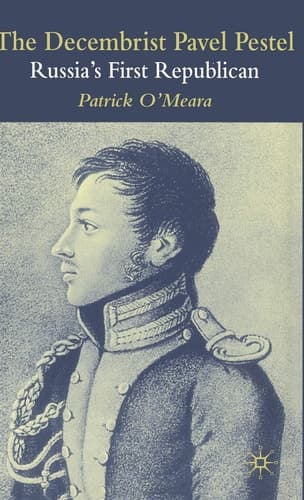
The Decembrist Pavel Pestel Russia's First Republican
by P. O'Meara
Published in 1975 but set in the 1820s, this novella sits at the intersection of Russian history and intimate portraiture—Tsypkin captures the idealism and doomed romanticism of the Decembrist movement through the eyes of someone living through it. It's a smaller, more lyrical work than Fusso's critical apparatus, but shares her interest in how individual lives intersect with historical currents.
View book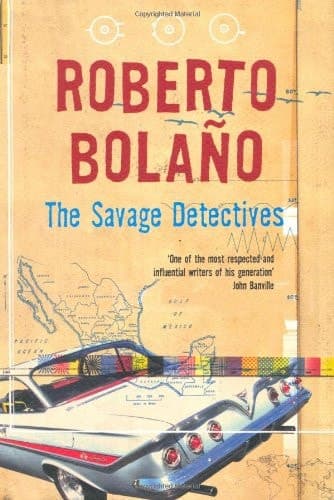
The Savage Detectives A Novel
by Roberto Bolaño
A wild departure, but stay with me: this sprawling novel follows a group of young poets in 1970s Mexico City, and it's structured like a series of overlapping testimonies and fragments—much like how Fusso assembles Pavlova from letters, essays, and critical commentary. Bolaño shares Fusso's conviction that literary history is made by obsessive, often marginal figures whose lives matter precisely because their work does.
View bookAbout Susanne Fusso
Biography coming soon.
View author page