Exploring the Invisible Art, Science, and the Spiritual - Second Edition
Lynn GamwellPublished2002
Pages344
Formatpaperback
PublisherPrinceton University Press
Synopsis
This sumptuous and stunningly illustrated book shows through words and images how directly, profoundly, and indisputably modern science has transformed modern art.
Beginning in the mid-nineteenth century, a strange and exciting new world came into focus--a world of microorganisms in myriad shapes and colors, prehistoric fossils, bizarre undersea creatures, spectrums of light and sound, molecules of water, and atomic particles. Exploring the Invisible reveals that the world beyond the naked eye--made visible by advances in science--has been a major inspiration for artists ever since, influencing the subjects they choose as well as their techniques and modes of representation.
Lynn Gamwell traces the evolution of abstract art through several waves, beginning with Romanticism. She shows how new windows into telescopic and microscopic realms--combined with the growing explanatory importance of mathematics and new definitions of beauty derived from science--broadly and profoundly influenced Western art. Art increasingly reflected our more complex understanding of reality through increasing abstraction. For example, a German physiologist's famous demonstration that color is not in the world but in the mind influenced Monet's revolutionary painting with light. As the first wave of enthusiasm for science crested, abstract art emerged in Brussels and Munich. By 1914, it could be found from Moscow to Paris.
Throughout the book are beautiful images from both science and art--some well known, others rare--that reveal the scientific sources mined by Impressionist and Symbolist painters, Art Nouveau sculptors and architects, Cubists, and other nineteenth- and twentieth-century artists.
With a foreword by astronomer Neil deGrasse Tyson, Exploring the Invisible appears in an age when both artists and scientists are exploring the deepest meanings of life, consciousness, and the universe.
Recommendations
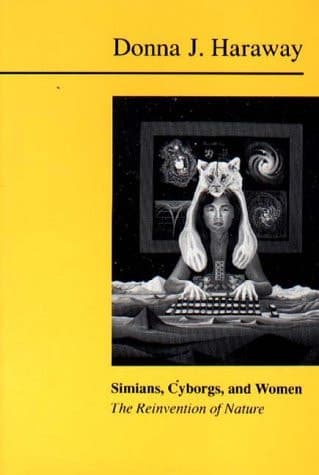
Simians, Cyborgs, and Women The Reinvention of Nature
by Donna Jeanne Haraway
Wulf traces how one naturalist's obsessive observations of the invisible connections between climate, geology, and life fundamentally changed how we see the world—and consequently, how artists began depicting it. Like Gamwell, she shows science and creativity as inseparable forces, but through the biography of a single visionary whose sketches and writings influenced everyone from Darwin to the Romantic painters you encountered in Exploring the Invisible.
View book
The Ten Thousand Doors of January
by Alix E. Harrow
This is your surprise pick—a literary fantasy that operates like a love letter to the exact moment Gamwell describes: when artists and scientists were drunk on discovering hidden worlds. Harrow weaves actual art history and scientific wonder into a narrative about a woman discovering impossible doorways, and the prose itself mirrors the abstract aesthetic you've just been studying, layering meaning and perception in ways that feel genuinely experimental.
View book
The Cosmic Connection An Extraterrestrial Perspective
by Carl Sagan
Published in 1973, this gives you that different-decade perspective while staying in Sagan's wheelhouse of making the invisible visible through language and imagination. Where Gamwell shows how artists responded to scientific revelation, Sagan asks what art and mythology reveal about humanity's deep need to connect with the cosmos—he's essentially reading culture the way Gamwell reads visual abstraction.
View book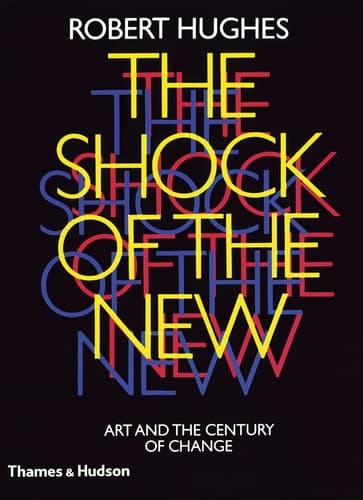
The Shock of the New Art and the Century of Change
by Robert Hughes
Hughes writes about modern art's revolution with the urgency of someone who lived through its aftermath, and he's obsessed with the same question Gamwell explores: how did artists suddenly start seeing differently? His chapters on Cubism and abstraction read like detective work, tracing the exact moment when scientific thinking rewired artistic vision, but with Hughes's combative, opinionated voice that makes art history feel like urgent cultural criticism.
View book
The Elegant Universe: Superstrings, Hidden Dimensions, and the Quest for the Ultimate Theory
by Brian Greene
Greene does what Gamwell's artists were attempting—he makes the genuinely invisible (dimensions beyond our perception, quantum strangeness) comprehensible through metaphor and visualization. Reading this after Exploring the Invisible completes a circle: you'll see how contemporary physicists are now the ones creating new languages and images to represent realities we can't see, continuing the tradition those early modernists started.
View bookAbout Lynn Gamwell
L
Lynn Gamwell
Born 1943
Biography coming soon.
View author page