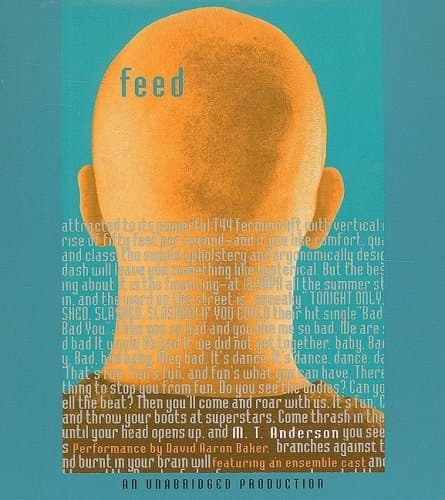
Synopsis
“We went to the moon to have fun, but the moon turned out to completely suck.”
So says Titus, whose ability to read, write, and even think for himself has been almost completely obliterated by his “feed,” a transmitter implanted directly into his brain. Feeds are a crucial part of life for Titus and his friends. After all, how else would they know where to party on the moon, how to get bargains at Weatherbee & Crotch, or how to accessorize the mysterious lesions everyone’s been getting? But then Titus meets Violet, a girl who cares about what’s happening to the world and challenges everything Titus and his friends hold dear. A girl who decides to fight the feed.
Following in the footsteps of Aldous Huxley, George Orwell, and Kurt Vonnegut, M. T. Anderson has created a not-so-brave new world–and a smart, savage satire about the nature of consumerism and what it means to be a teenager in America.
Recommendations
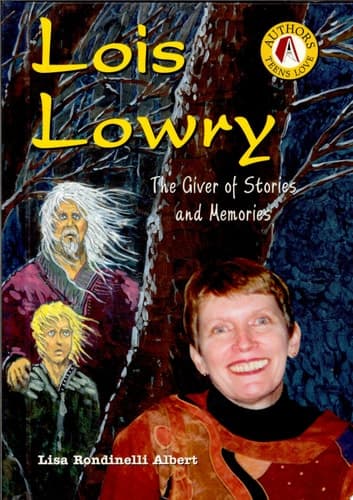
Lois Lowry The Giver of Stories and Memories
by Lisa Rondinelli Albert
Like Titus, Jonas lives in a society where individual choice has been systematized away—but Lowry reveals this horror through the protagonist's gradual awakening rather than Anderson's sardonic narration. Both books use a young person's discovery of what's been hidden from them as a lens to critique how societies control their citizens, though Lowry's approach is quieter and more haunting where Anderson is caustic.
View book
Neuromancer
by William Gibson
Gibson's 1984 cyberpunk classic shares Feed's obsession with how technology colonizes human consciousness, but he approaches it through noir-inflected prose and a protagonist navigating corporate-controlled systems rather than critiquing them from within. Where Anderson shows you the feed's seduction, Gibson shows you its infrastructure—both are deeply skeptical about technology's promises, just from different angles.
View book
The Vegetarian A Novel
by Kang Han
This is the curveball, but hear me out: Han Kang writes about a woman whose small act of resistance (refusing to eat meat) ripples through her family and society in ways that feel both absurd and devastating. Like Anderson, she's interested in how individuals are pressured to conform, but she explores it through fragmented perspectives and bodily autonomy rather than technology—it's Feed's themes of control and rebellion translated into an entirely different register.
View book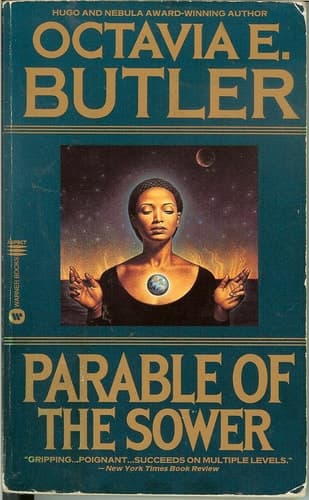
Parable of the Sower
by Octavia E. Butler
Butler's 1993 novel shares Anderson's near-future setting and his interest in how systems fail young people, but where Feed is about passive consumption, Parable is about active survival and community-building. Both feature protagonists trying to think clearly in corrupted systems, but Butler's vision is grittier and more focused on what people actually do when institutions collapse rather than how they're manipulated.
View book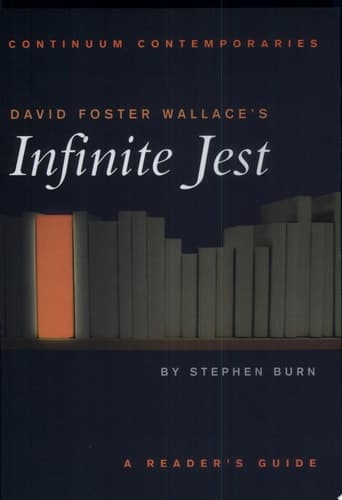
David Foster Wallace's Infinite Jest
by Stephen Burn
Wallace's mammoth novel is obsessed with the same question as Feed: how do entertainment and technology hollow out human connection and agency? His approach is maximalist where Anderson is minimalist, but both writers use dark comedy and fragmented communication styles (Anderson's feed-speak, Wallace's footnotes) to show how language itself gets corrupted by commercial forces. Fair warning: it's a commitment, but if you loved Feed's satirical bite, Wallace's scope might astonish you.
View bookAbout M.T. Anderson
Biography coming soon.
View author page