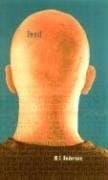
Synopsis
A brilliant new satire from the author of BURGER WUSS
For Titus and his friends, it started out like any ordinary trip to the moon - a chance to party during spring break and play around with some stupid low-grav at the Ricochet Lounge. But that was before the crazy hacker caused all their feeds to malfunction, sending them to the hospital to lie around with nothing inside their heads for days. And it was before Titus met Violet, a beautiful, brainy teenage girl who knows something about what it’s like to live without the feed-and about resisting its omnipresent ability to categorize human thoughts and desires.
Following in the footsteps of George Orwell, Anthony Burgess, and Kurt Vonnegut, Jr., M. T. Anderson has created a brave new world - and a hilarious new lingo - sure to appeal to anyone who appreciates smart satire, futuristic fiction laced with humor, or any story featuring skin lesions as a fashion statement.
Identity crises, consumerism, and star-crossed teenage love in a futuristic society where people connect to the Internet via feeds implanted in their brains.
Recommendations
The Peripheral Nerve in Leprosy and Other Neuropathies
by Noshir H. Antia (editor)
Gibson shares Anderson's gift for making near-future tech feel simultaneously mundane and deeply unsettling—his characters navigate a world where technology has reshaped human connection in ways they barely question until the story forces them to. Like Feed, it uses unfamiliar slang and casual references to world-building details to make you feel like an outsider gradually learning the rules, and both authors are fascinated by how corporations and systems colonize the spaces inside our heads.
View book
Brave New World by Aldous Huxley and Blade Runner: the Director's Cut Directed by Ridley Scott
by Megan De Kantzow
Since Anderson explicitly follows in Orwell and Huxley's footsteps, you should experience the original—but here's why it still hits: Huxley's vision of a society pacified by pleasure and consumption rather than oppression feels eerily prescient now, and his exploration of what happens when one character begins to question the system mirrors Titus and Violet's awakening. Published in 1932, it'll show you how Anderson updated these anxieties for the digital age.
View book
Making Paths & Walkways: Creative Ideas and Simple Techniques
by Paige Gilchrist Blomgren
Doctorow writes with the same sharp satirical edge as Anderson, but he's genuinely interested in what comes *after* rejecting the system—his characters don't just critique consumer culture, they build alternatives. The novel shares Feed's dark humor about how technology mediates identity, but adds a strand of cautious optimism about human ingenuity that gives it a different emotional texture while maintaining the same intellectual bite.
View book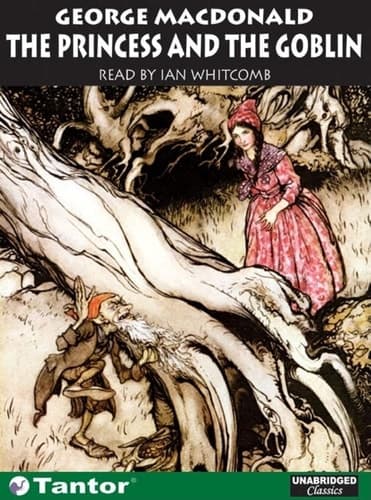
The Princess and the Goblin
by George MacDonald
This is your surprise pick—it's fantasy, not sci-fi, but it shares Feed's core obsession: what happens when a person suddenly finds themselves navigating a system designed to exclude them, forced to learn its unspoken rules while everyone watches to see if they'll fail? Addison writes with the same attention to how language and social codes function as invisible architecture, and her protagonist's gradual understanding of court politics has the same satisfying intellectual texture as Violet's media literacy.
View bookAbout M.T. Anderson
Biography coming soon.
View author page