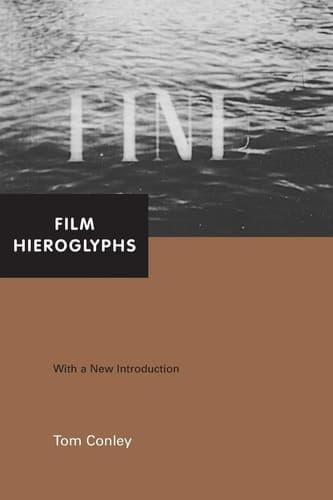
Film Hieroglyphs Ruptures in Classical Cinema
Tom ConleyPublished2006
Pages252
Formatpaperback
PublisherUniversity of Minnesota Press
Synopsis
At a time when traditional film theory privileged the purely visual, Film Hieroglyphs introduced a new way of watching film—examining the ways in which writing bears on cinema. Author Tom Conley gives special consideration to the points (ruptures) at which story, image, and writing appear to be at odds with one another.Conley hypothesizes that major directors—Renoir, Lang, Walsh, Rossellini—tend unconsciously to meld history and ideology. Graphic elements are seen as simultaneously foreign and integral to the field of the image. From these contradictions hieroglyphs emerge that mark a design attesting to a hidden rhetoric and to configurations of meaning that cinema cannot always control.Tom Conley is Lowell Professor of romance languages and visual and environmental studies at Harvard University. Among his books is The Self-Made Map (1996), as well as translations of The Fold (1992) by Gilles Deleuze and In the Metro (2002) by Marc Augé, all available from the University of Minnesota Press.
Recommendations
The Visible Word Experimental Typography and Modern Art, 1909-1923
by Johanna Drucker
Since Conley fascinates you with how text disrupts the visual field in cinema, Willan's exploration of typography as a visual language across modernist design and literature takes that same rupture into print culture. You'll recognize the same theoretical DNA—the idea that letters aren't transparent vessels but active graphic presences that reshape meaning.
View book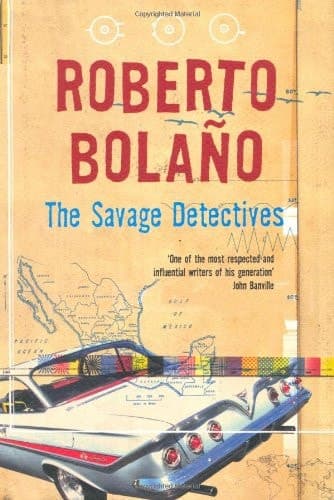
The Savage Detectives A Novel
by Roberto Bolaño
This is the surprise pick, but hear me out: Bolaño's novel operates exactly like Conley's film hieroglyphs—it's structured around ruptures where narrative breaks down, where different writing systems (diary entries, interviews, fragmented accounts) collide and create meaning through their contradictions rather than despite them. The 'hidden rhetoric' Conley finds in Renoir emerges here through the gaps between voices.
View book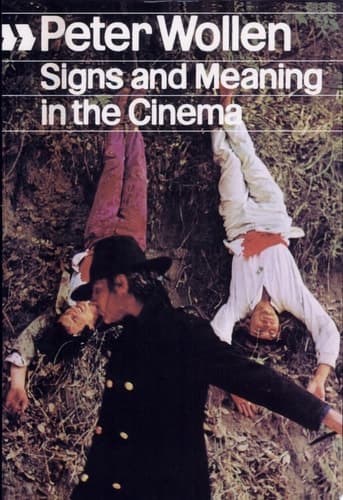
Signs and Meaning in the Cinema
by Peter Wollen
Wollen was working in the same theoretical moment as Conley but approaches semiotics from a different angle—he's more interested in how cinema functions as a sign system itself. Reading this alongside Film Hieroglyphs will deepen your understanding of how directors unconsciously encode meaning, and Wollen's analysis of Eisenstein's montage directly complements Conley's work on visual-textual collision.
View book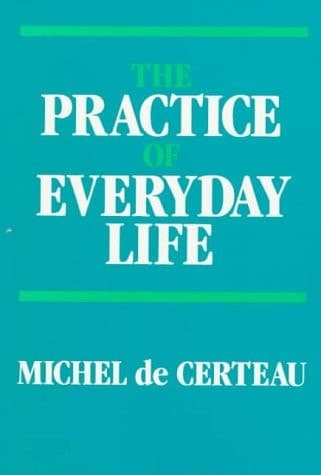
The Practice of Everyday Life
by Michel de Certeau
De Certeau (whom Conley actually translated through Augé's work) examines how ordinary people navigate systems of representation and control through tactics and subversions. It's the perfect complement to Conley's interest in how ideology gets embedded in visual fields—here you'll see how those 'hidden rhetorics' function in everyday life, not just on screen.
View book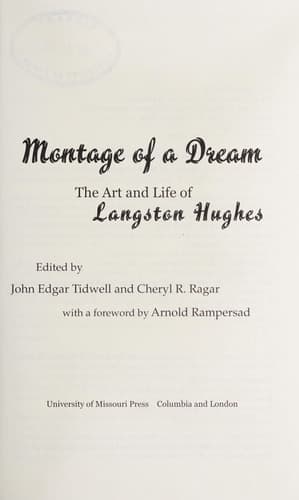
Montage of a Dream: The Art and Life of Langston Hughes
by John Edgar Tidwell
This 1980s study examines how modernist literature uses montage techniques borrowed from cinema—essentially the reverse of Conley's inquiry. You'll see how writers like Döblin create ruptures between narrative, typography, and historical documentation, proving that the hieroglyphic tensions Conley identifies in film aren't unique to the medium but symptomatic of modernism itself.
View bookAbout Tom Conley
Biography coming soon.
View author page