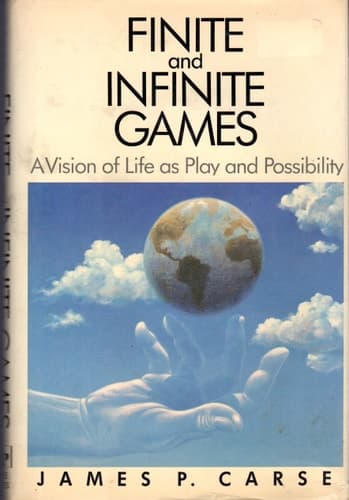
Finite and Infinite Games: A Vision of Life as Play and Possibility
James P. CarsePublished1986
Pages152
Formathardcover
PublisherFree Press
Synopsis
Reflection on life in terms of competition, Professor Carse compares two types of games manifested in human life--finite games, the familiar games of daily life that are bounded by space and time and infinite games, unbounded, unfettered, creative expressions of the human spirit
Recommendations
The Apocalyptic Vision of Mikhail Bulgakov's the Master and Margarita (Studies in Slavic Language & Literature)
by Edward E. Ericson
Bulgakov constructs nested narratives that operate by completely different rules—a Soviet satire, a supernatural romance, and a biblical retelling all happening simultaneously—which creates the exact tension between finite and infinite play that Carse explores. The novel treats reality itself as something malleable, where characters discover freedom precisely by stepping outside the bounded game of Soviet ideology.
View book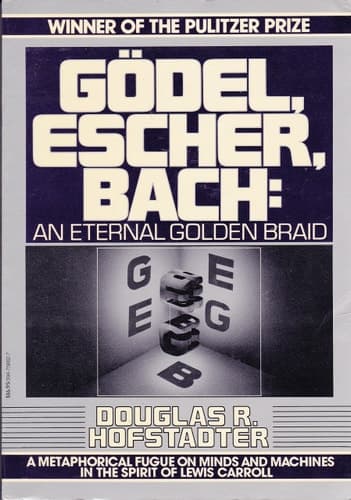
Gödel, Escher, Bach: An Eternal Golden Braid
by Douglas Hofstadter
This is Carse's book translated into mathematics, art, and music—Hofstadter explores how systems can contain themselves, how rules can be both finite and infinite depending on your perspective, and how meaning emerges from recursive patterns. If you loved Carse's philosophical playfulness, you'll find the same intellectual joy here, just expressed through dialogues between a tortoise and an achilles.
View book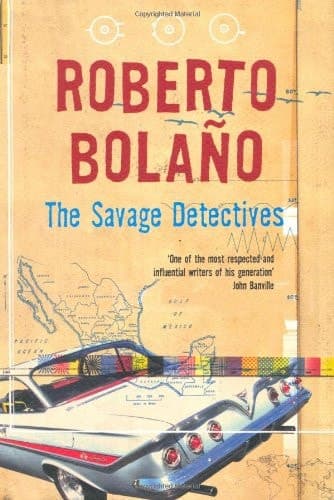
The Savage Detectives A Novel
by Roberto Bolaño
This is your surprise recommendation: a 900-page novel that reads like a game with constantly shifting rules, where the 'plot' matters less than the pursuit itself—characters chase a poet across continents in what becomes an infinite game of meaning-making. Bolaño captures that same spirit of unbounded creative expression Carse celebrates, but through the form of a literary mystery that deliberately refuses to resolve.
View book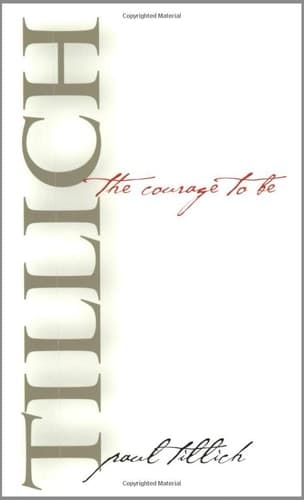
The Courage to be
by Paul Tillich
Published in 1952, Tillich approaches existence through the lens of anxiety and freedom in ways that directly complement Carse's framework—he examines how we construct meaning within and beyond the boundaries society imposes on us. Where Carse uses game theory, Tillich uses existential theology, but both are asking: what does it mean to live authentically within constraint?
View book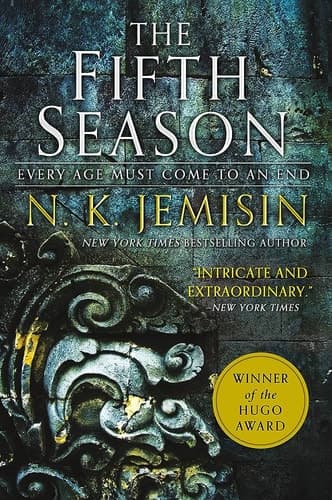
The Fifth Season
by N. K. Jemisin
Jemisin builds a world where the rules of power and survival are explicitly finite—oppressive, bounded, designed to keep certain people trapped—and her characters discover their infinite potential precisely by breaking those rules. The novel uses worldbuilding as a meditation on systems of control and liberation, making Carse's abstract philosophy visceral and urgent.
View bookAbout James P. Carse
Biography coming soon.
View author page