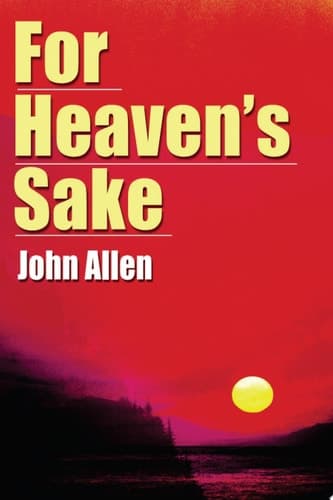
Synopsis
Written in the first person, this sparkling story traces a young man's physical and spiritual journey through the harsh realities of a dubious college career, crippled marriage and bankrupt lifestyle.
Meet Jane, the looming nemesis of a wife who constantly keeps poverty knocking at the door with her credit-card addiction and compulsive lifestyle. The problem is compounded by her husband's inability to adapt to the political regimen of life in a theological seminary and his constant struggle to make ends meet.
Whether conducting a funeral service, taking part in field trips or simply trying to accommodate archaic classroom concepts, the author takes his hero through the curriculum with an authority and candor that can only be the result of meticulous research and firsthand experience. Add to this a hatred of hypocrisy and a smoldering rage at the modern-day pharisaic and one has a free-for-all that has rarely been this honestly described.
Hard-hitting and leaving little to the imagination, the author has some surprising revelations for all those interested in what goes on behind a ministerial public front. For Heaven's Sake encompasses hilarious scenes both in and out of the pulpit, and is a compelling read.
After obtaining a degree in Theology, John Allen pastored a church, teaching subjects as diverse as textual interpretation, end-times theology and public speaking. He has published a number of helpful manuals, a commentary on Revelation and two novels.>/p>
Recommendations

Barbara Kingsolver's The Poisonwood Bible A Reader's Guide
by Linda Wagner-Martin
Like Allen, Kingsolver uses a family's catastrophic mistakes and moral compromises as the engine of her narrative, but she sets her story in the Congo where a minister's idealism collides brutally with reality. You'll find that same unflinching examination of how good intentions curdle into hypocrisy, except here it's filtered through multiple perspectives that force you to see how each family member rationalizes their complicity differently.
View book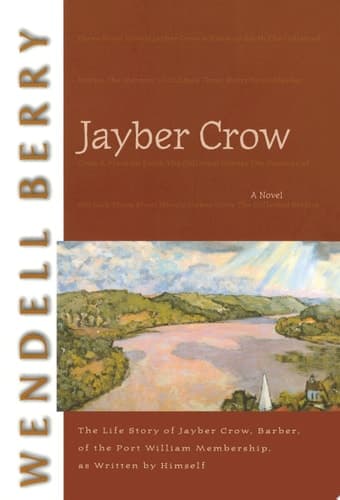
Jayber Crow: A Novel
by Wendell Berry
This is a quieter, more meditative cousin to *For Heaven's Sake*—Berry's protagonist is a barber and former seminary student in rural Kentucky who abandons the ministry after realizing he can't reconcile faith with institutional religion. Where Allen's narrator rages against pharisaism, Jayber finds a kind of grace in his failure, but both men are wrestling with the same fundamental betrayal: the gap between what the church preaches and what it practices.
View book
The remains of the day de Kazuo Ishiguro
by Gallix/François
This might seem like a departure, but stay with me: Ishiguro's butler has spent his life serving a morally compromised employer while telling himself he's simply being professional and dutiful. Allen's protagonist is furious at this kind of self-deception; Ishiguro's narrator is heartbroken by it. Both books are about men slowly recognizing how they've rationalized away their own integrity, and both use spare, controlled prose to make that recognition devastating.
View book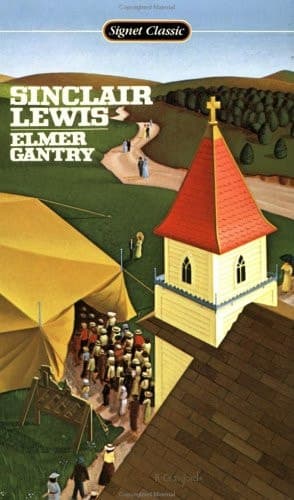
Elmer Gantry
by Sinclair Lewis
Published in 1927, this is the grandfather of all books about ministerial fraud and religious charlatanism—Lewis's preacher is a con man who believes his own mythology. Where Allen writes from inside the seminary struggling against hypocrisy, Lewis writes about the hypocrite himself, and the satire is absolutely vicious. If you appreciated Allen's rage at modern Pharisees, you'll recognize that same fury burning through Lewis's pages, just with a 1920s shine.
View bookAbout John Allen
J
John Allen
Born 1941
John L. Allen is a former chairman of the Department of Geography and emeritus professor of geography at the University of Wyoming in Laramie. His publications, numbering more than thirty titles to date, reflect his broadly varied interests, including the exploration of the American West, human impacts on natural environments and related landscape changes, and images of the West. Among students of the Lewis and Clark expedition, Professor Allen’s best-known work is Lewis and Clark and the Image of the American Northwest (reprint, New York: Dover, 1975). Originally published under the title Passage through the Garden: Lewis and Clark and the Image of the American Northwest, it remains among the most authoritative and frequently-referenced works in the literature.-Discover Lewis&Clark
View author page