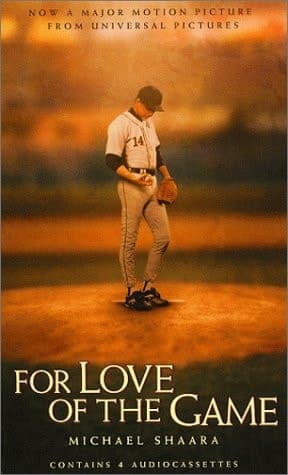
Synopsis
Billy Chapel, a major league pitcher headed for the Hall of Fame, allows his loyalty to the game, his enduring youth, and his pure spirit to threaten his career.
Recommendations

The Natural
by Bernard Malamud
Malamud's Roy Hobbs is Billy Chapel's spiritual predecessor—a ballplayer wrestling with the mythic weight of the game itself, where talent and integrity collide in ways that feel almost Arthurian. Where Shaara explores what it means to stay young in spirit, Malamud asks what happens when a player must choose between his legend and his soul, and the answer is far more complicated.
View book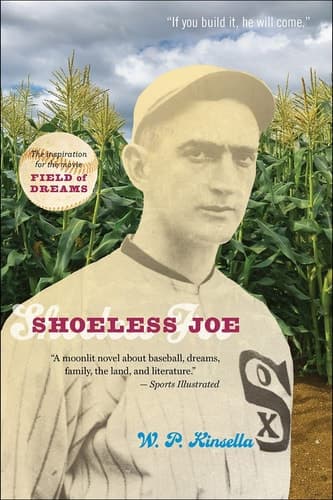
Shoeless Joe
by W. P. Kinsella
This one captures that same reverence for baseball as something transcendent and redemptive, but Kinsella takes it into magical realism territory—a farmer builds a field and the dead come to play. It's got Shaara's emotional core about loyalty to the game, but wrapped in a dreamlike quality that transforms the sport into something almost spiritual rather than just competitive.
View book
The remains of the day de Kazuo Ishiguro
by Gallix/François
Here's the surprise: Stevens the butler and Billy Chapel are kindred spirits in their devotion to a calling that demands everything. Ishiguro's narrator has spent his life perfecting his craft with the same pure spirit Shaara celebrates, but he's forced to reckon with what that loyalty cost him personally. It's a meditation on duty and regret that echoes Chapel's internal struggle, just transplanted from the diamond to a grand English estate.
View book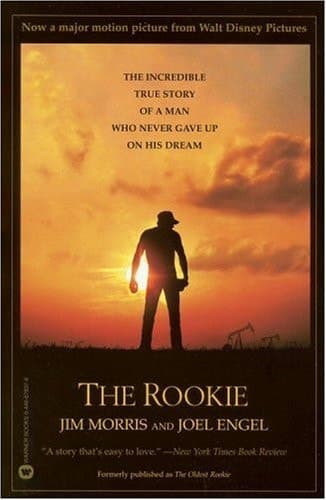
The Rookie The Incredible True Story of a Man Who Never Gave Up on His Dream
by Jim Morris
Published in 2007, this gives you a more contemporary take on the athlete-as-protagonist story, following Quentin Barnes from poverty to the NFL draft. Sigler writes with the same respect for athletic excellence that Shaara brings to baseball, but adds a grittier, more modern edge—the purity of the game exists here alongside systemic pressures and personal demons that feel very 21st century.
View book
A Gentleman in Moscow A Novel
by Amor Towles
This might seem like a left turn, but Towles captures something essential that Shaara does—the portrait of a man whose grace, humor, and refusal to compromise his principles become his greatest strength even as the world changes around him. The Count's devotion to living well within impossible constraints mirrors Chapel's commitment to playing the game with integrity, and Towles writes with the same warmth and philosophical depth.
View bookAbout Michael Shaara
M
Michael Shaara
1928–1988
Michael Shaara (June 23, 1928 – May 5, 1988) was an American author of science fiction, sports fiction, and historical fiction. He was born to an Italian immigrant father (the family name was originally spelled Sciarra, which in Italian is pronounced in a similar way) in Jersey City, New Jersey, graduated in 1951 from Rutgers University, where he joined Theta Chi, and served as a sergeant in the 82nd Airborne Division prior to the Korean War. Before Shaara began selling science fiction stories to fiction magazines during the 1950s, he was an amateur boxer and police officer. He later taught literature at Florida State University while continuing to write fiction. The stress of this and his cigarette smoking caused him, at the early age of 36, to have a heart attack, from which he recovered completely. His novel about the Battle of Gettysburg, The Killer Angels, won the Pulitzer Prize for Fiction in 1975. Shaara died of a heart attack in 1988 aged fifty-nine. Shaara's children, Jeffrey and Lila, are also novelists. In 1997, Jeffrey Shaara established the annual *Michael Shaara Award for Excellence in Civil War Fiction*, awarded at Gettysburg College. **Source**: [Michael Shaara](https://en.wikipedia.org/wiki/Michael_Shaara) on Wikipedia.
View author page