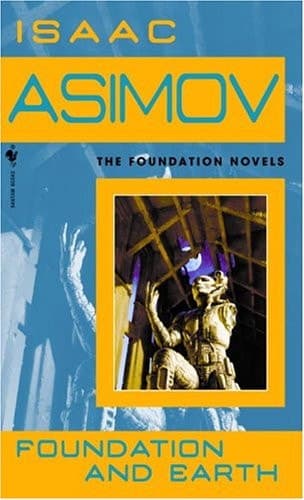
Foundation and Earth
Isaac AsimovPublished2004
Pages528
Formatpaperback
PublisherNational Geographic Books
Synopsis
The fifth novel in Isaac Asimov’s classic science-fiction masterpiece, the Foundation series
THE EPIC SAGA THAT INSPIRED THE APPLE TV+ SERIES FOUNDATION
Golan Trevize, former Councilman of the First Foundation, has chosen the future, and it is Gaia. A superorganism, Gaia is a holistic planet with a common consciousness so intensely united that every dewdrop, every pebble, every being, can speak for all—and feel for all. It is a realm in which privacy is not only undesirable, it is incomprehensible.
But is it the right choice for the destiny of mankind? While Trevize feels it is, that is not enough. He must know.
Trevize believes the answer lies at the site of humanity’s roots: fabled Earth . . . if it still exists. For no one is sure where the planet of Gaia’s first settlers is to be found in the immense wilderness of the Galaxy. Nor can anyone explain why no record of Earth has been preserved, no mention of it made anywhere in Gaia’s vast world-memory. It is an enigma Trevize is determined to resolve, and a quest he is determined to undertake, at any cost.
Recommendations
Heretics of Dune
by Frank Herbert
If you were captivated by Asimov's intricate worldbuilding and political maneuverings, Frank Herbert's Dune is a must-read. Like Foundation, it explores the interplay between ecology, technology, and power on a galactic scale, with a similarly epic scope and memorable cast of characters.
View bookThe Italian Left in the Twentieth Century: A History of the Socialist and Communist Parties
The Italian Left in the Twentieth Century: A History of the Socialist and Communist Parties
by Alexander De Grand
Le Guin's acclaimed novel is a thoughtful exploration of gender, identity, and the nature of humanity - themes that also resonate strongly in Foundation. Her lyrical, introspective style and ability to craft truly alien cultures make this a perfect recommendation for fans of Asimov's cerebral approach.
View book
The Birthday of the World
by Ursula K. Le Guin
Another Le Guin gem, this one exploring the tension between individualism and collectivism through the lens of two contrasting societies. Like Foundation, it uses speculative fiction to tackle big philosophical questions about the nature of freedom, progress, and the human condition.
View book
UNIX in a Nutshell A Desktop Quick Reference for System V Release 4 and Solaris 7
by Arnold Robbins
Lem's classic novel shares Foundation's fascination with the mysteries of the cosmos and humanity's place in it. But where Asimov's work is epic in scale, Solaris is a more intimate, psychological exploration of the limits of knowledge and the nature of consciousness. Fans of cerebral sci-fi will find much to ponder here.
View book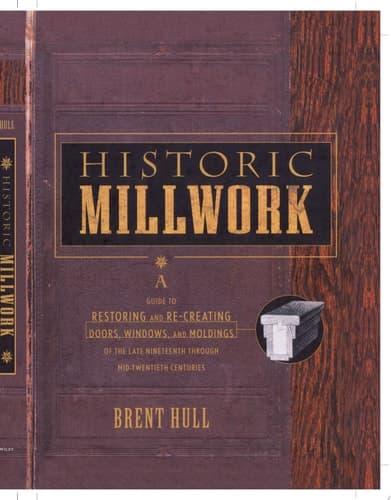
Historic Millwork A Guide to Restoring and Re-creating Doors, Windows, and Moldings of the Late Nineteenth Through Mid-Twentieth Centuries
by Brent Hull
Published in 1971, this Le Guin novel predates the Foundation series by over 30 years, but its themes of individual agency versus collective destiny will resonate strongly with fans of Asimov's work. It's a thought-provoking exploration of the power of the mind to shape reality, with a compelling narrative that builds to a poignant conclusion.
View bookAbout Isaac Asimov
I
Isaac Asimov
1920–1992
Asimov was born sometime between October 4, 1919 and January 2, 1920 in Petrovichi in Smolensk Oblast, RSFSR (now Russia), the son of a Jewish family of millers. Although his exact date of birth is uncertain, Asimov himself celebrated it on January 2. His family emigrated to Brooklyn, New York and opened a candy store when he was three years old. He taught himself to read at the age of five. He began reading the science fiction pulp magazines that his family's store carried. Around the age of eleven, he began to write his own stories, and by age nineteen, he was selling them to the science fiction magazines. He graduated from Columbia University in 1939. He married Gertrude Blugerman in 1942. During World War II he worked as a civilian at the Philadelphia Navy Yard's Naval Air Experimental Station. After the war, he returned to Columbia University and earned a Ph.D. in biochemistry in 1948. He then joined the faculty of the Boston University School of Medicine until 1958, when he became a full-time writer. His first novel, [Pebble in the Sky](https://openlibrary.org/works/OL46402W), was published in 1950. He and his wife divorced in 1973, and he married Janet O. Jeppson the same year. He was a highly prolific writer, having written or edited more than 500 books and an estimated 9,000 letters and postcards.
View author page