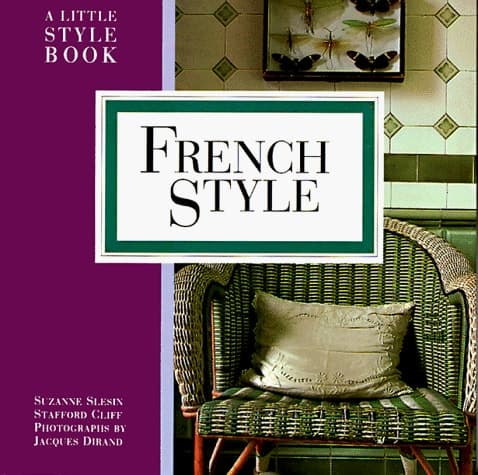
French Style A Little Style Book
Suzanne SlesinPublished1994
Pages205
Formatpaperback
PublisherClarkson Potter
Synopsis
Beginning with French Style, Suzanne Slesin and her coauthors created an acclaimed series of high-quality color books that focused on international areas of cultural and domestic interest. The Little Style Books revisit this classic material in a new and reinvigorated format.
Snappy and appealing, The Little Style Books contain pictures and text from the original edition selected anti reorganized to highlight what is quintessential about the style of the country. The chapter on Living, for example, is filled with ideas for arranging rooms, placing furniture, lighting corners: the Cooking chapter shows not only how other people live, but how our kitchens might be adapted.
A treasure trove of ideas, this is indeed the essence of style.
Recommendations
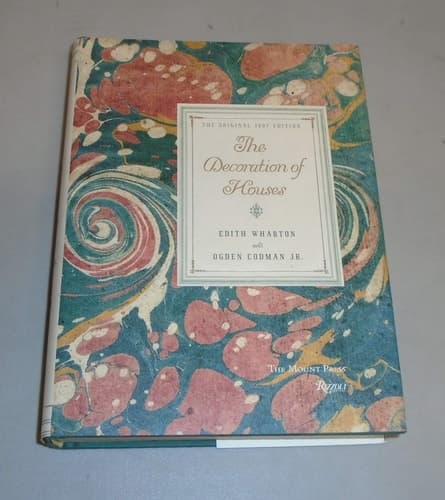
The Decoration Of Houses
by Edith Wharton
Wharton's 1897 manifesto on interior design shares Slesin's conviction that how we arrange our homes reveals who we are—but Wharton writes with the authority of someone who's lived in gilded mansions and European villas, offering principles rather than just inspiration. Where Slesin curates visual ideas, Wharton argues for restraint and proportion as moral virtues, making this the philosophical ancestor to the Little Style Books.
View book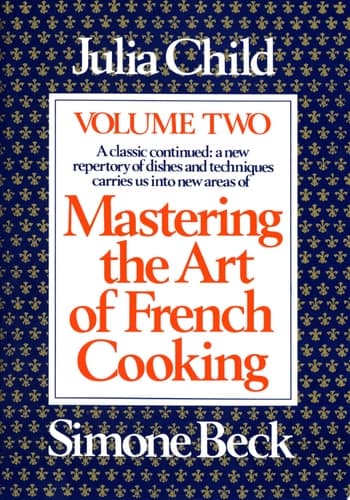
Mastering the Art of French Cooking, Volume 2 A Cookbook
by Julia Child
Child's masterwork does what Slesin's cooking chapter hints at—it doesn't just show you French food, it teaches you to *think* like a French cook, breaking down technique with the same clarity Slesin brings to arranging a room. The book is as much about understanding a culture's approach to problem-solving as it is about beurre blanc.
View book
Quilting and Braiding The Feminist Christologies of Sallie McFague and Elizabeth A. Johnson in Conversation
by Shannon Schrein
This might seem like a departure, but Kimmerer approaches living spaces and domestic life through the lens of reciprocity and relationship—she'd reorganize your kitchen not for style, but for how it connects you to the land and seasons. It's the surprise recommendation because it takes the 'how we live' question Slesin asks and roots it in something deeper than aesthetics.
View book
The Silent Girl A Rizzoli & Isles Novel
by Tess Gerritsen
A genuine curveball: Gerritsen's thriller opens with meticulous descriptions of how a Boston townhouse is arranged, how light falls through windows, how a killer's attention to domestic detail mirrors his precision with violence. If you loved Slesin's eye for how spaces tell stories, you'll find Gerritsen uses that same observational intensity, just in service of something far more sinister.
View book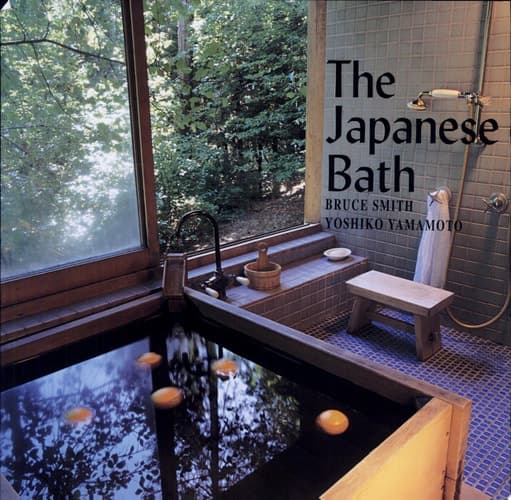
The Japanese Bath
by Bruce Smith
Smith's meditation on the Japanese bathing tradition does for one room what Slesin does for an entire country—it explores how a single space embodies philosophy, ritual, and beauty. The photographs are stunning, but the real gift is understanding that the Japanese bath isn't decoration; it's a complete worldview about cleansing, time, and family compressed into tile and water.
View bookAbout Suzanne Slesin
Biography coming soon.
View author page