Synopsis
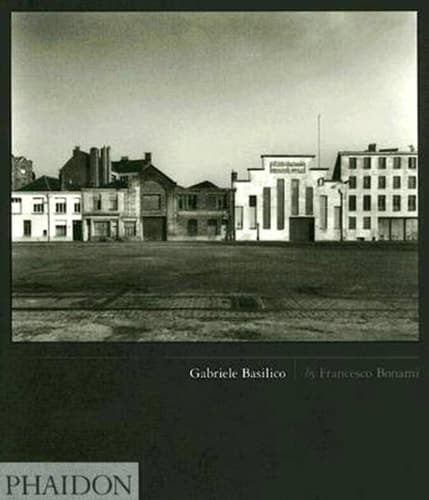
A fascinating introduction to the work of Gabriele Basilico (b. 1944), one of the most important European landscape photographers of our time. His work captures the city in its quiet, empty moments, almost as if some disaster had driven away the population - the buildings remain, lasting testaments to the society that created them. Basilico has extensively chronicled the lesser-known parts of his own native country as well as travelling widely throughout Northern Europe, bringing his Italian sensibility and melding it with the peculiarities of the Northern landscape.
Recommendations

In Flagrante Collecto: Caught in the Art of Collecting
by Marilynn Gelfman Karp
Vitali shares Basilico's Italian perspective and architectural eye, but where Basilico finds poetry in urban emptiness, Vitali captures the human presence in leisure spaces—beaches, pools, public squares—with the same patient, observational gaze. Both photographers treat their subjects with a kind of anthropological distance that reveals the bones of how we inhabit space.
View book
The Rings of Saturn
by Winfried Georg Sebald
This is your surprise recommendation—it's prose, not photography, but Sebald moves through European landscapes (particularly Northern Europe) with the same elegiac, almost haunted quality that defines Basilico's work. Both artists find melancholy beauty in abandoned or overlooked spaces, and both weave history into their observations of the physical world in ways that feel deeply meditative rather than documentary.
View book
New Hampshire Atlas and Gazetteer : Topographic Maps of the
by DeLorme
Jenkins curated this landmark 1975 exhibition that influenced photographers like Basilico—it's the conceptual ancestor of much of what you've just read about. Rather than romanticizing landscape, these photographers (including Robert Adams and Lewis Baltz) treat suburban sprawl and industrial sites with the same formal rigor Basilico brings to European cities, making the mundane visually compelling.
View book
The Savage Detectives A Novel
by Roberto Bolaño
Bolaño's sprawling novel moves through Latin American and European cities with the same restless, observational energy Basilico brings to his photography—both artists are fascinated by what cities reveal about themselves when you look closely at their margins and forgotten corners. The book's fragmented structure mirrors how Basilico's photographs accumulate into a portrait of place rather than a single narrative.
View book
Three Concepts Thermal Bath Vals, Art Museum Bregenz, "Topography of Terror" Berlin
by Peter Zumthor
This exhibition catalog uses photography and spatial analysis to examine how architecture embodies history—it shares Basilico's conviction that buildings are documents of the societies that created them. Where Basilico photographs quietly, this work confronts how landscape and architecture can testify to darker historical moments, offering a more explicitly political dimension to the same visual language.
View bookAbout Francesco Bonami
Biography coming soon.
View author page