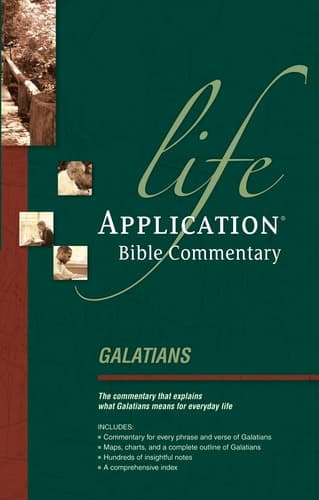
Synopsis
The Life Application Bible Commentary series is the only commentary to offer sermon and lesson applications alongside stirring commentary. Each volume in the series provides in-depth explanation, background, and application for every verse in the text. Perfect for sermon preparation and lesson planning, this one-of-a-kind reference provides excellent quotes and a bibliography for additional commentary.
Additional features include • Charts, diagrams, and maps on the same page as their related verses • Quotes from various versions, such as the NIV, NRSV, and NLT • Key information graphically highlighted
Recommendations
The Message of Romans God's Good News for the World
by John Stott
Stott brings the same scholarly rigor and pastoral sensitivity to Romans that Barton brings to Galatians, but he goes deeper into the theological architecture—you'll find yourself wrestling with Paul's arguments about grace and law in ways that feel both intellectually satisfying and spiritually challenging. The structure mirrors what you appreciated: accessible commentary paired with real-world application, but Stott's decades of preaching experience means the 'so what?' moments feel earned rather than tacked on.
View book
The New Testament Documents Are They Reliable?
by F. F. Bruce
If you found yourself curious about *why* we can trust what Barton was explaining, Bruce's forensic approach to manuscript evidence and historical reliability will scratch that itch—he writes like a detective presenting a case, and the evidence he marshals is genuinely compelling. This is the 'background reading' that transforms casual study into confident understanding, and it's lean enough to read in a week but substantial enough to reference for years.
View book
Quilting and Braiding The Feminist Christologies of Sallie McFague and Elizabeth A. Johnson in Conversation
by Shannon Schrein
This is the curveball—but hear me out: Kimmerer writes about reciprocity, covenant, and right relationship the way Paul writes about grace in Galatians. Both authors are wrestling with how we're supposed to live in response to something we've received rather than earned. Where Barton's commentary helps you understand Paul's argument intellectually, Kimmerer makes you *feel* what gratitude-based living actually means through essays that read like meditations. It's theology through botany instead of Greek, but the spiritual architecture is surprisingly similar.
View book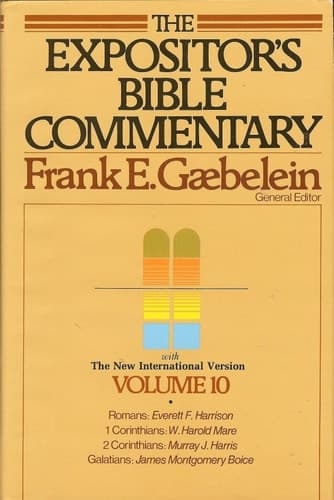
The Expositor's Bible Commentary With the New International Version of the Holy Bible. Romans-Galatians
by Frank Ely Gaebelein
Arnold's work sits at the intersection of what you loved about Barton—practical, verse-by-verse clarity—and something richer: he's genuinely interested in how Ephesians speaks to spiritual warfare and cosmic conflict in ways that feel neither naive nor overly mystical. The commentary includes cultural background that makes Paul's household codes and armor metaphors snap into focus, and the application sections actually challenge you rather than offering platitudes.
View bookAbout Bruce B. Barton
Biography coming soon.
View author page