Synopsis
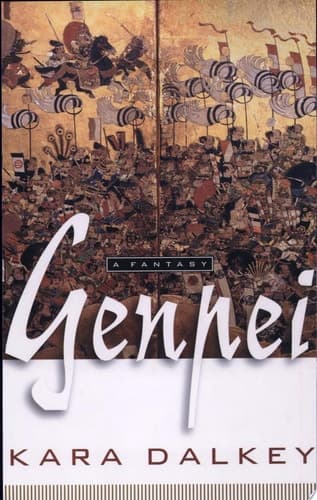
Throughout the twelfth century, two rival clans, the Minomoto and the Taira, struggled for supremacy in Imperial Japan. Each attempted a rebellion and, for a time, the Taira gained ascendancy. But their rule turned despotic and at last, during the Genpei War of 1179-1185, the Minomoto drove the Taira out of the capital and took control for themselves.
At the final battle of Dan-no-ura, the Taira-born child-emperor and his family all jumped into the Inland Sea to avoid capture and drowned. With them was lost the Imperial Sword, never to be seen again. The Minomoto leader took control, moved the capital, and became the first Shogun of Japan.
That much is history.
But wherefore come the tales of superhuman strength, the incredible insight, the clandestine knowledge of the Genpei War's heroes? There has been much speculation throughout the generations. Some have called the Minomoto's rise to power destiny, others call it a deal between humans and spirits--since even in death, the eternal Japanese warrior's spirit cannot be laid to rest. How much is truth, how much legend? One can never tell, for there are older, stranger tales as well....
Recommendations
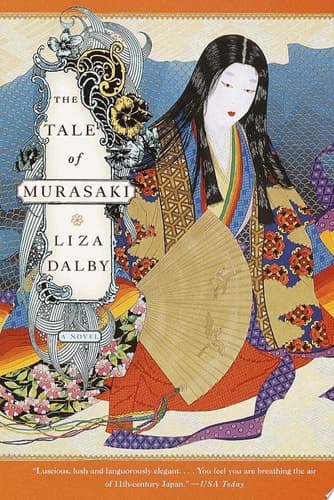
The Tale of Murasaki A Novel
by Liza Dalby
Dalby does what Dalkey does but from the opposite angle—she takes the historical Murasaki Shikibu, author of The Tale of Genji, and weaves her actual life through the legendary court intrigue of Heian Japan. You'll get that same blend of meticulously researched history and the supernatural whispers that cling to it, but told through a woman's perspective navigating power through art rather than warfare.
View book
The City Trilogy Five Jade Disks, Defenders of the Dragon City, Tale of a Feather
by Shi Kuo Chang
Lee captures that same energy of rival clans locked in generational struggle for dominance, but she's transplanted it to contemporary New York with Asian-American families controlling magical jade. The family dynamics and the way honor, loyalty, and supernatural ability intertwine feel like a spiritual successor to the Genpei War's human-versus-spirit tensions, just filtered through a completely different cultural lens and era.
View book
The Princess and the Goblin
by George MacDonald
This is the surprise pick—it's a quieter, more introspective fantasy than Genpei, but it shares something crucial: the way Addison explores what happens when an outsider suddenly inherits a throne built on centuries of court ritual and hidden supernatural currents. There's no grand battle, but the political maneuvering and the protagonist's gradual discovery of what's really been operating behind the scenes has that same slow-burn revelation you loved.
View book
Across the Nightingale Floor
by Lian Hearn
Hearn builds an entire fantasy world explicitly inspired by feudal Japan—clans, honor codes, hidden magical abilities woven into bloodlines—and she structures it around the same kind of historical turning point you found compelling in Genpei. The prose has that lyrical, almost elegiac quality when describing battles and loss, and the spirits here aren't just folklore; they're active players in the political game.
View book
The Historian
by Elizabeth Kostova
Published in 2005, this one's from a different era of fantasy, and it approaches the supernatural through scholarship and obsession rather than action. Kostova takes a historical legend—Dracula—and shows how it's been layered with truth, myth, and deliberate obscuration across centuries. Like Dalkey, she's asking 'how much is history, how much is legend?' but through a detective story that spans Eastern Europe, making you feel the weight of old stories still moving through the present.
View bookAbout Kara Dalkey
K
Kara Dalkey
Born 1953
Biography coming soon.
View author page