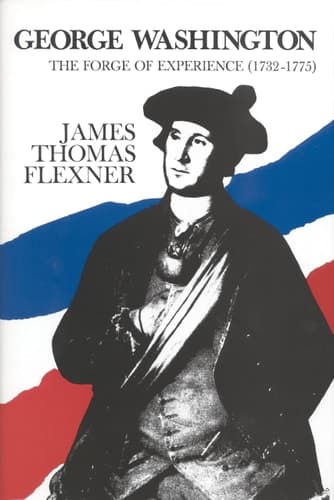
George Washington: The Forge of Experience 1732 - 1775 - Volume I
James Thomas FlexnerPublished1965
Pages390
Formatpaperback
PublisherLittle, Brown
Synopsis
This volume tells about considerably more than half George Washington's life, the forty-three years that elapsed from his birth to his acceptance, at the outbreak of the American Revolution, of the command of the Continental Army.
Recommendations

Alexander Hamilton
by Ron Chernow
Chernow does for Hamilton what Flexner does for Washington—he reconstructs a life through meticulous research and lets the complexity of the man emerge from the details rather than imposing a narrative. You'll find the same patient, chronological unfolding of how circumstance and character forge a revolutionary leader, but with Hamilton's relentless ambition providing a fascinating counterpoint to Washington's more measured rise.
View book
The Essential Federalist and Anti-Federalist Papers
by Alexander Hamilton
This is the surprise pick—it's not narrative biography but primary source argument, yet it's essential reading after Flexner because you'll see Washington's world through the eyes of the men who were actively shaping the nation's founding philosophy. Reading these essays after understanding Washington's pre-Revolutionary formation gives you the intellectual architecture behind the decisions he'd soon face.
View book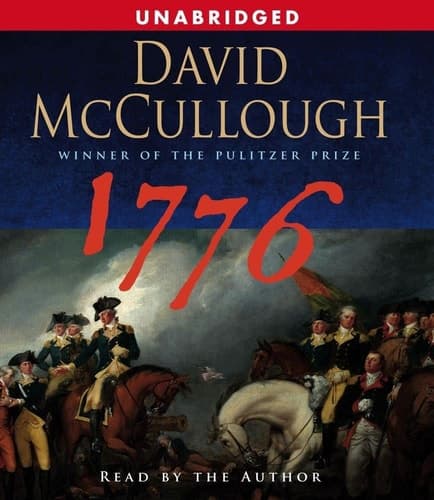
1776
by David McCullough
McCullough picks up almost exactly where Flexner leaves off—with Washington accepting command—but he narrows his focus to a single, pivotal year with novelistic intensity. Where Flexner gives you the long formation, McCullough gives you the pressure-cooker moment, and his gift for making military logistics and desperate retreats genuinely gripping means you'll see Washington tested in real time.
View book
The Radicalism of the American Revolution Pulitzer Prize Winner
by Gordon S. Wood
Wood argues that the Revolution was far more radical than we typically imagine—a genuine social upheaval, not just a political separation. After reading Flexner's careful account of Washington's gradual emergence as a leader, Wood's interpretation will make you reconsider what Washington was actually part of and how revolutionary his own trajectory truly was.
View book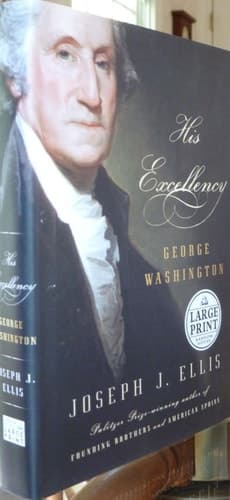
His Excellency: George Washington
by Joseph J. Ellis
Ellis takes a different biographical approach than Flexner—more thematic and psychological than chronological—examining Washington through specific lenses like his relationship to power, his silences, and his self-creation. Think of it as a complementary portrait: where Flexner shows you how Washington became who he was, Ellis shows you who that person actually was beneath the marble monument.
View bookAbout James Thomas Flexner
J
James Thomas Flexner
1908–2003
Biography coming soon.
View author page