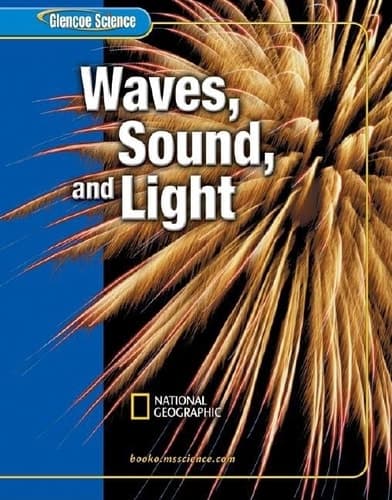
Glencoe Science: Waves, Sound, and Light, Student Edition (GLEN SCI: SOUND & LIGHT)
McGraw-Hill EducationPublished2004
Pages192
Formathardcover
PublisherMcGraw-Hill Education
Synopsis
Discover the flexibility to teach science your way
Waves, Sound, and Light, as a part of the Glencoe Science 15-Book Series, provides students with accurate and comprehensive coverage of the properties of waves, sound, and light. The strong content coverage integrates a wide range of hands-on experiences, critical-thinking opportunities, and real-world applications. The modular approach allows you to mix and match books to meet your curricula.
Recommendations
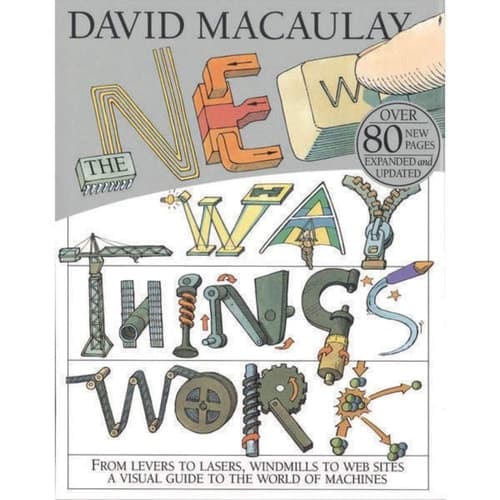
The New Way Things Work
by David Macaulay
Macaulay takes the same hands-on, visual approach to explaining physics that you just experienced, but trades the textbook format for witty illustrations and a Rube Goldberg machine aesthetic. You'll find the same 'aha!' moments about how the physical world actually works, just delivered with considerably more personality and humor—think of it as what your science textbook would look like if it had a sense of comedy.
View book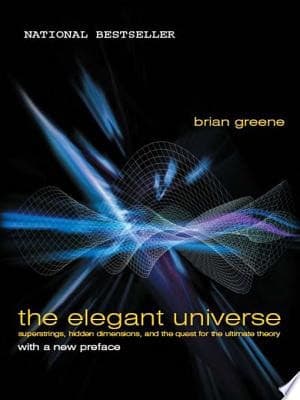
The Elegant Universe: Superstrings, Hidden Dimensions, and the Quest for the Ultimate Theory
by Brian Greene
Greene takes the wave and light physics you've just studied and launches them into the deep end—showing how these principles connect to the very fabric of reality itself. What makes this different from a typical physics book is Greene's gift for making mind-bending concepts feel almost conversational; he builds from the familiar (light, waves) to the genuinely strange (extra dimensions, quantum mechanics) without ever losing you.
View book
The Phantom Tollbooth
by Norton Juster
Here's your genre surprise: a children's adventure novel that's secretly obsessed with how language, mathematics, and light work together. The protagonist travels through kingdoms where puns have physical consequences and colors have personalities—it's whimsical on the surface, but Juster is genuinely playing with the same principles of perception and physics you've been studying, just through allegory instead of diagrams.
View book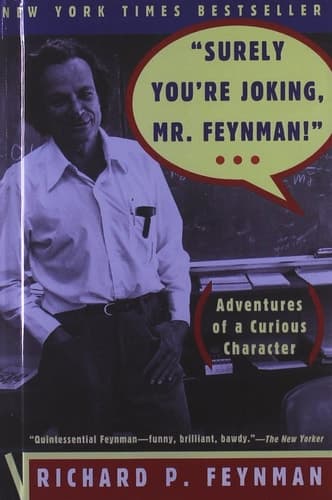
Surely You're Joking, Mr. Feynman! Adventures of a Curious Character
by Richard Phillips Feynman
Feynman was obsessed with understanding *why* waves and light behave the way they do, and this memoir shows you his actual thought process—how a genuinely curious mind approaches physics. Unlike your textbook, this is pure personality: a Nobel Prize winner explaining his philosophy of learning through stories about safe-cracking, bongo drums, and his relentless questioning of everything. It's what scientific curiosity actually looks like when it's alive.
View book
Homeward Bound or the Chase: A Tale of the Sea
by James Fenimore Cooper
This one connects sound—which you've just studied—to marine biology, oceanography, and environmental science in ways that feel almost novelistic. Strandberg traces how sound travels through water, how creatures use it to communicate, and what happens when human noise pollution disrupts these acoustic ecosystems. It's science writing that treats sound not as an abstract property but as something alive and consequential in the real world.
View bookAbout McGraw-Hill Education
Biography coming soon.
View author page