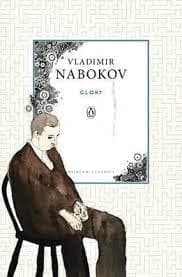
Glory: A novel
Vladimir Vladimirovich NabokovPublished1981
Pages205
Formatpaperback
PublisherMc-Graw Hill
Synopsis
'In general Glory is my happiest thing.' 'The fun of Glory is . . . to be sought in the echoing and linking of minor events, in back-and-forth switches, which produce an illusion of impetus; in an old daydream directly becoming the blessing of the ball hugged to one's chest, or in the casual vision of Martin's mother grieving beyond the time-frame of the novel in an abstraction of the future that the reader can only guess at, even after he has raced through the last seven chapters where a regular madness of structural twists and a masquerade of all characters culminate in a furious finale, although nothing much happens at the very end - just a bird perching on a wicket in the greyness of a wet day' - Vladimir Nabokov
Recommendations
Generating recommendations…
Our AI is preparing recommendations for Glory: A novel. This usually takes under a minute.
About Vladimir Vladimirovich Nabokov
V
Vladimir Vladimirovich Nabokov
1899–1977
Vladimir Vladimirovich Nabokov (Russian: Влади́мир Влади́мирович Набо́ков; 23 April [O.S. 10 April] 1899c – 2 July 1977) was a multilingual Russian-American novelist and short story writer. Nabokov wrote his first nine novels in Russian, then rose to international prominence as a master English prose stylist. He also made contributions to entomology and had an interest in chess problems. Nabokov's *Lolita* (1955) is frequently cited as among his most important novels and is his most widely known, exhibiting the love of intricate word play and synesthetic detail that characterised all his works. The novel was ranked at #4 in the list of the Modern Library 100 Best Novels. *Pale Fire* (1962) was ranked at #53 on the same list. His memoir entitled *Speak, Memory* was listed #8 on the Modern Library nonfiction list. ([Source][1].) [1]:https://en.wikipedia.org/wiki/Vladimir_Nabokov
View author page