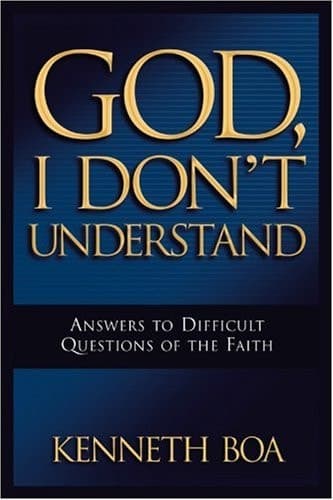
God, I Don't Understand Answers to Difficult Questions of the Faith
Kenneth BoaPublished2007
Pages237
Formathardcover
PublisherVictor
Synopsis
Updated for a new audience, this Ken Boa classic speaks more relevantly to today's skeptical audiences than ever before. With intelligence and grace, Boa objectively delves into the mysteries of faith and offers reasonable explanations while encouraging his readers to be content and embrace the mysteries of faith.
Features and Benefits • New, updated handbook approach of a popular classic.
• Easy to use, readers can turn to a section that addresses the relevant question and find a biblical explanation.
• Perfect for those who desire to grow in their theological understanding, Seminary Students, Sunday school teachers, or believers who want to be able to defend their faith to give an answer for what they believe.
Recommendations
The Reason for God Belief in an Age of Skepticism
by Timothy Keller
Keller takes Boa's approach but inverts it—instead of answering objections to faith, he addresses why skepticism itself has logical gaps. Both authors write for the intellectually restless believer, but Keller spends more time in the philosophical trenches, which means you'll find yourself arguing with the book in the best possible way.
View book
C.S. Lewis: The Signature Classics Audio Collection: The Problem of Pain, The Screwtape Letters, The Great Divorce, Mere Christianity
by C. S. Lewis
Published in 1952, this predates Boa's handbook approach by decades, yet Lewis does something Boa references but doesn't fully explore: he builds faith arguments from pure logic and human experience rather than starting with scripture. It's the ancestral DNA of modern Christian apologetics, and reading it after Boa will show you how the conversation has evolved.
View bookC.S. Lewis: The Signature Classics Audio Collection: The Problem of Pain, The Screwtape Letters, The Great Divorce, Mere Christianity
by C. S. Lewis
Lewis tackles the single question that Boa's handbook touches on but can't fully resolve in a few pages—why suffering exists if God is good. This slim book reads like a extended meditation rather than a reference guide, which means Lewis has room to sit with the mystery alongside you, not just explain it away.
View book
The Righteous Mind Why Good People Are Divided by Politics and Religion
by Jonathan Haidt
This is the curveball—a social psychology book that doesn't defend faith but explains *why* faithful and secular people talk past each other. If you've ever wondered why your reasonable answers to faith questions don't convince skeptics, Haidt shows you that reason isn't actually the bottleneck; moral intuition is. It's a companion to Boa that works from the outside in.
View book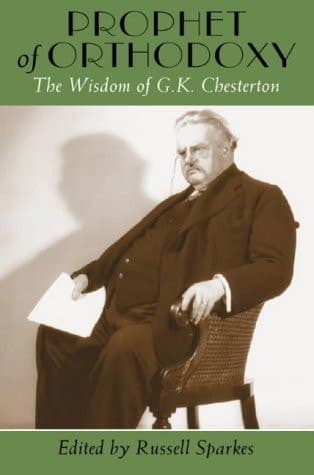
Prophet of Orthodoxy The Wisdom of G.K. Chesterton
by Gilbert Keith Chesterton
Chesterton writes like someone who's delighted by the paradoxes of faith rather than troubled by them—he'll make you laugh while defending the Incarnation, which is a tone Boa aims for but Chesterton perfects. Where Boa answers objections systematically, Chesterton pirouettes around them, and you'll find his approach sticks with you longer because it's so much more fun.
View bookAbout Kenneth Boa
Biography coming soon.
View author page