Synopsis
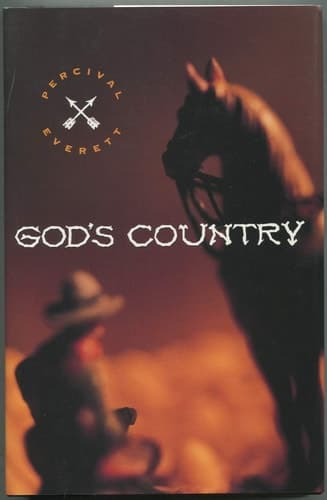
In his stunning new novel God's Country, Percival Everett offers a wickedly funny rewrite of the Great American western.
The unlikely narrator through this tale of misadventures is one Curt Marder: gambler, drinker, cheat, and would-be womanizer. He has lost his farm, his wife, and his dog to a band of marauding hooligans. With nothing to live on but a desire to recover what is rightfully his, Marder is forced to enlist the help of the best tracker in the West: a black man named Bubba.
This odd couple is soon joined by Jake, a wayward child determined to join the hunt. As Jake and Marder follow Bubba across desolate, unsettled land, they meet Indians, settlers, and soldiers. Aiming to keep a low profile, they nevertheless find themselves in all kinds of trouble, including run-ins with a scurrilous preacher, a flamboyant prostitute, and General Custer in a nightgown.
A natural coward, Marder only survives these incidents because of Bubba's reluctant heroism. However, even after their final, chilling exchange, Marder fails to realize that Bubba's secrets extend beyond his ability to track footprints on the prairie.
God's Country is hilarious and haunting by turns, a slam-bang parable of the way things were in 1871.
Recommendations

The Brothers and Sisters Learn to Write Popular Literacies in Childhood and School Cultures
by Anne Haas Dyson
DeWitt shares Everett's gift for mining dark comedy from the Western genre while maintaining genuine emotional stakes beneath the absurdity. Like Marder and Bubba, his protagonists are bound together by circumstance and mutual dependence, and the novel has that same quality of hilarity punctuated by moments of unsettling violence and unexpected tenderness.
View book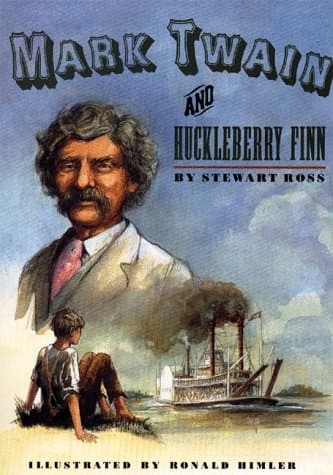
Mark Twain and Huckleberry Finn
by Stewart Ross
I'm recommending this as a literary ancestor rather than a cliché—Everett's novel is in direct conversation with Twain's treatment of race, American mythology, and the picaresque journey. Both feature a morally compromised narrator traveling with a Black companion across contested American landscape, and both use humor to interrogate rather than reinforce the myths they're retelling.
View book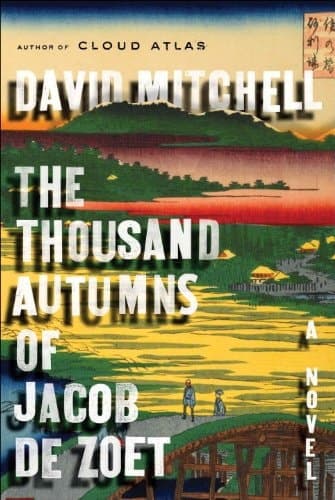
The Thousand Autumns of Jacob De Zoet A Novel
by David Stephen Mitchell
Here's your genre surprise: Mitchell's historical novel shares Everett's fascination with how power operates through small human interactions in unfamiliar territory. The collision between cultures, the unreliable narrator who gradually realizes how little he understands, the way humor and tragedy interweave—Mitchell builds these same tensions, just set in 18th-century Japan rather than the American frontier.
View book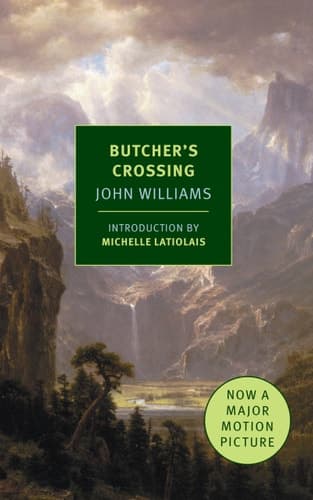
Butcher's Crossing
by John Williams
Williams wrote this in 1960, offering a more austere take on the Western that complements Everett's wickedness. Where Everett uses comedy to expose the mythology, Williams uses sparse prose and genuine dread—but both are fundamentally interrogating what the frontier myth actually cost and who paid that cost. The obsessive quest structure mirrors Marder's journey, but without the comic relief.
View book
Sellout The Inside Story of President Clinton's Impeachment
by David P. Schippers
Beatty's narrator is another unreliable, self-deluding protagonist navigating American racial absurdity through a picaresque structure that's simultaneously hilarious and furious. Like Everett, Beatty uses genre conventions (here, the legal/social satire) to expose how deeply American mythology is built on contradiction, and his dialogue has that same deadpan quality where characters state outrageous things as if they're obvious.
View bookAbout Percival Everett
P
Percival Everett
Born 1956
American writer and Distinguished Professor of English at the University of Southern California.
View author page