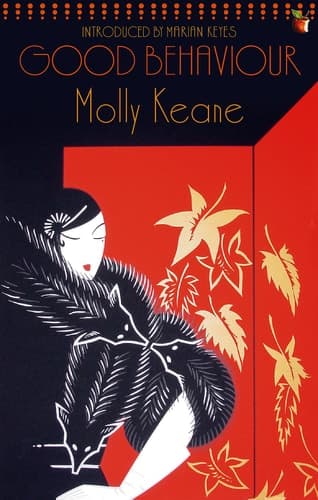
Synopsis
I do know how to behave - believe me, because I know. I have always known...'
Behind the gates of Temple Alice the aristocratic Anglo-Irish St Charles family sinks into a state of decaying grace. To Aroon St Charles, large and unlovely daughter of the house, the fierce forces of sex, money, jealousy and love seem locked out by the ritual patterns of good behaviour. But crumbling codes of conduct cannot hope to save the members of the St Charles family from their own unruly and inadmissible desires. This elegant and allusive novel established Molly Keane as the natural successor to Jean Rhys.
Recommendations

The remains of the day de Kazuo Ishiguro
by Gallix/François
Like Keane, Ishiguro is fascinated by how rigid social codes become a prison rather than a protection—his butler Stevens is trapped by the same suffocating decorum that binds Aroon. Both novels use restrained, elegant prose to reveal the emotional devastation lurking beneath impeccable surfaces, and both protagonists are ultimately undone by their inability to break free from the rules that have defined them.
View book
Dream Fever
by Katherine Sutcliffe
This is my surprise pick for you—it's a contemporary Argentine novel that operates in a completely different register, yet shares Keane's interest in how family secrets corrode from within. Where Good Behaviour uses elegant irony, Schweblin uses fragmented, dreamlike narration to create unease, but both explore how the things families refuse to say aloud become more powerful than any spoken truth.
View book
The Last Leopard: A Life of Giuseppe Tomasi di Lampedusa
by David Gilmour
Published in 1958, this novel shares Keane's elegiac tone about aristocratic decline—both authors watch their characters navigate a world where old hierarchies are crumbling. Lampedusa's Prince Salina has the same weary intelligence as Keane's characters, and both books treat the death of an entire social order with a kind of mournful grace rather than melodrama.
View book
The Paying Guest
by George Gissing
Waters captures that same suffocating atmosphere of post-war gentility—her characters are similarly trapped by what they're supposed to be rather than who they are. Where Keane uses Anglo-Irish country house decay, Waters uses 1920s suburban London, but both explore how desire and jealousy explode beneath the surface of "proper" domestic life with devastating consequences.
View book
Parade's End
by Ford Madox Ford
Ford's tetralogy (I'm recommending the first volume) is obsessed with the same question that haunts Keane: how do people survive when the social codes they've built their lives around become meaningless? Both authors write about the English/Anglo-Irish gentry with a mixture of affection and sharp critique, and both understand that good behaviour is often just another form of self-destruction.
View bookAbout Molly Keane
M
Molly Keane
1904–1996
Biography coming soon.
View author page