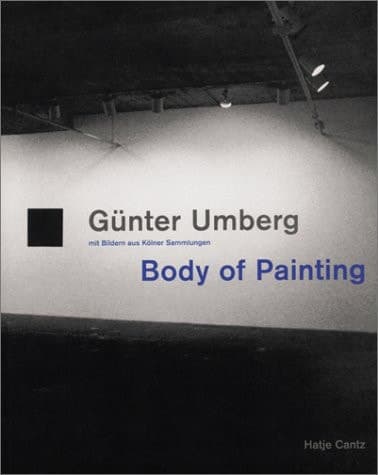
Gunter Umberg: Body of Painting: Pictures from Cologne-based Collections
Jochen PoetterPublished2001
Pages200
Formatpaperback
PublisherHatje Cantz Publishers
Synopsis
For Body of Painting, Gnter Umberg has placed his own oeuvre within the context of images by other artists with whom he feels a special affinity. The other artists featured include Jasper Johns, Sigmar Polke, Ellsworth Kelly, Yves Klein, Jessica Stockholder, Gerhard Richter, Brice Marden, Robert Ryman, Piero Manzoni, Andy Warhol, Jo Baer, Ingrid Calame, Helmut Federle, Dan Flavin, Sam Francis, Hans Hoffman, Oskar Kokoschka, Jonathan Lasker, and David Reed, among others. Together, these works create a discursive dialogue which allows viewers to grasp relationships of both harmony and discord among a multiplicitous network of texts, with surprising and engaging results. Umberg's own pieces can definitely be counted among the many highlights of this collection--his paintings break the bounds of the visible; they form imaginary fields of extreme openness whose velvety blackness both envelops and releases the viewer.
Recommendations

Grande Illusions: A Learn-By-Example Guide to the Art and Technique of Special Make-Up Effects from the Films of Tom Savini
by Tom Savini
Gombrich's foundational text examines how artists create meaning through visual language and perception—precisely the territory Umberg explores when his paintings 'break the bounds of the visible.' Where Umberg's catalogue positions artworks in dialogue with each other, Gombrich provides the theoretical framework for understanding how that conversation actually works in the viewer's eye and mind.
View book
Gertrude Steins Autobiographien The autobiography of Alice B. Toklas und Everybody's autobiography
by Monika Hoffmann
This is a surprise recommendation, but hear me out: Stein's fragmented, repetitive prose style mirrors the way Umberg's catalogue creates meaning through accumulation and juxtaposition rather than linear narrative. Both works ask you to sit with visual or linguistic material that doesn't immediately resolve, building understanding through pattern recognition and unexpected connections—Stein does it with words, Umberg with paint and composition.
View book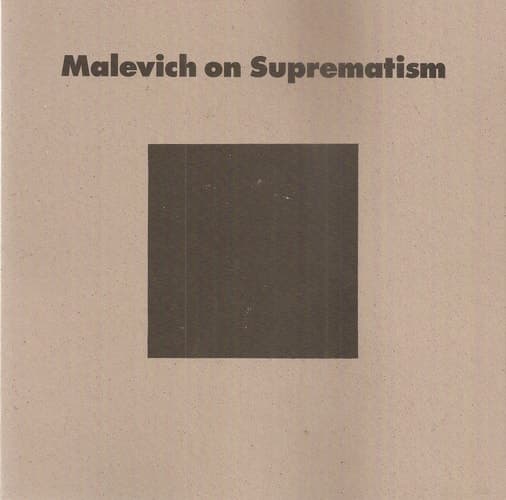
Malevich on Suprematism: Six Essays 1915-1926
by Kazimir Severinovich Malevich
Published in 1927, this manifesto-essay takes you back to the early modernist moment when artists were first grappling with abstraction and pure form—the DNA of everything in Umberg's collection. Malevich's thinking about the 'black square' as a gateway to transcendence directly echoes what you read about Umberg's 'velvety blackness' that both envelops and releases the viewer.
View book
Seven Days in the Art World
by Sarah Thornton
Thornton's anthropological approach to how contemporary art gets made, valued, and circulated gives you the institutional context for understanding why a catalogue like Umberg's matters—how artists position themselves within networks, how taste gets constructed, and why certain affinities (like those Umberg identifies with Johns, Richter, and others) carry weight in the art world.
View book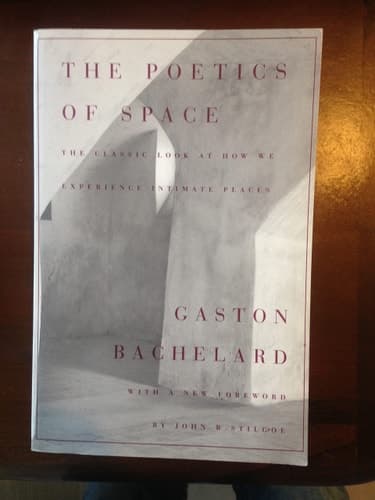
The Poetics of Space
by Gaston Bachelard
Bachelard's phenomenological meditation on how spaces—rooms, houses, intimate corners—shape consciousness and memory offers a philosophical companion to Umberg's 'imaginary fields of extreme openness.' Both works are concerned with how visual and spatial experience creates an interior landscape in the viewer, moving beyond mere representation into something more psychological and felt.
View bookAbout Jochen Poetter
Biography coming soon.
View author page