Synopsis
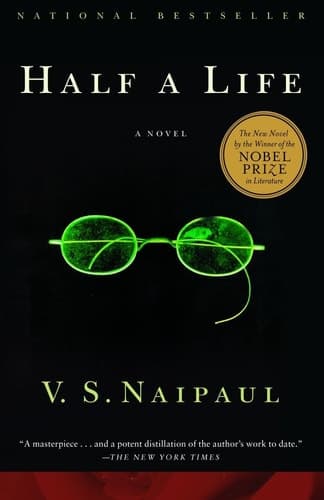
In a narrative that moves with dreamlike swiftness from India to England to Africa, Nobel Laureate V. S. Naipaul has produced his finest novel to date, a bleakly resonant study of the fraudulent bargains that make up an identity.
The son of a Brahmin ascetic and his lower-caste wife, Willie Chandran grows up sensing the hollowness at the core of his father's self-denial and vowing to live more authentically. That search takes him to the immigrant and literary bohemias of 1950s London, to a facile and unsatisfying career as a writer, and at last to a decaying Portugese colony in East Africa, where he finds a happiness he will then be compelled to betray. Brilliantly orchestrated, at once elegiac and devastating in its portraits of colonial grandeur and pretension, Half a Life represents the pinnacle of Naipaul's career.
Recommendations
Generating recommendations…
Our AI is preparing recommendations for Half a Life A Novel. This usually takes under a minute.
About V. S. Naipaul
V
V. S. Naipaul
1932–2018
Vidiadhar Surajprasad Naipaul (17 August 1932 – 11 August 2018) was a Trinidadian-born British writer of works of fiction and nonfiction in English. He is known for his comic early novels set in Trinidad, his bleaker novels of alienation in the wider world, and his vigilant chronicles of life and travels. He published more than thirty books over fifty years. Naipaul's breakthrough novel *A House for Mr Biswas* was published in 1961. He won the Booker Prize in 1971 for his novel In a *Free State,* and the Jerusalem Prize in 1983. In 1990, he was awarded the Trinity Cross, Trinidad and Tobago's highest national honour. He received a knighthood in Britain in 1990, and the Nobel Prize in Literature in 2001. Some of his other works include *The Guerillas* (1975), *The Middle Passage* (1962) *A Bend in the River* (1979), *Among the Believers* (1981), *The Enigma of Arrival* (1987), *India: A Million Mutinies Now* (1990), *Beyond Belief* (1998) and *Half a Life* (2001).
View author page