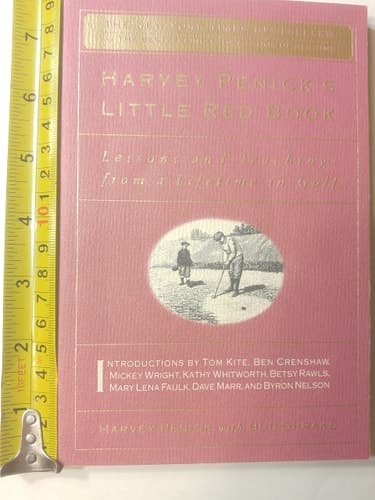
Harvey Penick's Little Red Book Lessons and Teachings From a Lifetime of Gold
Harvey PenickPublished1999
Pages176
Formatpaperback
PublisherSimon & Schuster
Synopsis
THE CLASSIC BOOK OF GOLF WISDOM FROM THE GAME'S GREATEST TEACHER The Little Red Book has become required reading for all players and fans of the game of golf, from beginners to seasoned pros. The legendary Harvey Penick, who began his golfing career as a caddie in Austria, Texas, at the age of eight, worked with an amazing array of champions over the course of nearly a century, dispensing invaluable wisdom to golfers of every level. Penick simplifies the technical jargon of other instructional books and communicates the very essence of the game, and his Little Red Book is full of inspiration and homespun wisdom that reflects at once his great love of golf as well as his great talent for teaching.
Recommendations
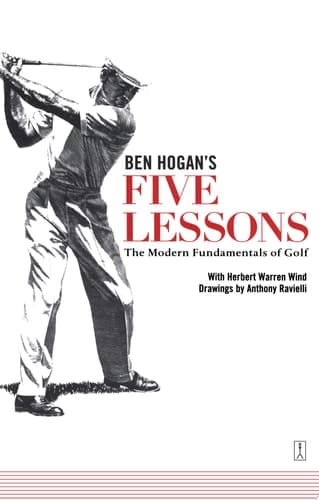
Ben Hogan's Five Lessons The Modern Fundamentals of Golf
by Ben Hogan
Where Penick teaches through stories and intuition, Hogan deconstructs the swing with almost mathematical precision—yet both men arrive at the same truth: mastery comes from understanding fundamentals so deeply they become second nature. If you appreciated Penick's clarity, you'll find Hogan's systematic approach equally revelatory, just from a different angle of the same mountain.
View book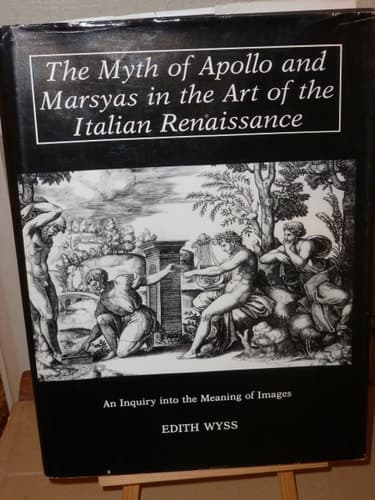
The Myth of Apollo and Marsyas in Italian Renaissance Art An Inquiry Into the Meaning of Images
by Edith Wyss
Waitzkin takes Penick's philosophy—that deep understanding matters more than rote technique—and applies it across chess, martial arts, and investing. He writes about how to internalize principles so they become intuitive, which is exactly what Penick was teaching, but here you'll see that same wisdom operating in completely different domains, making the underlying lessons feel universal.
View book
Disneyland The Nickel Tour
by Bruce Gordon
This is the curveball—a literary novel set in a brutal reform school that has nothing to do with golf. But Whitehead writes with the same economy and moral clarity that makes Penick's little red book so powerful; he trusts the reader to understand what matters without explaining it to death. If you loved Penick's ability to say something profound in a few sentences, you'll recognize that same restraint and wisdom here, just applied to American history instead of golf.
View book
A Walk in the Woods Rediscovering America on the Appalachian Trail
by Bill Bryson
Bryson captures something Penick understood deeply: the way a simple activity—walking, golfing—becomes a vehicle for reflection and connection. His humor and warmth mirror Penick's homespun tone, and both writers find profound lessons in the details of a journey rather than grand pronouncements. You'll recognize the same gentle wisdom, just applied to hiking instead of the golf course.
View book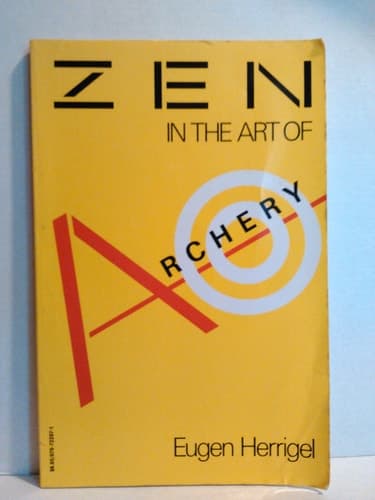
Zen in the Art of Archery
by Eugen Herrigel
Published in 1953, this book predates Penick's by decades and explores the same territory from an entirely different cultural tradition—how to achieve mastery by letting go of conscious effort. Herrigel's account of learning from a Japanese master echoes Penick's teaching method: both understood that the deepest lessons can't be forced, only discovered. It's like reading Penick's philosophy filtered through Zen Buddhism.
View bookAbout Harvey Penick
Biography coming soon.
View author page