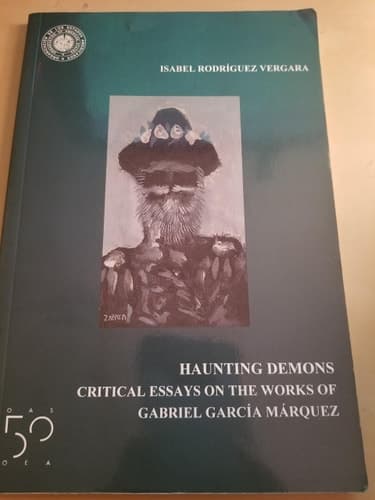
Haunting Demons: Critical Essays on the Works of Garcia Marquez (Coleccion Interamer)
Rodriguez-Vergara, IsabelPublished1998
Pages94
Formathardcover
PublisherColumbus Memorial Library
Synopsis
We don't have a synopsis for this title yet.
Recommendations
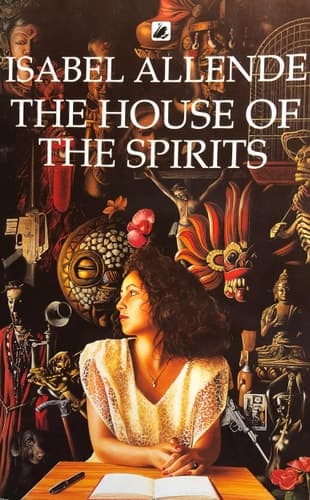
The House of the Spirits
by Isabel Allende
Allende shares García Márquez's gift for weaving magical realism into multigenerational family sagas, but she approaches it through a distinctly feminist lens—where the supernatural elements often represent women's hidden power rather than just atmospheric strangeness. Since you've been deep in critical analysis of García Márquez's work, you'll find it rewarding to see how another Latin American master uses similar techniques to entirely different thematic ends.
View book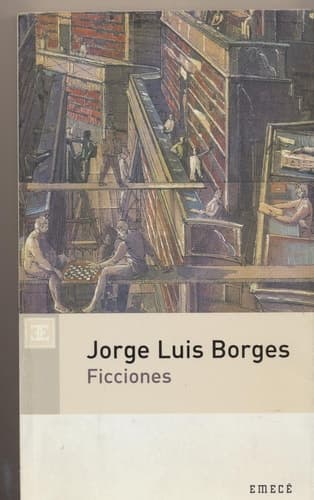
Ficciones
by Jorge Luis Borges
This is a collection of short stories rather than a novel, which might feel like a palate cleanser after a critical study—Borges was García Márquez's literary godfather, and reading these stories will show you the philosophical DNA behind magical realism. What makes this essential: Borges constructs entire worlds in 5-10 pages through pure intellectual architecture, whereas García Márquez builds them through sensory detail, so you'll see two different approaches to the same literary ambition.
View book
The Apocalyptic Vision of Mikhail Bulgakov's the Master and Margarita (Studies in Slavic Language & Literature)
by Edward E. Ericson
Written in 1960s Soviet Russia but unpublished until after the author's death, this novel uses magical realism as political allegory in ways that will make you reconsider how García Márquez's work functions—Bulgakov's Devil literally walks through Moscow causing chaos, and the novel's structure mirrors the fractured reality of living under totalitarianism. It's a surprise recommendation because it's Russian rather than Latin American, but the literary DNA is unmistakably related, and the critical frameworks you've been studying will apply beautifully here.
View book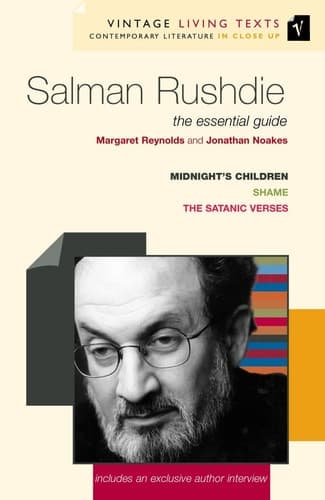
Salman Rushdie Midnight's Children, Shame, The Satanic Verses
by Margaret Reynolds
Rushdie explicitly built his style on García Márquez's foundations, but transplanted magical realism into post-colonial India with a narrator whose unreliability is baked into the novel's DNA—children born at the moment of Indian independence have magical powers, but the narrator himself admits he might be misremembering everything. You'll recognize the literary lineage immediately, but Rushdie's obsession with how stories get told and retold adds a layer of narrative complexity that pushes beyond García Márquez's approach.
View bookAbout Rodriguez-Vergara, Isabel
Biography coming soon.
View author page