Heart of Emerson's Journals
Ralph Waldo EmersonPublished2003
Pages368
Formatpaperback
PublisherKessinger Publishing, LLC
Synopsis
This scarce antiquarian book is a facsimile reprint of the original. Due to its age, it may contain imperfections such as marks, notations, marginalia and flawed pages. Because we believe this work is culturally important, we have made it available as part of our commitment for protecting, preserving, and promoting the world's literature in affordable, high quality, modern editions that are true to the original work.
Recommendations
Self-reliance, and Other Essays
by Ralph Waldo Emerson
Wait—I know what you're thinking. But hear me out: if you connected with the *journals* specifically, you'll find his polished essays offer the same philosophical rigor with even sharper prose. The journals show you his thinking process; these essays show you the architecture he built from those raw observations about individualism and nature.
View book
The Struggle for Life A Companion to William James's The Varieties of Religious Experience
by Donald Capps
James does what Emerson was reaching for—he takes the interior spiritual life seriously as a subject of rigorous study. Where Emerson's journals are intimate and aphoristic, James builds a comprehensive architecture from hundreds of accounts of human consciousness and meaning-making. Both writers trust their readers' intelligence completely.
View book
The Savage Detectives A Novel
by Roberto Bolaño
This is your surprise pick. It's structured like a journal—fragmented, digressive, full of marginal characters and half-finished thoughts—but it's a novel about poets chasing meaning through Mexico City. Bolaño captures that same Emersonian hunger for authentic experience and self-discovery, but filtered through late-20th-century skepticism and literary obsession.
View book
Peter Mayle's Provence: Included A Year In Provence and Toujours Provence
by Peter Mayle
Mayle's memoir reads like a contemporary journal of observation and reflection—he notices the small details of daily life with Emerson's attentiveness, but grounds it in sensory experience rather than abstraction. It's meditative without being heavy, and shares that same pleasure in recording how one actually *lives* rather than how one thinks one should live.
View book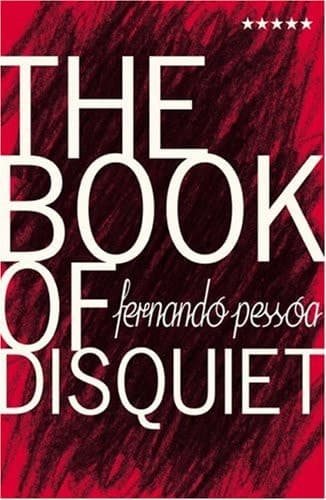
The Book of Disquiet
by Fernando Pessoa
This is genuinely a journal—or rather, a collection of fragments that reads like one—written by a poet obsessed with the texture of consciousness itself. Pessoa shares Emerson's conviction that the examined life contains multitudes, but he fragments himself into different voices and personas. It's what happens when someone takes Emerson's self-reliance and spins it into philosophical vertigo.
View bookAbout Ralph Waldo Emerson
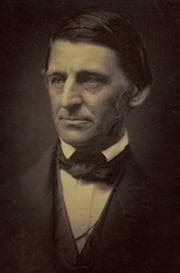
Ralph Waldo Emerson
1803–1882
Ralph Waldo Emerson was an American philosopher, essayist, and poet, best remembered for leading the Transcendentalist movement of the mid-19th century. His teachings directly influenced the growing New Thought movement of the mid-1800s. He was seen as a champion of individualism and a prescient critic of the countervailing pressures of society. Emerson gradually moved away from the religious and social beliefs of his contemporaries, formulating and expressing the philosophy of Transcendentalism in his 1836 essay, Nature. As a result of this ground-breaking work he gave a speech entitled The American Scholar in 1837, which Oliver Wendell Holmes, Sr. considered to be America's "Intellectual Declaration of Independence". Considered one of the great orators of the time, Emerson's enthusiasm and respect for his audience enraptured crowds. His support for abolitionism late in life created controversy, and at times he was subject to abuse from crowds while speaking on the topic. When asked to sum up his work, he said his central doctrine was "the infinitude of the private man." ([Source][1]) [1]: http://en.wikipedia.org/wiki/Ralph_Waldo_Emerson
View author page