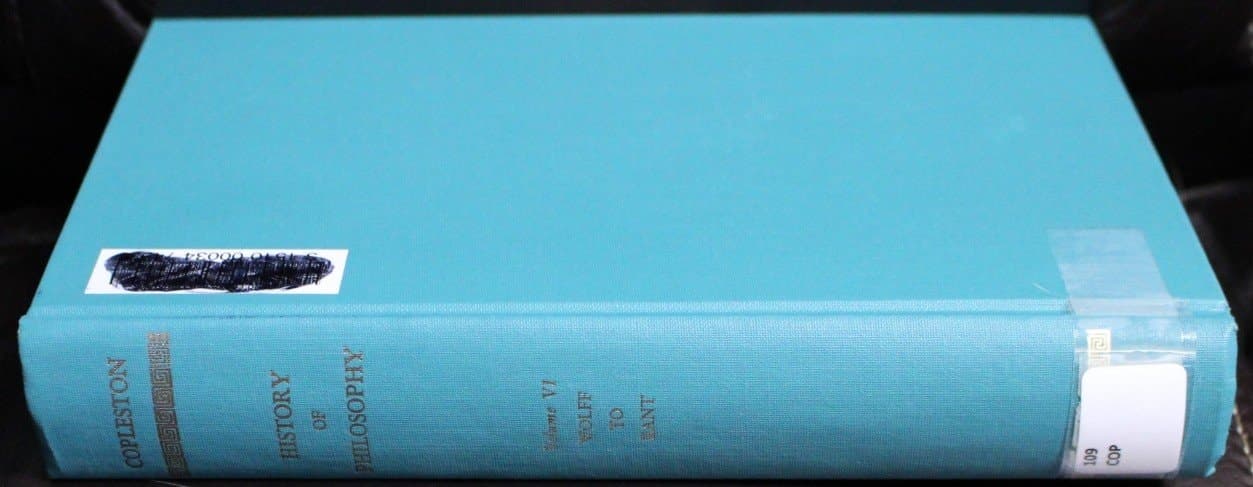
History of Philosophy Wolff to Kant
Frederick Charles CoplestonPublished1960
Pages520
Formathardcover
PublisherSearch Press
Synopsis
A detailed study, designed for use in Catholic seminaries, of classical philosophy, stressing the theories of Socrates, Plato, Aristotle, and their followers
Recommendations

Immanuel Kant's Critique Of Pure Reason V2: In Commemoration Of The Centenary Of Its First Publication
by Immanuel Kant
Since you've just finished Copleston's bridge to Kant, you're primed to tackle the primary source itself. Copleston's scholarly apparatus will have given you the conceptual scaffolding to navigate Kant's notoriously dense prose—you'll recognize the arguments you've read about, but now you'll see them in Kant's own voice, with all his careful qualifications and systematic rigor intact.
View book
Passion of the Western Mind Understanding the Ideas That Have Shaped Our World View
by Richard Tarnas
Tarnas writes philosophy history as narrative drama rather than seminary textbook—he traces the same intellectual lineage as Copleston but with an almost mythic sensibility, showing how each philosopher's ideas emerged from the psychological and cultural crises of their era. If Copleston gave you the architecture, Tarnas gives you the weather patterns that shaped it.
View book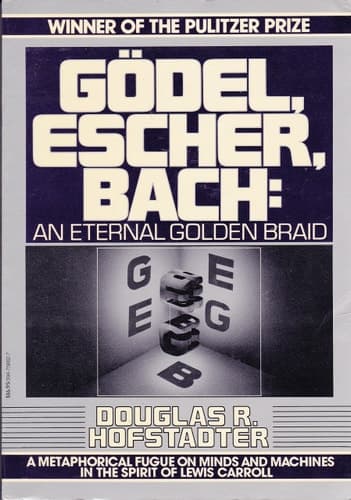
Gödel, Escher, Bach: An Eternal Golden Braid
by Douglas Hofstadter
This is your surprise recommendation—it's not philosophy in the classical sense, but it's deeply concerned with the same questions about consciousness, meaning, and self-reference that animated Kant's Critique. Hofstadter uses mathematics, art, and music to explore what happens when systems become aware of themselves, which is essentially what Kant was grappling with when he asked how the mind structures experience.
View book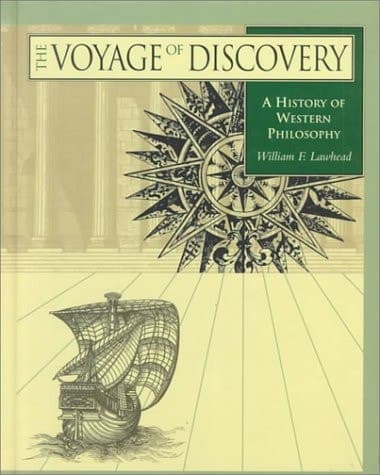
The Voyage of Discovery A History of Western Philosophy
by William F. Lawhead
Russell's 1945 survey covers the same ground as Copleston but from a completely different temperament—where Copleston is reverent and systematic, Russell is skeptical and witty, often challenging the very figures Copleston treats with deference. Reading them in sequence gives you a kind of philosophical stereo vision, seeing how the same thinkers look from inside and outside the Catholic intellectual tradition.
View book
The Structure of Scientific Revolutions
by Thomas S. Kuhn
Published in 1962, just after Copleston's volume, Kuhn asks a question that would have fascinated Kant: how do we actually know when we've made progress in understanding? He shows that the history of science isn't a smooth accumulation of truth but a series of paradigm shifts—a framework that makes you reconsider everything Copleston told you about how philosophy 'progressed' from one thinker to the next.
View bookAbout Frederick Charles Copleston
F
Frederick Charles Copleston
1907–1994
Biography coming soon.
View author page