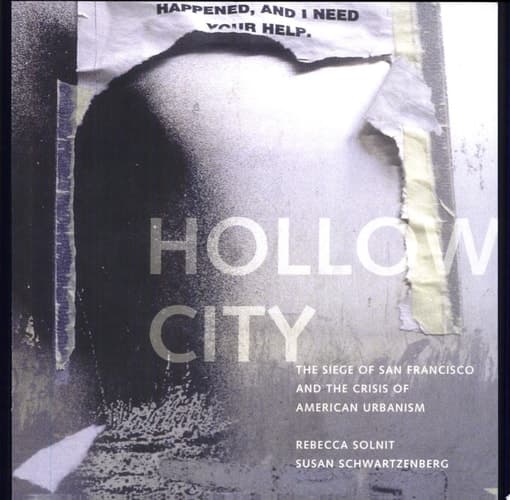
Hollow City The Siege of San Francisco and the Crisis of American Urbanism
Rebecca SolnitPublished2002
Pages192
Formatpaperback
PublisherVerso
Synopsis
Writer-historian Rebecca Solnit and photographer Susan Schwartzenberg survey San Francisco's transformation skyrocketing rents that are driving out artists, activists, nonprofit organizations and the poor; the homogenization of the city's architecture, industries and population; the decay of its public life; and the erasure of its sites of civic memory.
Recommendations
The Great Risk Shift: The Assault on American Jobs, Families, Health Care, and Retirement--And How You Can Fight Back
by Jacob S. Hacker
Hacker examines how economic insecurity has hollowed out the American middle class through policy choices and corporate restructuring—he's doing for economic systems what Solnit does for urban spaces, tracing how deliberate decisions transform the landscape of ordinary people's lives. Both writers refuse to treat these changes as inevitable market forces; instead, they show the specific human and political choices that created the crisis.
View book
The Death and Life of Great American Cities
by Jane Jacobs
Published in 1961, Jacobs pioneered the kind of street-level urban observation that Solnit employs—she watches how cities actually function rather than how planners think they should. Where Solnit documents San Francisco's decline, Jacobs explains the underlying principles of what makes urban neighborhoods vital, giving you the theoretical foundation for understanding what gets lost when cities homogenize.
View book
Nickel and Dimed - Acting Edition (Acting Edition for Theater Productions)
by based on NICKEL AND DIMED, ON GETTING BY IN AMERICA by Barbara Ehrenreich Joan Holden (NOT)
Ehrenreich embeds herself in low-wage work the way Solnit and Schwartzenberg embed themselves in San Francisco's neighborhoods—both are investigative works that refuse abstract statistics and instead show you the actual texture of precarious life. You'll recognize Solnit's concern for the poor and displaced, but experienced through Ehrenreich's wry, unflinching first-person account of trying to survive on minimum wage.
View book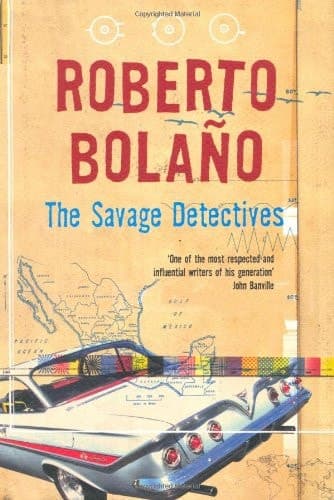
The Savage Detectives A Novel
by Roberto Bolaño
Here's the surprise: this sprawling novel is obsessed with the same questions as Hollow City—what happens to artistic communities when they're displaced, how cities erase their own histories, whether bohemia can survive capitalism. But Bolaño approaches it through fragmented narrative and dark humor rather than essay-photography, following poets and drifters through Mexico City and beyond. It's Solnit's themes refracted through literary fiction's more unsettling lens.
View book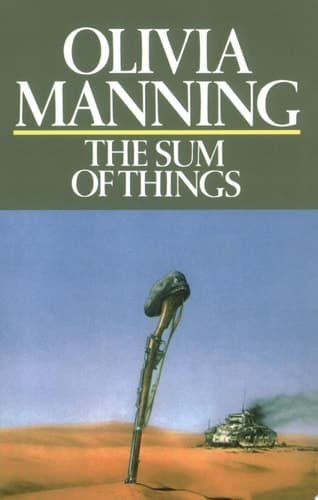
The Sum of Things
by Olivia Manning
Currid-Halkett analyzes how consumption and status-signaling reshape cities and communities in the contemporary moment—she's examining the cultural logic that drives the gentrification Solnit documents. Where Solnit shows you what's being lost in San Francisco, Currid-Halkett explains the aspirational machinery that's replacing it, making this a perfect companion that fills in the 'why' behind the transformation.
View bookAbout Rebecca Solnit
R
Rebecca Solnit
Born 1961
A writer who lives in San Francisco. She has written on a variety of subjects including the environment, politics, place, and art.
View author page