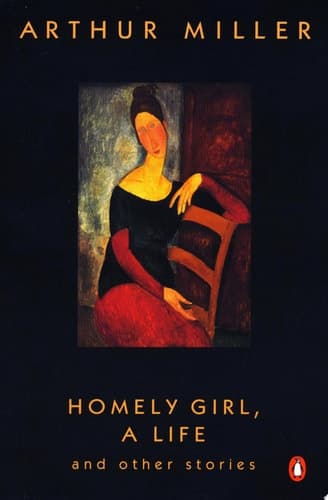
Homely Girl, A Life And Other Stories
Arthur MillerPublished1997
Pages128
Formatpaperback
PublisherPenguin
Synopsis
In his long career, Arthur Miller has charted some of the most hidden aspects of the American character, and made us recognize ourselves. With Homely Girl, A Life, he turns his attention to a smaller, more intimate, canvas, but one that in its deceptive delicacy still encompasses a vast range of human fears, ambitions, and desires. Janice—the eponymous homely girl—has hated her face ever since she was a child and her mother held up Ivory Snow advertisements to her, saying, "Now that is beauty." Homely she is, but also fiercely herself. Still,it is not until she falls in love with a blind musician that she feels her full nature unfold in this exquisite portrait of a woman finding a language to describe herself.Flanked by two stories also set in Manhattan, "Fame" and "Fitter's Night," Homely Girl, A Life pays homage to a city constantly reinventing itself—and to the classic Miller themes of work, honor, and identity."Chekhovian . . . deserves praising to the top of the highest skyscraper for its humanity, wit, depth" —A.N. Wilson
Recommendations
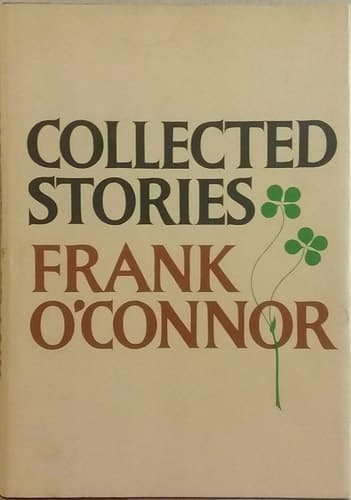
Collected Stories
by Frank O'Connor
O'Connor shares Miller's gift for excavating the grotesque and beautiful within ordinary American lives, but she does it with a Southern Gothic sensibility that's darker and more spiritually urgent. Like 'Homely Girl,' her stories find profound dignity in characters society overlooks, though she tends to shatter her characters' self-deceptions rather than gently unfold them.
View book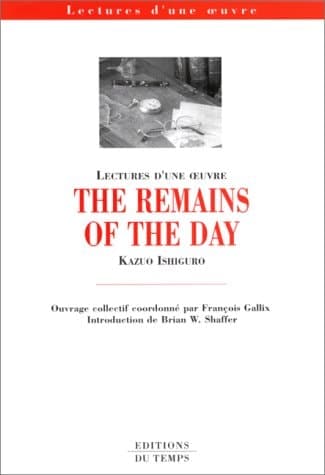
The remains of the day de Kazuo Ishiguro
by Gallix/François
Ishiguro does what Miller does—charts the hidden architecture of a life through careful, restrained prose—but sets it in post-war England with a butler whose entire existence has been shaped by duty and repression. The way he gradually reveals what his protagonist has sacrificed mirrors how Miller lets Janice's self-awareness unfold, except Ishiguro's character may never fully arrive at that recognition.
View book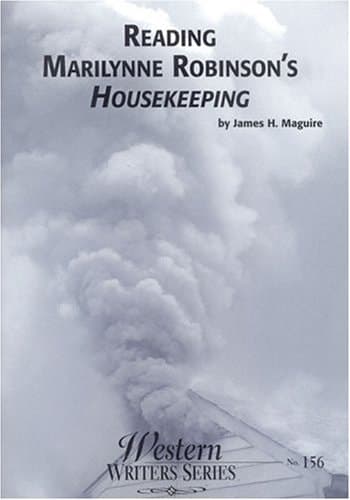
Reading Marilynne Robinson's Housekeeping (Boise State University Western Writers Series)
by James H. Maguire
Robinson writes about women who don't fit conventional molds with the same tender attention Miller brings to Janice, but she's working in a more lyrical, almost elegiac register. Her novel explores how identity forms through relationship and belonging in ways that feel like a spiritual cousin to Miller's blind musician—two people seeing each other truly.
View book
The Savage Detectives A Novel
by Roberto Bolaño
Here's the surprise: Bolaño's sprawling, formally experimental novel is obsessed with the same things Miller is—ambition, artistic identity, the search for meaning in a vast city—but he approaches it through a labyrinth of voices and decades rather than Miller's focused intimacy. If you loved how Miller captures Manhattan's constant reinvention, Bolaño does something similar for Mexico City and the literary world, but with controlled chaos.
View book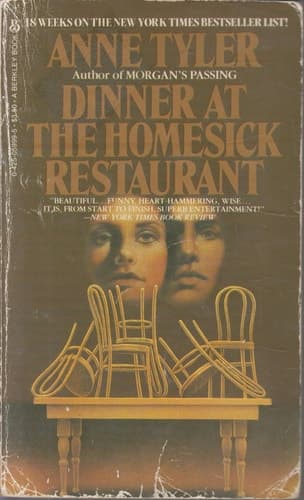
Dinner at the Homesick Restaurant
by Anne Tyler
Tyler has that same Miller quality of finding the extraordinary within domestic failure and family obligation, but she structures her novel around a family's repeated attempts to share a meal rather than a single character's awakening. Her characters are awkward, unglamorous, and deeply human—they'd recognize themselves in Janice's fierce self-awareness and her struggle to be seen.
View bookAbout Arthur Miller
A
Arthur Miller
1915–2005
Arthur Asher Miller was an American playwright, essayist and screenwriter in the 20th-century American theater. Among his most popular plays are All My Sons (1947), Death of a Salesman (1949), The Crucible (1953), and A View from the Bridge (1955). He wrote several screenplays and was most noted for his work on The Misfits (1961). The drama Death of a Salesman is considered one of the best American plays of the 20th century.
View author page