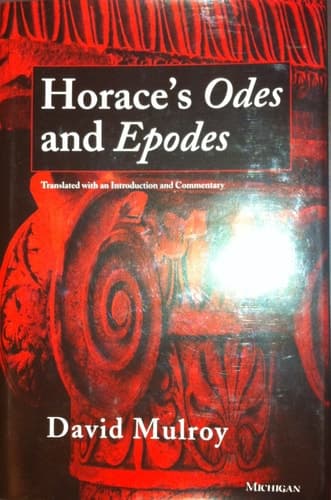
Horace's Odes and Epodes
HoracePublished1994
Pages242
Formathardcover
PublisherUniversity of Michigan Press
Synopsis
In his new book David Mulroy presents a translation of the Odes and Epodes of Horace, who was one of the Augustan regime's best known and most talented poets. Intended for those with little knowledge of these works as well as for those with a more experienced ear, David Mulroy's translations are accompanied by explanatory notes on the individual poems. Appendices are also provided that offer information on Suetonius' biography of Horace, on ambiguity in Horace's personal allusions, and on the theme of sadism in Horace's writings. Teachers of Latin writers in translation will want to use this book to make Horace accessible to their students; scholars of Latin literature will find much of value in the notes and appendices as well as in the linguistically satisfying translations.
Recommendations
Virgil: The Aeneid
by K. W. Gransden
You've just spent time with Horace's precise, jewel-like observations of love and mortality—now experience the epic that Horace himself admired and engaged with throughout his career. Virgil's narrative sweep will feel like watching the same Roman world from a different altitude, and you'll catch echoes of Horatian themes woven through the larger tapestry. The tension between personal feeling and public duty that runs through the Aeneid deepens when you've already internalized Horace's more intimate voice.
View book
Poetics. English Aristotle on the art of poetry
by 384 BC Aristotle
Here's the theoretical backbone for what Horace was actually *doing* in those poems. Aristotle's Poetics reads like a conversation with Horace across centuries—both writers are obsessed with proportion, the right word in the right place, and how form shapes meaning. After experiencing Horace's technical mastery firsthand, you'll find Aristotle's framework illuminating rather than dry; it's like learning the grammar of something you've already felt intuitively.
View book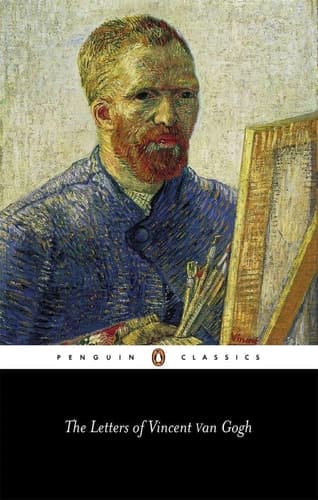
The Letters of Vincent Van Gogh
by Vincent Van Gogh
This is the surprise pick, but stay with me: van Gogh's letters have the same quality as Horace's best work—they're intensely personal yet formally controlled, mixing profound vulnerability with sharp observation about craft and beauty. Both writers are wrestling with how to make something lasting and true from immediate experience. Reading van Gogh after Horace, you'll recognize the same restless intelligence, the same refusal to sentimentalize feeling, just expressed through a different medium entirely.
View book
Ovid Metamorphoses
by Ovid
Ovid was Horace's contemporary and rival, and where Horace distills experience into concentrated moments, Ovid sprawls and transforms and multiplies perspectives. The Metamorphoses will feel like a conversation with Horace's restraint—Ovid takes the same Roman sensibility but asks 'what if we followed desire and change wherever they lead?' You'll appreciate Horace's economy even more after experiencing Ovid's baroque abundance, and you'll see how both poets were solving different problems with the same cultural inheritance.
View bookAbout Horace
H
Horace
Born 1951
Biography coming soon.
View author page