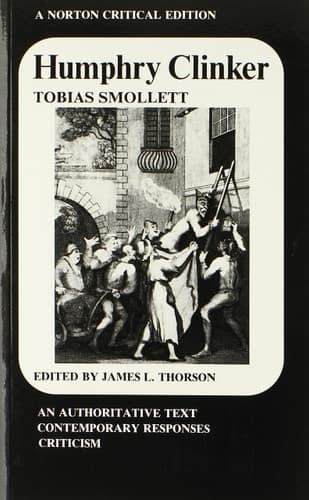
Humphry Clinker An Authoritative Text, Contemporary Responses, Criticism
Tobias George SmollettPublished1983
Pages436
Formatpaperback
PublisherNorton
Synopsis
A few obvious typographical errors have been corrected, but Smollett'screative misspellings in the letters of Tabitha Bramble and theinimitable Win Jenkins have been retained with all of their comicallyearthy overtones.
"Contemporary Responses" to the controversial Smollett's last novel areprovided by a series of reviews that appeared on the English sceneimmediately after its publication. A letter from a friend to the authoron the novel's publication is also included.
Criticism includes Sir Walter Scott's early-nineteenth-centuryassessment of the novel; modern essays by Lewis M. Knapp, ByronGassman, Mary Wagoner, William Park, Wolfgang Iser, John Sekora, andJohn F. Sena; and a bibliographical essay by Connie Capers Thorson.
The volume also contains a selective Bibliography of works on Smollettand on Humphry Clinker in particular.
Recommendations
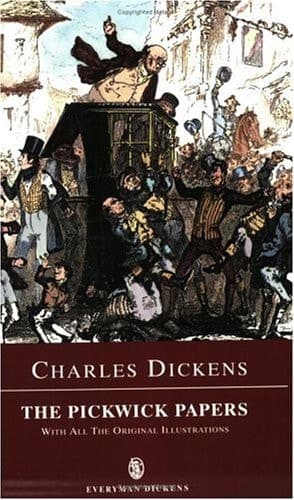
The Pickwick Papers
by Charles Dickens
Dickens learned from Smollett's epistolary chaos and character eccentricity, but where Smollett's letters crackle with misspellings and malapropisms, Dickens channels that same anarchic energy into narrative voice and grotesque minor characters. You'll find the same pleasure in watching a ragtag group of misfits stumble through misadventures, but with Dickens's slightly more sentimental heart underneath the comedy.
View book
Find what the Sailor Has Hidden Vladimir Nabokov's Pale Fire
by Priscilla Meyer
This is the surprise pick, but hear me out: like Humphry Clinker, Pale Fire is fundamentally about unreliable narrators telling their own stories through fragmented documents—a poem, annotations, an index. Nabokov takes Smollett's playful distrust of narrative authority and weaponizes it into something genuinely destabilizing. The comedy is darker and more intellectual, but that same delight in how form shapes meaning is absolutely there.
View book
The Moonstone, by Wilkie Collins
by Jean-Pierre Naugrette
Collins takes the multi-narrator structure that Smollett perfected and applies it to a mystery, so you get that same pleasure of piecing together truth from wildly different perspectives—each character's voice completely distinct, each account contradicting the last. The servants' accounts are particularly wonderful; Collins gives them the same comedic dignity that Smollett grants to Win Jenkins, but with actual narrative weight.
View book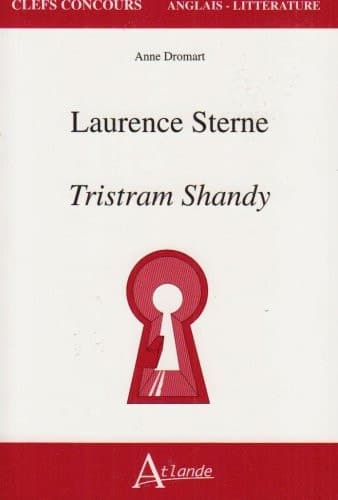
Laurence Sterne, "Tristram Shandy"
by Anne Dromart
Sterne was Smollett's contemporary and rival, and this novel takes everything Smollett does with digression, typographical mischief, and narrative self-awareness and cranks it up to eleven. If you loved the sheer *playfulness* of Humphry Clinker—the sense that the author is winking at you while his characters bumble about—Tristram Shandy is Sterne essentially writing a 600-page wink.
View bookAbout Tobias George Smollett
T
Tobias George Smollett
1721–1771
A Scottish physician, poet and author.
View author page