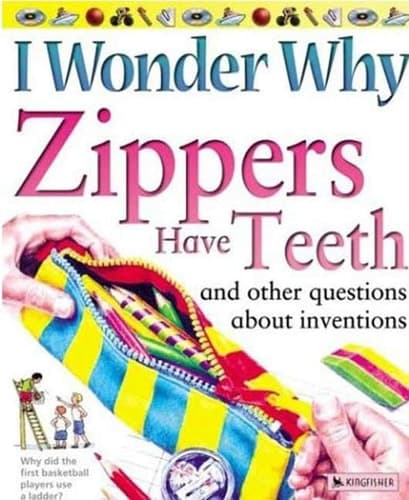
I Wonder Why Zippers Have Teeth And Other Questions About Inventions
Barbara TaylorPublished2003
Pages32
Formatpaperback
PublisherKingfisher
Synopsis
"What did people use before they had refrigerators?" and "Where do inventors get their ideas?" are some of the questions answered in this intriguing look at inventions.
Recommendations
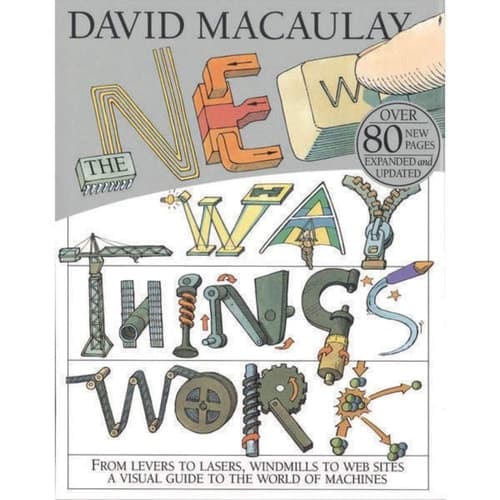
The New Way Things Work
by David Macaulay
Macaulay has that same gift for making mechanical concepts feel like puzzles waiting to be solved, but he adds his signature cartoon illustrations that turn physics into visual comedy. Where Taylor asks 'why do zippers have teeth?', Macaulay shows you a woolly mammoth operating a lever and suddenly you understand the principle—it's curiosity-driven but with a wink.
View book
The Perfectionists: A Novel
by Gail Godwin
This is your surprise pick—it reads like narrative history rather than a children's reference book, but Winchester traces how tiny tolerances in manufacturing changed everything from ball bearings to atomic bombs. If you loved the 'where do inventors get their ideas?' question, Winchester shows you the obsessive engineers who asked 'how precise can we actually make this?' and accidentally revolutionized civilization.
View book
Girlology A Girl's Guide to Stuff That Matters
by Melisa Holmes
Miodownik writes like he's sitting across from you at a café, casually explaining why steel behaves the way it does or what makes chocolate melt on your tongue. He takes the same investigative spirit as Taylor—asking fundamental 'why' questions about everyday objects—but goes deeper into the material science, making it feel like detective work rather than textbook learning.
View book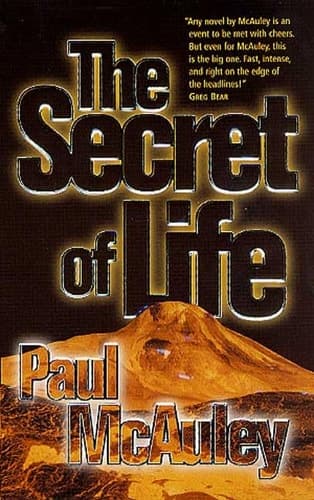
The Secret of Life
by Paul McAuley
A departure from pure invention history, but Lorr investigates the systems and innovations behind something as mundane as getting food to your table—the refrigeration chains, packaging innovations, supply-line engineering. It answers 'how did we solve the problem of keeping food fresh across continents?' with the same investigative curiosity Taylor brings, just with more real-world stakes.
View book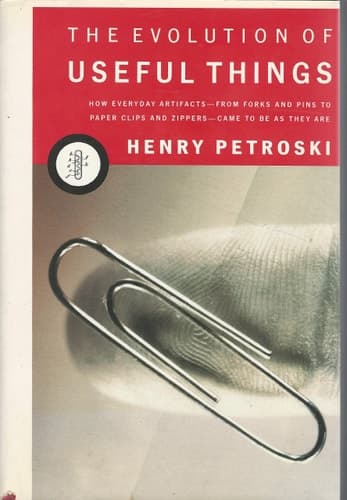
The Evolution Of Useful Things
by Henry Petroski
Petroski traces how ordinary objects—forks, paper clips, zippers themselves—evolved through tiny improvements and accidents over centuries. Published in 1992, it's from an earlier era of popular science writing, and it has that same 'let's ask obvious questions about non-obvious things' energy as Taylor, but with the depth of an engineer who actually understands why each iteration mattered.
View bookAbout Barbara Taylor
B
Barbara Taylor
Born 1954
Biography coming soon.
View author page