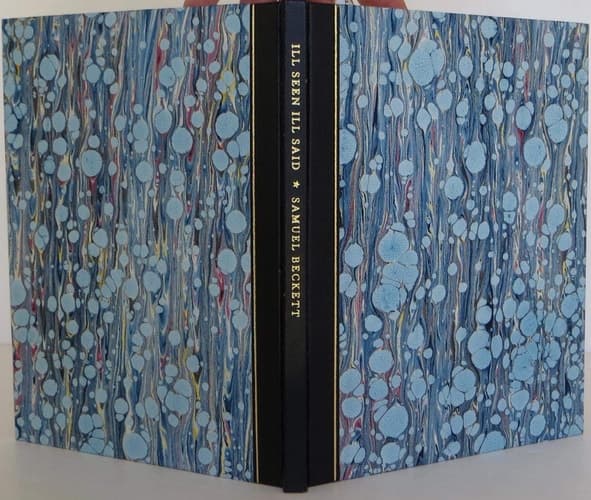
Synopsis
This late work from Samuel Beckett is the haunting picture of an old woman alone in a cabin, who watches the evening and the morning star and ventures out chiefly to visit a grave. In prose of great poetic beauty, which the author translated from his original French text Mal vu mal dit in 1982, Beckett returns to the imagery of the Old and New Testaments to speculate on the great questions of human existence. One of the great writers of the 20th century, Beckett won the Nobel Prize in 1969. He is remembered primarily as a novelist and playwright, producing Waiting for Godot and the trilogy Molloy, Malone Dies, and The Unnameable, though he was also a poet and, when he chose to be, a discerning critic of great originality. Beckett continues to exert a powerful influence on other writers and interest in his work has grown since his death in 1989.
Recommendations
Generating recommendations…
Our AI is preparing recommendations for Ill Seen Ill Said. This usually takes under a minute.
About Samuel Beckett
S
Samuel Beckett
1906–1989
Samuel Barclay Beckett was an Irish avant-garde writer, dramatist and poet, writing in English and French. Beckett's work offers a bleak outlook on human culture and both formally and philosophically became increasingly minimalist in his later career. As a student, assistant, and friend of James Joyce, Beckett is considered one of the last modernists; as an inspiration to many later writers, he is sometimes considered one of the first postmodernists. He is also considered one of the key writers in what Martin Esslin called "Theatre of the Absurd." As such, he is widely regarded as one of the most influential writers of the 20th century. Beckett was awarded the Nobel Prize in Literature in 1969 for his "writing, which—in new forms for the novel and drama—in the destitution of modern man acquires its elevation". Beckett was elected Saoi of Aosdána in 1984. He died in Paris of respiratory problems. ([Source][1]) [1]: http://en.wikipedia.org/wiki/Samuel_Beckett
View author page