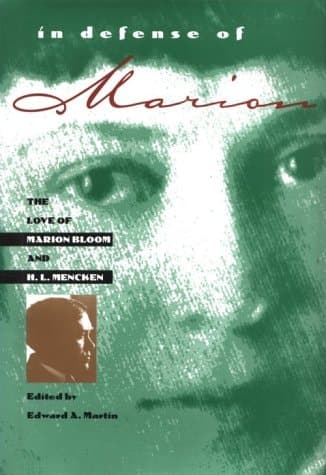
In Defense of Marion The Love of Marion Bloom & H.L. Mencken
Henry Louis MenckenPublished1996
Pages397
Formathardcover
PublisherUniversity of Georgia Press
Synopsis
This documentary history chronicles what in duration and volatile intensity was the most important love relationship in H.L. Mencken's life, one that he tried to obscure and hoped would remain buried within the copious record of his achievements as author and editor. The love between Marion Bloom and Mencken flourished during a period when he wrote frequently about women's issues. In Defense of Marion both illuminates Mencken's ambivalent attitudes toward the "New Woman" and presents a particularized social history of the intellectual and personal aspirations of many women during the early twentieth century. Bloom and Mencken met in 1914 and became lovers within a few months. Their intimacy continued, on and off, until about a year before Mencken's marriage to Sara Haardt in 1930. Edward A. Martin, who supplies a wealth of interpretive notes and commentary, tells of the Mencken-Bloom affair not only through selections from their letters and diaries but also through excerpts from the personal writings of others who were close to the two and who often complicated their relationship. Such relevant figures include Sara Haardt; Estelle Bloom, Marion's sister; Theodore Dreiser, Estelle's lover and employer as an editorial assistant; and the movie star Aileen Pringle, with whom Mencken was infatuated.
Recommendations
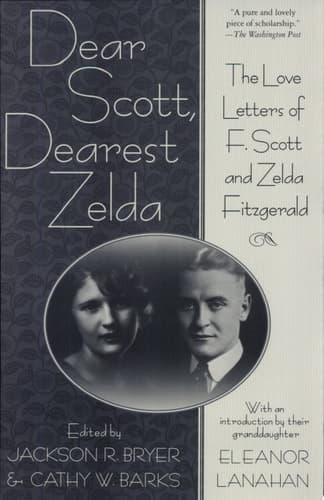
Dear Scott, Dearest Zelda The Love Letters of F. Scott and Zelda Fitzgerald
by Francis Scott Fitzgerald
Like Martin's documentary history of Mencken and Bloom, this collection lets you reconstruct an intimate relationship through primary documents—but here you're reading Zelda's own voice as she navigates being both muse and artist in her marriage to F. Scott. The tension between her ambitions and the era's constraints on women mirrors Mencken's complicated relationship with the 'New Woman,' except you get her perspective directly.
View book
Gertrude Steins Autobiographien The autobiography of Alice B. Toklas und Everybody's autobiography
by Monika Hoffmann
Stein pulls off something audacious here—writing Alice's autobiography in her own voice—that lets her examine a long-term intimate partnership while also commenting on modernism, artistic ambition, and how two women built a life together in early twentieth-century Paris. It has the same archival quality as *In Defense of Marion*, but filtered through Stein's playful, unreliable narration that makes you question what you're really being told.
View book
The Savage Detectives A Novel
by Roberto Bolaño
This is your surprise recommendation—a sprawling, postmodern novel that seems nothing like a documentary history until you realize Bolaño is doing something similar: reconstructing a relationship and a movement through fragments, letters, interviews, and competing narratives. Like Martin's approach with Mencken and Bloom, Bolaño shows how personal intimacy gets tangled up with literary ambition and how memory itself becomes unreliable when multiple people are telling the story.
View book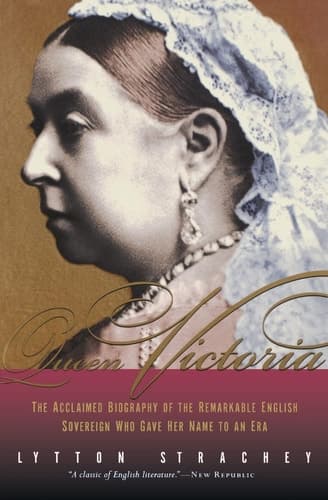
Queen Victoria: The Definitive Biography of England's Famous Ruler (A Harvest / HBJ Book)
by Lytton Strachey
Holroyd does for Strachey what Martin does for Mencken—excavates a life that the subject himself wanted to keep private, using letters and the testimonies of people in his orbit to understand his emotional and intellectual world. Both books grapple with how a public intellectual's published work relates to their hidden private self, and both authors are meticulous about letting contradictions stand rather than resolving them.
View bookAbout Henry Louis Mencken
H
Henry Louis Mencken
1880–1956
Biography coming soon.
View author page