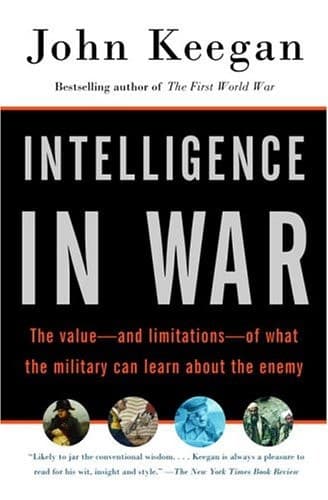
Intelligence in War The value--and limitations--of what the military can learn about the enemy
John KeeganPublished2004
Pages432
Formatpaperback
PublisherKnopf Doubleday Publishing Group
Synopsis
A masterly look at the value and limitations of intelligence in the conduct of war from the premier military historian of our time, John Keegan.
Intelligence gathering is an immensely complicated and vulnerable endeavor. And it often fails. Until the invention of the telegraph and radio, information often traveled no faster than a horse could ride, yet intelligence helped defeat Napoleon. In the twentieth century, photo analysts didn’t recognize Germany’s V-2 rockets for what they were; on the other hand, intelligence helped lead to victory over the Japanese at Midway. In Intelligence in War, John Keegan illustrates that only when paired with force has military intelligence been an effective tool, as it may one day be in besting al-Qaeda.
Recommendations
Generating recommendations…
Our AI is preparing recommendations for Intelligence in War The value--and limitations--of what the military can learn about the enemy. This usually takes under a minute.
About John Keegan
J
John Keegan
1934–2012
Sir John Desmond Patrick Keegan was a British military historian, lecturer, writer and journalist. He was the author of many published works on the nature of combat between the 14th and 21st centuries concerning land, air, maritime, and intelligence warfare, as well as the psychology of battle. - Wikipedia
View author page